


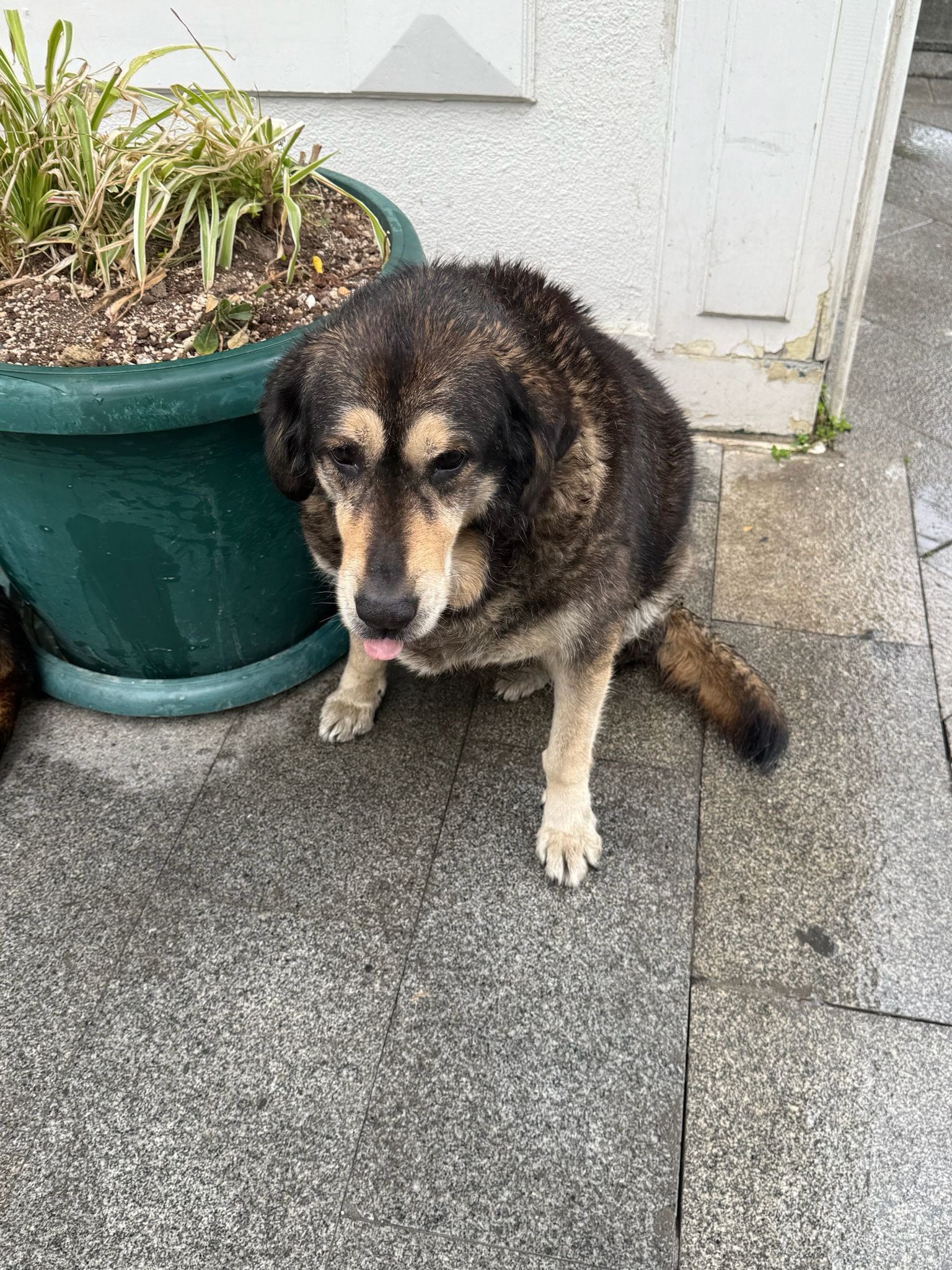
There are some stories that leave you heartbroken. Others leave you angry. Then there are the stories that leave you emotionally exhausted because they are no longer isolated tragedies. They are part of a pattern you have been watching unfold for so long that every new name feels painfully familiar. That is how I felt when I read about Tosun.
According to the people who knew him, Tosun had lived in the same neighbourhood for years. He wasn’t a dog wandering through life unnoticed or unwanted. He was a community dog in the truest sense of the word. People knew his name, cared for him and looked out for him. He already had what every dog deserves, a place where he belonged and a community that loved him. When he was reported to the municipality and taken away, those people didn’t abandon him or assume somebody else would deal with it. They went to find him, determined to bring him home. He was in Üsküdar Municipality Hekimbaşı Shelter Turkey.
What happened next is almost impossible to comprehend. They found Tosun in the municipal shelter, frightened and desperate to leave the open enclosure he was in with dogs he did not know and immediately began the process of taking him home. They completed the paperwork, accepted responsibility for him and believed they would soon be walking back out through the gates together. Instead, according to their account, they were told they couldn’t take him because nobody was available to authorise his release. They would have to come back.
By the time they returned, Tosun was dead.
I have replayed that sequence of events in my mind more times than I care to admit because I cannot make it make sense. Here was a dog who wasn’t forgotten, who wasn’t abandoned and who wasn’t sitting in that shelter waiting for somebody to notice him. The people who loved him were already there. They had found him. They wanted him. They had done everything they had been asked to do. The only thing standing between Tosun and home was bureaucracy.
The explanation reportedly given to the people who loved him was that his heart couldn’t take it and that it was probably a heart attack. That word, probably, has stayed with me ever since I read it because it raises more questions than it answers. What happened to Tosun? Was he examined? Was a post-mortem carried out? If so, what did it find? If not, why not? When a much loved dog dies in a municipal shelter after people have already come to take him home, surely his community deserves more than uncertainty.
Perhaps what has affected me most is that I know Tosun is not alone. For almost two years I have documented the implementation of Türkiye’s street dog law. Every day I read another report, another municipal announcement, another story of dogs being removed from the places they have called home for years. I have watched the collection figures climb higher and higher while questions about what happens after those dogs disappear behind shelter gates receive far less attention. We now know that around 149,000 dogs have reportedly died in municipal shelters from what have been described as natural causes. One hundred and forty nine thousand. I have reached the point where I no longer read that figure as a statistic. I read it as 149,000 individual lives.
I am exhausted by it. I am frustrated by it. I am angry that communities are repeatedly being asked to trust a system while stories like Tosun’s continue to emerge. I am angry that so much of the public conversation revolves around how many dogs have been collected rather than what became of them afterwards. Collecting a dog is not an outcome. It is the beginning of a responsibility, and that responsibility does not end when the shelter gates close.
Tosun should never have become another name on a list of dogs who never made it home. His story should have ended with the people who loved him walking back through those gates with him by their side. Instead, they returned to collect a dog they would never see alive again, and they were left with questions instead of answers.
I refuse to believe that this is something we should simply accept. Tosun deserved better, just as every one of those 149,000 dogs deserved better. They deserve more than being reduced to statistics in municipal reports, more than vague explanations and more than a world that grows a little more accustomed to these stories every time another one appears.
Tosun’s life mattered. His community knew that. The people who went to bring him home knew that. The rest of us should know it too, because if we can read his story without feeling grief, anger and an overwhelming sense that something has gone terribly wrong, then we have started to lose something of our own humanity.