


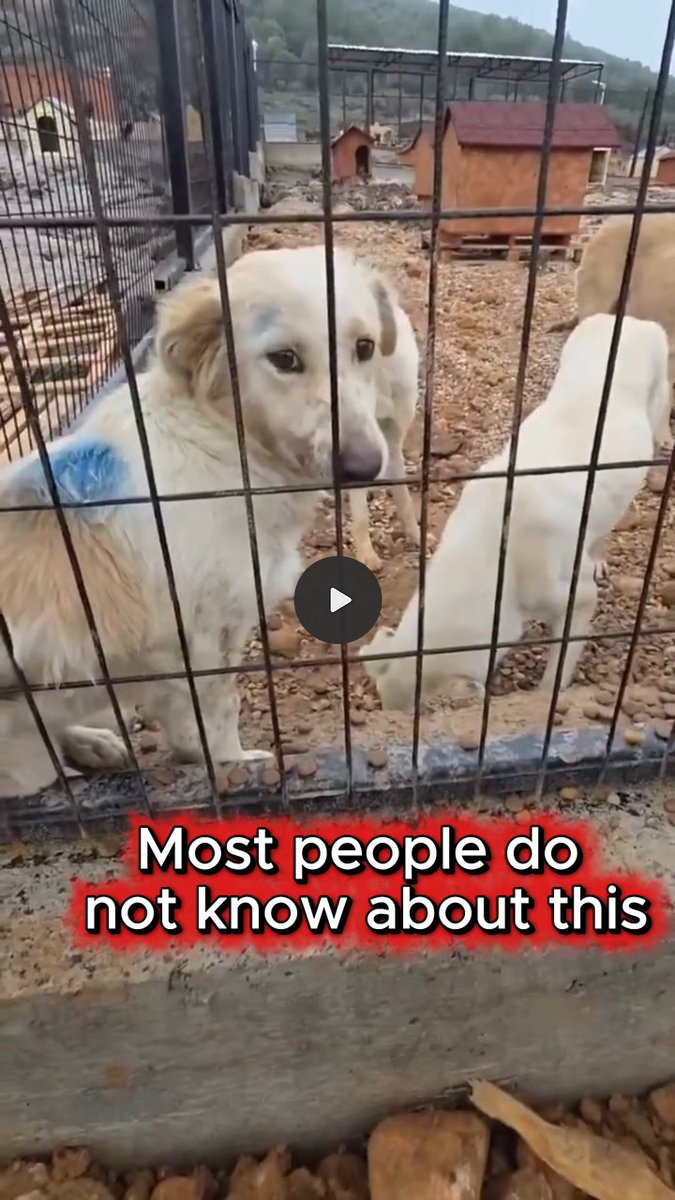
They have marched, protested, documented suffering, challenged government decisions and demanded answers. They have stood outside shelters, taken their concerns to the courts and refused to accept that removing animals from public view means removing responsibility for their lives. They have continued when their voices have been ignored, when their efforts have been dismissed and when speaking out has exposed them to hostility.
And still, Türkiye’s street dogs are being taken away.
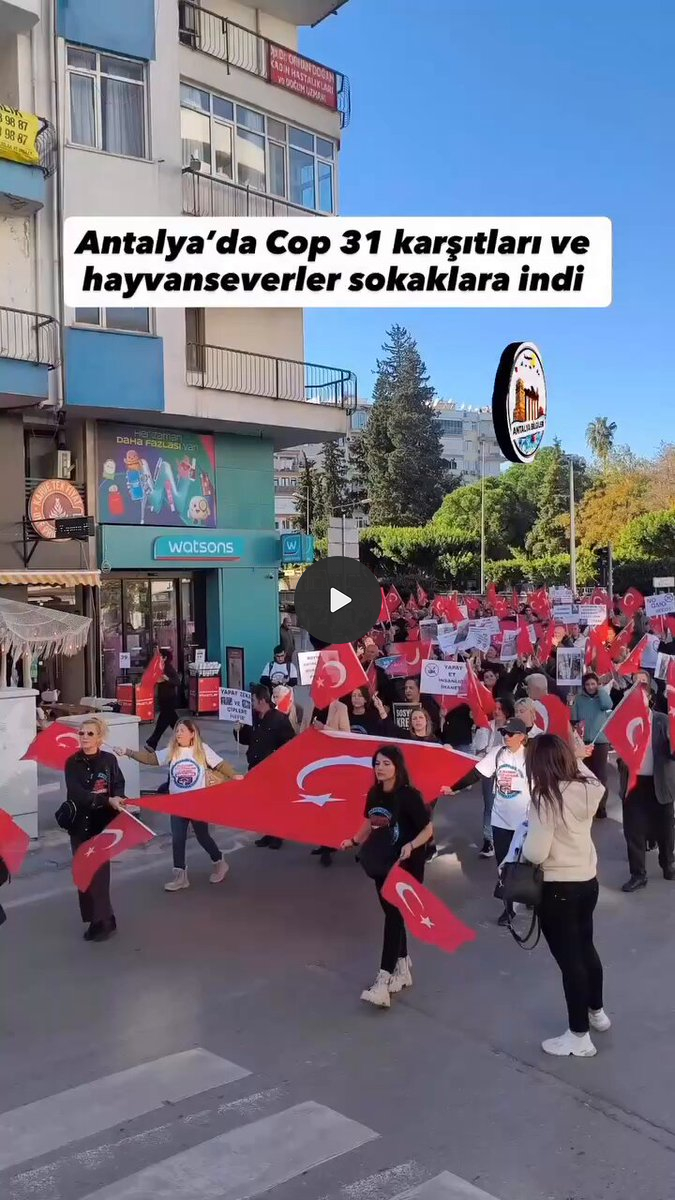
Now, while Antalya hosts COP31, the United Nations Climate Change Conference, animal defenders have taken to the streets again. Footage circulating from the city shows demonstrators carrying Turkish flags and placards, with reports describing animal welfare campaigners joining opponents of the conference. Their message brings together three responsibilities that should never have been separated: “We will defend people, animals and nature together.”
It is a powerful declaration from people who have spent years fighting for animals whose futures have become increasingly uncertain. Yet while international delegates gather to discuss climate change, sustainability and humanity’s responsibilities towards the planet, the struggle taking place beyond the conference halls has received nothing approaching the international attention it deserves.
The world has gathered in Antalya to discuss the future of life on Earth. Outside, people are fighting for the life already here.
And the world is looking away.

The contrast is difficult to ignore. Türkiye is welcoming international representatives to discuss environmental responsibility while its own citizens continue challenging policies that have transformed the lives of street animals. Since the amendments to the Animal Protection Law in 2024, the collection of stray dogs has become a central element of national policy. Municipalities have been required to expand their responsibilities for collecting and housing animals, while campaigners have repeatedly questioned whether the infrastructure, resources and oversight are sufficient to protect those entering public custody.
Authorities have reported substantial progress in removing dogs from the streets. Yet comprehensive, publicly accessible records that would allow independent scrutiny of the programme remain difficult to establish. How many dogs have entered municipal facilities? How many have been adopted, transferred or died? What happens to animals requiring prolonged veterinary treatment? Who independently verifies their welfare, and can an individual dog be traced from the place it was collected to its eventual outcome?
These are questions that any government exercising responsibility over living animals should be prepared to answer. They do not depend on political allegiance, nationality or whether someone supports or opposes the collection programme. They arise from the responsibility assumed when an animal is taken into public custody.
In Antalya itself, allegations concerning municipal animal facilities have already raised serious questions about the treatment and fate of animals in public care. The discoveries reported at Kepez in August demanded scrutiny, documented findings and clear explanations. Yet the wider problem extends far beyond one municipality or one incident. Across Türkiye, animal defenders continue to raise concerns about shelter conditions, capacity, veterinary provision and the ability to account for animals removed from communities.
And increasingly, the people asking these questions are becoming targets themselves.
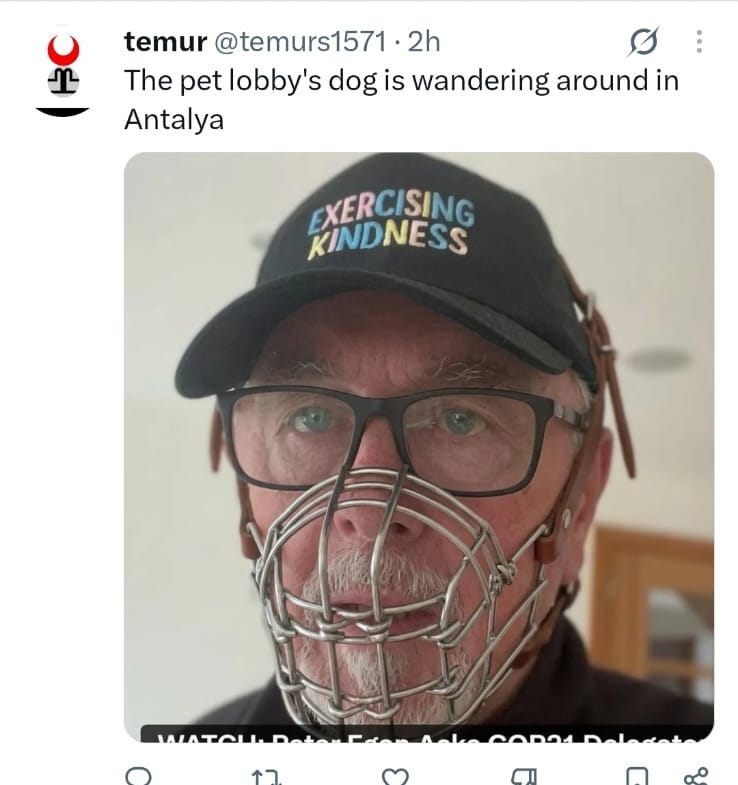
British actor and animal welfare advocate Peter Egan has repeatedly out about Türkiye’s stray dogs. His international profile allows him to draw attention to issues that might otherwise receive little coverage outside the country. But recent responses to his advocacy demonstrate how quickly legitimate questions about animal welfare can be displaced by hostility towards the person raising them.
Among the replies have been obscene insults, discriminatory language and demands that he take Türkiye’s dogs to England. Some have questioned his right to comment on another country’s affairs. Others have reduced the discussion to personal ridicule. One particularly degrading response circulated a manipulated image depicting Peter wearing a metal dog muzzle, accompanied by language intended to humiliate him.
The image was cruel. Its purpose was not to challenge evidence or contribute to a discussion about animal welfare. It was to make someone who speaks for animals an object of contempt.
There is a legitimate place for disagreement. Peter Egan’s statements, like those of any campaigner, can and should be examined against the evidence. Animal welfare policy involves difficult questions about public safety, disease prevention, population management and the resources available to municipalities. Those questions deserve informed debate.
But telling someone to leave the discussion because they are British does not establish whether dogs are being treated humanely. Directing abuse at an advocate does not establish whether shelters are adequately resourced. Mocking someone for expressing compassion does not explain what has happened to animals taken into municipal custody.
The insults grow louder. The questions remain unanswered.
And if someone with Peter’s public profile can be subjected to such hostility, we should consider what it means for ordinary people who challenge decisions within their own communities. The volunteers who feed animals, the citizens who document conditions, the lawyers who pursue accountability and the campaigners who organise demonstrations do not all have international recognition or large audiences prepared to defend them.
For some, speaking out can mean confronting hostility in the very places where they live and work. Yet they continue, often with little acknowledgement beyond the animal welfare community.
It would be profoundly wrong to describe Türkiye as a country without compassion for animals. The people marching in Antalya are evidence of the opposite. Across the country, citizens have continued caring for street animals, challenging decisions and demanding humane alternatives. Their determination has endured through legislative changes, public controversy and an increasingly polarised debate.
These are not people waiting for the international community to tell them how to care for animals. They are people already doing the work, often under circumstances that deserve far greater international recognition.
What they need is not for outsiders to take ownership of their struggle. They need the world to recognise that their concerns are legitimate, their evidence deserves examination and their demands for transparency should not be dismissed.
Yet international animal welfare advocacy is repeatedly met with the accusation of foreign interference. Those questioning Türkiye’s policies are told to concern themselves with their own countries, as though the existence of animal welfare failures elsewhere removes any right to question what is happening in Türkiye.
Britain has its own serious animal welfare problems. So do countries across Europe, Asia, Africa and the Americas. Dog Desk Animal Action has challenged failures in the United Kingdom and elsewhere, and we will continue doing so. No country has a monopoly on compassion, and no country should be exempt from scrutiny.
Animal welfare does not stop at a national border. Neither should accountability.
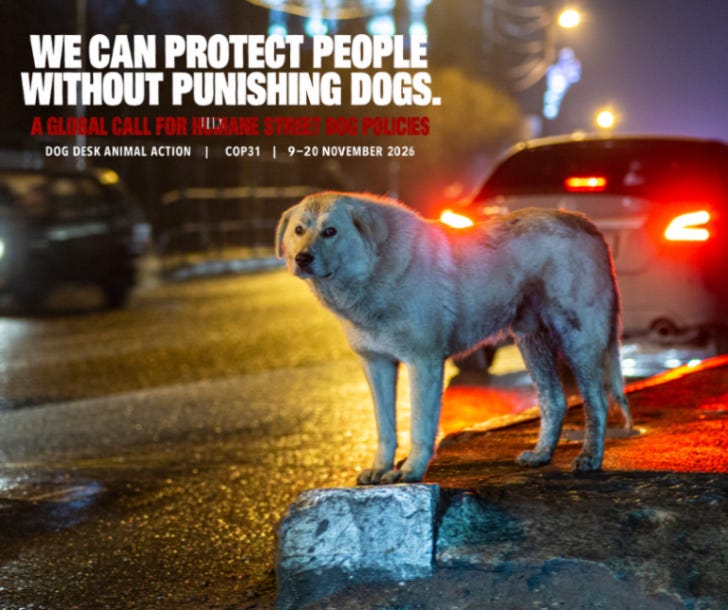
There is another reason why the demonstrations in Antalya deserve attention during COP31. Climate change is already affecting the lives of animals through extreme heat, flooding, drought, disease and disruption to food and water supplies. Animals confined in overcrowded or inadequately maintained shelters may be particularly vulnerable to those pressures.
Environmental resilience cannot be confined to energy systems, infrastructure and economic planning. It must also consider the welfare of animals dependent on human care, including those placed in municipal facilities.
A shelter without adequate drainage becomes dangerous during flooding. A facility without sufficient shade, ventilation or water becomes dangerous during extreme heat. A system already struggling with capacity cannot be assumed capable of protecting animals during increasingly severe weather events.
These are practical animal welfare concerns directly connected to climate resilience. They deserve consideration in discussions about sustainable communities and environmental responsibility.
The demonstrators in Antalya are making a broader point. Protecting people, animals and nature should not be treated as competing ambitions. Public safety and animal welfare can coexist. Responsible population management can be humane. Communities can be protected without treating every free-roaming dog as an enemy.
What cannot be accepted is the idea that collecting animals resolves the responsibility owed to them.
A humane policy must be judged not only by the number of dogs removed from the streets, but by what happens to those dogs afterwards. It must be possible to establish where they are held, whether they receive appropriate care, how many survive and what opportunities exist for adoption or other lawful outcomes.
Without reliable records and meaningful oversight, claims of success remain difficult to evaluate independently.
And that is why the campaign cannot end.
More than 11,000 people have signed Dog Desk Animal Action’s petition calling for humane reform and protection for Türkiye’s stray dogs. Those signatures represent an extraordinary expression of concern from people unwilling to accept that animal suffering should be overlooked because it occurs beyond their own borders.
But signatures alone cannot maintain public scrutiny indefinitely. A petition can demonstrate concern. It cannot, by itself, follow every legislative development, examine every official statement or investigate every reported incident.
That requires sustained attention.
At Dog Desk Animal Action, we have continued examining Türkiye’s collection programme, tracking developments in animal protection legislation, investigating reported incidents and questioning gaps in the information available about animals held by public authorities. We have challenged unsupported claims even when they come from people advocating for animals, because evidence and accuracy are essential to accountability.
Our work extends beyond Türkiye, but the principle remains the same wherever animals are removed, confined or placed under the control of public authorities.
Where did they go? Who is responsible for them? What evidence establishes what happened next?
These are questions we will continue asking.
And we are asking those who signed our petition to continue alongside us.
If you have followed this campaign through Change.org, we invite you to join Dog Desk Animal Action directly through our independent Substack publication. There you can receive our investigations, significant developments and opportunities to take action by email, without depending on a petition platform to decide which updates reach you.
Joining is free. There is no obligation to donate or become a paid subscriber. What we are asking for is your continued attention, your willingness to examine the evidence and your support in ensuring that the concerns of animal defenders are not lost beneath the next news cycle.
Join us at
Because the people marching in Antalya are not fighting for a moment of publicity. They are fighting for animals whose lives depend on decisions being made today, and for a future in which humane treatment is an obligation rather than an optional act of kindness.
When COP31 ends, the delegates will leave. The international media will turn its attention elsewhere. The conference banners will come down, and the world will move on to its next gathering.
But the dogs will still be in municipal facilities. The questions about their welfare will remain. The volunteers, campaigners and ordinary citizens who have refused to abandon them will still be there.
They will still be demanding answers.
They will still be fighting to protect animals who cannot speak for themselves.
And they will still be waiting for the international community to recognise the seriousness of what they are confronting.
The people of Türkiye have not stopped speaking. The question is whether the rest of us are prepared to listen.
The world is looking away.
Will you?
Dog Desk Animal Action CIC
Traceability. Transparency. Accountability.
This version keeps the argument moving through continuous paragraphs, with the