


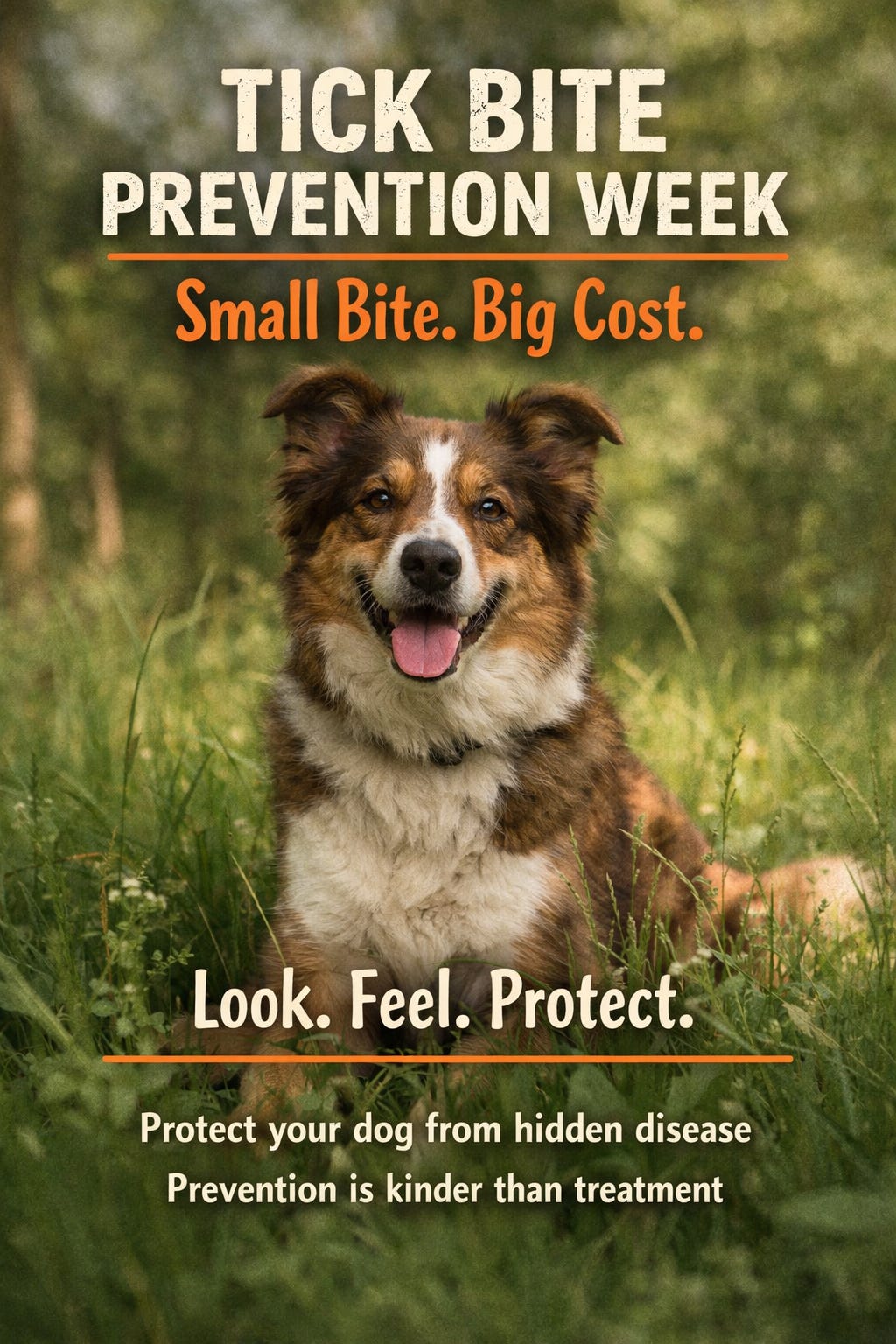
Ticks are tiny, quiet and incredibly easy to miss.
But the diseases they can transmit are anything but small.
For many people, a tick is just a nuisance you remove after a walk. In reality, one bite can expose a dog to long-term illness, chronic pain, neurological damage and sometimes death. Prevention is always safer, cheaper and kinder than treatment.
This guide explains how ticks find dogs, where they live, and what you can do every day to stop bites before they happen.
Why Tick Prevention Matters
Ticks do not bite for food. They bite to attach for days.
During that time they can transmit serious diseases including (depending on country):
Lyme disease
Ehrlichiosis
Anaplasmosis
Babesiosis
Tick-borne fever
Many of these start with vague symptoms. Owners often think the dog is just tired, sore or aging. By the time the real cause is discovered, damage may already be significant.
Prevention is therefore not cosmetic care it is medical protection.
Ticks do not jump or fly.
They wait.
They climb onto grass stems or leaves and hold their front legs out. When a warm animal brushes past, they latch on.
Common exposure areas:
Long grass
Woodland paths
Leaf litter
Moorland and countryside trails
Parks with wildlife
Gardens
Urban dogs are not safe. Many ticks live in city parks and even small communal green areas.
Daily Prevention Habits
1. Check your dog after every walk
The most effective prevention is a 30-second routine.
Feel with your fingers not just your eyes. Ticks can be the size of a poppy seed.
Focus on:
Ears (inside and behind)
Eyelids
Lips and chin
Neck folds and collar area
Armpits
Groin
Between toes
Under the tail
2. Adjust walking routes in peak seasons
Ticks are most active:
Spring
Early summer
Warm autumns
Mild winters
Avoid brushing through dense vegetation when possible. Keep dogs on central paths rather than edges.
3. Keep fur manageable
Very thick coats hide ticks for days.
Regular brushing dramatically increases early detection.
Veterinary Preventatives
There is no single best product. What matters is consistent coverage.
Options include:
Spot On Treatments
Oral Tablets
Collars
Sprays
Your vet should advise based on:
Location
Lifestyle
Swimming habits
Health conditions
Never use dog products on cats.
Safe Tick Removal
Do not pull ticks out with fingers.
Incorrect removal leaves mouthparts embedded and increases infection risk.
Use a tick removal hook:
Slide tool under tick
Twist steadily (do not yank)
Lift gently
Clean site
Wash hands
Do not use:
Alcohol
Vaseline
Burning
Squeezing
These stress the tick and increase disease transmission.
Symptoms After a Bite
Contact a vet if you notice in the following weeks:
Lethargy
Fever
Stiffness or limping
Loss of appetite
Swollen joints
Pale gums
Unusual bleeding
Neurological changes
Early treatment dramatically improves outcomes.
Protecting Vulnerable Dogs
Street and rescue dogs are especially at risk.
They often carry ticks for weeks before anyone notices.
Routine prevention is one of the simplest ways we reduce suffering in newly rescued animals. Many chronic “mystery illnesses” in rescue cases turn out to be untreated tick-borne disease.
The Takeaway
Tick prevention is not about paranoia. It is about routine.
A quick check after walks
A consistent preventative
Correct removal
Small habits prevent lifelong illness.
Because with ticks, the real danger is not the bite you see
it is the infection you do not.