



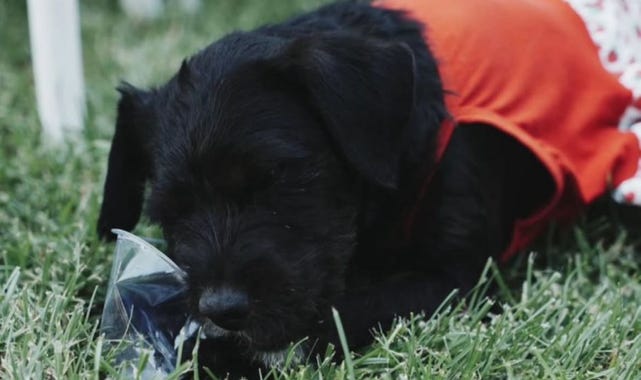
On 8 December 2025, local media reported a horrific incident in Muğla: a dog named Mila was shot and killed by a neighbour allegedly after the dog had chased chickens. The neighbour then placed the lifeless body in a sack, put it into a vehicle, and abandoned it near a stream. Mila’s owner and relatives say the perpetrator admitted the act calmly, showing no remorse.
Mila’s family described the killing as a senseless cruelty and said they want the authorities to the person responsible.
Sadly, this is not an isolated case: in recent years, there have been multiple reports from the same region of stray and owned dogs being shot or killed sometimes with rifles or even blunt instruments.
The Slaughter Law
The slaughter law allows the removal of stray animals who can be killed under certain circumstances.
Often, stray animals are tagged as nuisances, dangerous or public health / safety threats by citizens who just want them gone.
While such laws may have been established with public-safety or public-health rationale in mind, their real-world implications often diverge sharply from those intentions.
Why This Case Reflects a Dangerous Consequence of the Slaughter Law
It normalises violence against animals. When laws permit or fail to sufficiently punish killing animals under vague or subjective pretexts (e.g. chasing chickens, being a stray), some individuals may feel they have licence to act as judge, jury, and executioner. In the Mila case, the neighbour reportedly felt entitled to shoot the dog without hesitation or remorse.
It blurs responsibility and moral boundaries. The fact that the dog was shot for chasing chickens, a behaviour many dogs exhibit shows how easily ordinary behaviour can be framed as justification for violence. Where the legal framework tolerates such killing, people may treat animals not as sentient beings but as disposable pests.
It discourages accountability. The slaughter law can act as a legal and cultural shield: perpetrators may assume that their actions are legally acceptable or at least tolerated. That breeds impunity. In regions where animal cruelty is repeatedly reported, this seems to be the case.
It undermines humane animal-welfare practices. Even caring citizens, neighbours, animal-lovers, rescuers may feel frustrated, powerless or threatened. If shootings become widespread, people might avoid rescuing or sheltering stray animals, fearing backlash. This damages local community-based initiatives and discourages compassion.
It corrodes social empathy. When violence against vulnerable beings (animals) becomes legally and socially tolerated, it may desensitise people paving the way for more brutal or callous behaviour, potentially even beyond animal cruelty.
What Needs to Change: Toward Humane, Responsible Policy
Clear, stricter legal protection for animals. Laws should define animal cruelty unambiguously, prohibit unregulated killings even of strays, and ensure that shooting or killing a domesticated (or stray) animal without due reason is a punishable crime.
Transparent, enforced protocols for animal control. Where stray animals pose real, documented threats (e.g. disease, aggression), there should be regulated capture, shelter, sterilization, adoption. Lethal measures only as absolute last resort not as first response.
Community awareness and education. People should be sensitised to the moral and ecological value of animals. Education campaigns could foster empathy, discourage violent solutions and promote responsible pet ownership.
Support for civic animal-welfare efforts. Encouraging and funding local shelters, community adoption drives, and volunteer networks that can intervene and provide care for stray or unwanted animals.
Swift, transparent justice when cruelty occurs. Each case like “Mila” must be fully investigated; perpetrators prosecuted — to send a message that animal cruelty is unacceptable, not tolerated.
Wider Implications: Why This Is Not Just a Dog Problem
This isn’t only about stray-dog management; it’s about the kind of society we want to live in. When cruelty becomes a socially acceptable response to nuisance whether animal or human it undermines empathy, erodes justice, and degrades our collective moral fabric. Allowing or condoning the killing of animals without due cause diminishes respect for life, and may pave the way for broader forms of dehumanization.
In regions like Muğla, the repeated reports of shootings points to a systemic issue. The slaughter law, instead of protecting society, becomes a legal loophole that enables cruelty and impunity.
If we genuinely believe in compassion, dignity, and coexistence with humans and animals then laws must reflect that. Wildlife, stray animals, pets: they all deserve a chance to exist without fear.
Final Thoughts
The killing of Mila is more than a heart breaking incident it is a symptom of a broken legal and moral framework. Until laws change and public attitudes shift, we may continue seeing such tragedies.
As citizens, animal-lovers, and members of a shared community, we have a responsibility. Not just to demand justice for individual victims but to challenge, reform, and reimagine the systems that enable cruelty.