

Turkish Headlines Claim “Dog Lick Caused Amputation” But What Is Actually Confirmed?


In recent days, Turkish news outlets have published striking headlines stating that a woman went into a coma within 24 hours after a dog lick and lost her limbs.
The framing is direct. Certain. Definitive.
But when the original reporting from the UK is examined more closely, the language used by doctors appears far more cautious.
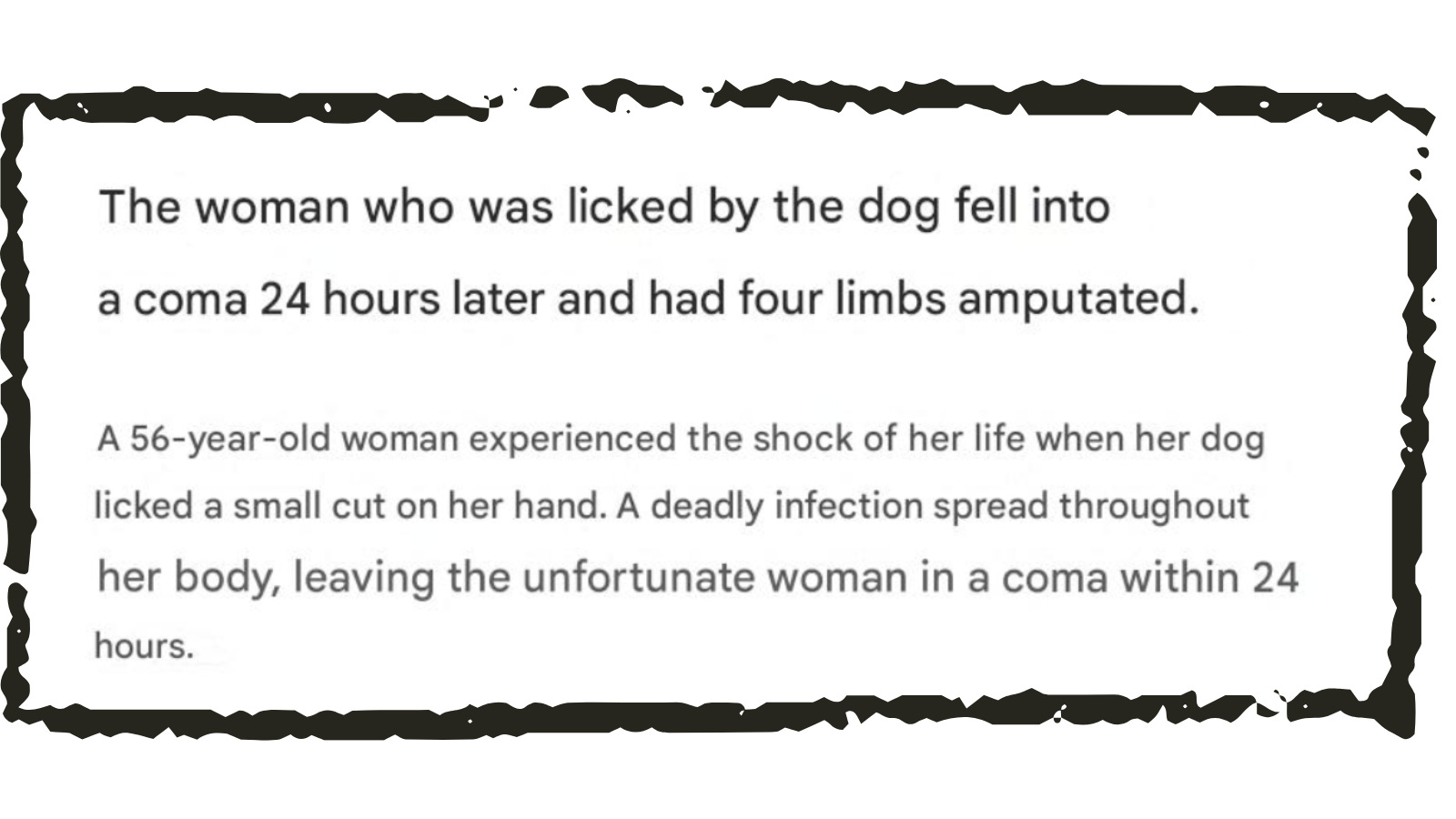
What Turkish Articles Are Saying
Turkish reports present the sequence as established fact:
A dog licked a wound.
The bacteria entered her bloodstream.
This caused sepsis.
The sepsis led to quadruple limb amputation.
The wording removes uncertainty. It reads as a confirmed chain of causation.
For readers encountering only these versions, the message is clear: a dog lick directly caused catastrophic limb loss.
What International Reporting Actually Indicates
The UK-based coverage describes the case of Manjit Sangha, who developed severe sepsis and required amputations.
Doctors reportedly believe bacteria may have entered through a small cut that had been licked by her pet dog. Some articles reference Capnocytophaga canimorsus, a bacterium commonly found in dog saliva that can, in rare circumstances, lead to severe infection.
However, reputable reports use language such as:
believed to have
thought to be
likely triggered by
These are clinical interpretations based on timing and presentation not necessarily publicly confirmed laboratory findings.
At the time of writing, we have not seen official confirmation published stating that a specific bacterium was definitively isolated and identified as the proven cause.
Because of this distinction, we have contacted the relevant health authority to request clarification on whether laboratory confirmation was obtained and whether the cause has been formally established.
If confirmation is provided, we will update accordingly.
Why Language Matters
In medical reporting, the difference between:
suspected cause
and proven cause
is significant.
Sepsis can develop from many different infections. It is a medical emergency that can escalate rapidly regardless of source.
When headlines remove qualifiers and present a suspected pathway as a confirmed fact, the public perception shifts from:
A rare medical case under clinical investigation to dogs can cause limb loss.
That leap is powerful.
The Broader Context
In a country where stray dogs are already a politically sensitive issue, framing matters.
This case involved a household pet, not a street animal. Yet once simplified into absolute cause-and-effect language, stories can be absorbed into wider narratives about public health risk and animal management.
Fear spreads faster than nuance.
That does not mean the medical event should be dismissed. It was severe. It was traumatic. It deserves compassion. But accuracy should travel with it.
A Call for Precision
Responsible reporting should reflect the level of certainty available.
If a cause is suspected, it should be described as suspected.
If a bacterium is confirmed by laboratory testing, that confirmation should be clearly stated.
Until such confirmation is publicly documented, caution in wording protects both public understanding and proportional response.
Disclaimer
This article is based on publicly available reporting at the time of writing. We are not the treating clinicians and do not have access to the patient’s medical records. Our purpose is to examine differences in media framing and clarify the distinction between suspected and confirmed medical causation.