

Turkish Lawyer Hülya Yalçın Detained Over Instagram Story
Another Case Raising Questions About Freedom of Expression in Turkey

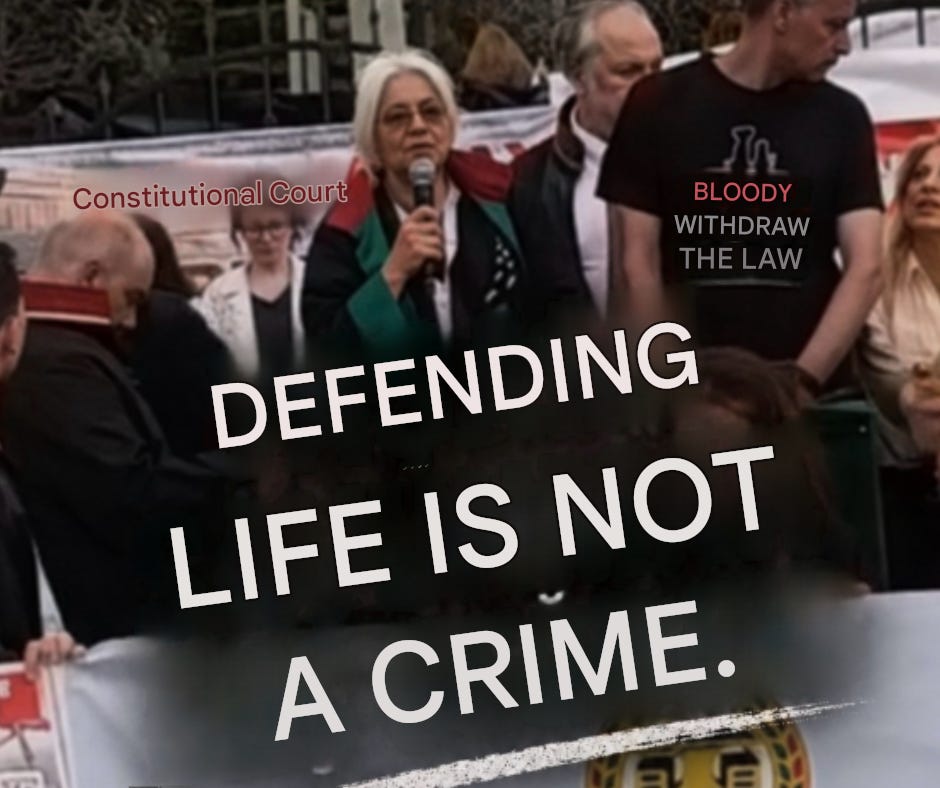
In a late-night operation on May 7, 2026, Turkish authorities detained lawyer Hülya Yalçın at her home in Istanbul.
The allegation relates to insulting the President under Article 299 of the Turkish Penal Code, a controversial law that has repeatedly been criticised by human rights organisations and legal observers for its use against critics, journalists, activists, and social media users.
Yalçın, who has reportedly practiced law for 28 years and serves as president of the Hayvanlara Adalet Derneği, was taken to Istanbul’s Vatan Police Headquarters before later being transferred to Anadolu Courthouse on May 8.
According to statements shared by lawyer solidarity groups and members of the legal community, prosecutors requested her referral for pre-trial detention following questioning.
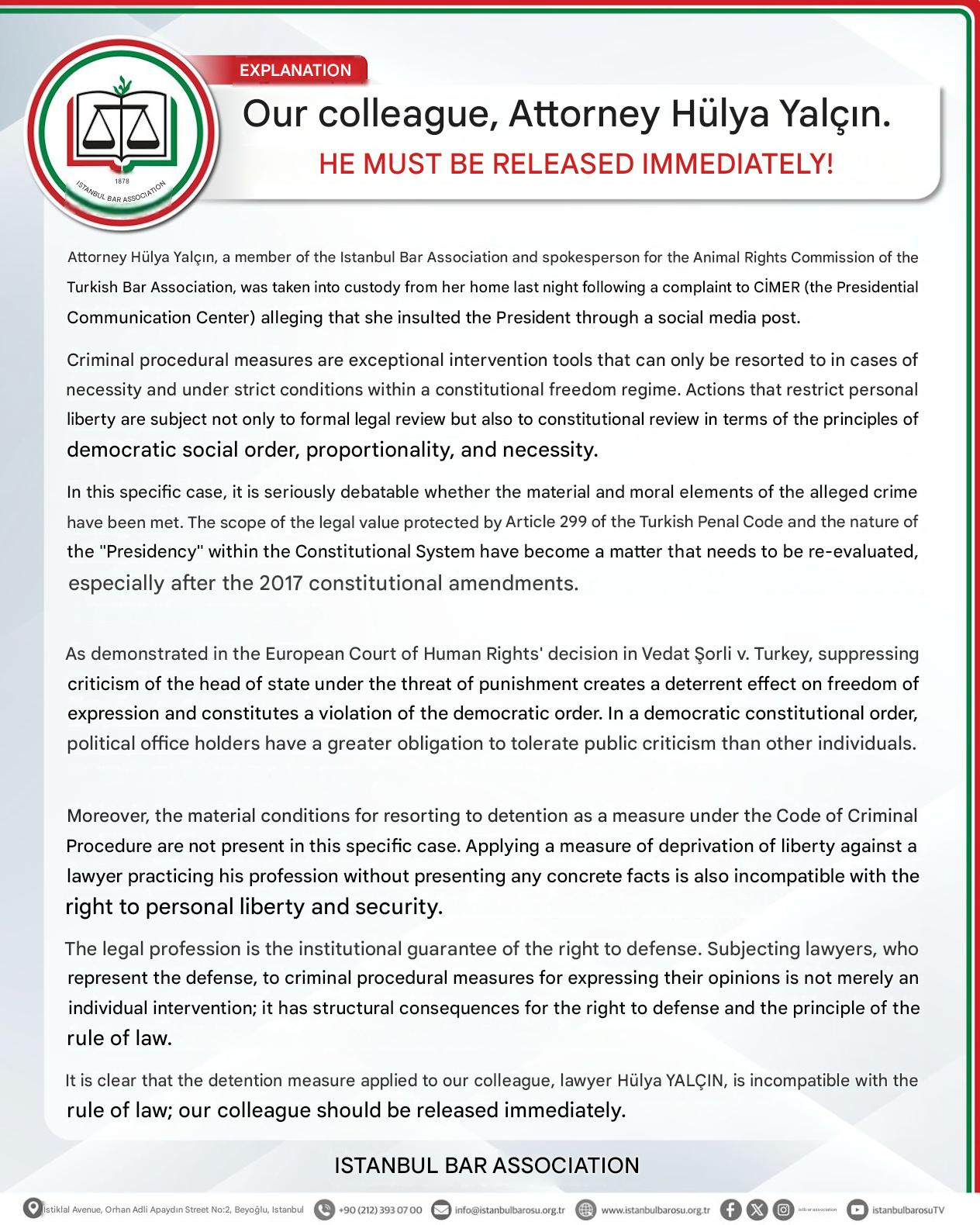
Reports Suggest Instagram Story Triggered Investigation
According to information circulating among Turkish legal networks and social media accounts following the case, the investigation reportedly concerns content Yalçın shared to her Instagram story rather than an original permanent post.
While the exact material involved has not been publicly released in full, temporary social media shares have increasingly formed the basis of investigations in Turkey under speech-related laws.
The case quickly drew reactions from lawyers’ associations and rights advocates, many of whom argued that detention was a disproportionate response.
The Istanbul Bar Association issued a solidarity statement describing the detention as incompatible with the principles of the rule of law and calling for Yalçın’s immediate release.
A Prominent Voice In Animal Welfare Advocacy
Hülya Yalçın has become a well-known figure within Turkey’s animal welfare movement over recent years. Her work has included:
Opposition to large-scale street dog roundups
Criticism of conditions inside some municipal shelters
Public commentary on animal protection legislation and enforcement
Legal advocacy connected to animal rights cases
Supporters describe her as a determined defender of animal welfare and civil society advocacy. Critics, meanwhile, have accused some activists within the movement of using confrontational rhetoric surrounding government-backed animal policies.
The detention comes during a period of heightened tension surrounding Turkey’s stray dog policies, shelter capacity concerns, and increasing debate over the implementation of recent legal measures affecting free-roaming dogs.
The Wider Debate Around Article 299
Article 299 of the Turkish Penal Code criminalises insulting the President and has generated sustained controversy both domestically and internationally. Thousands of investigations have reportedly been opened under the law in recent years, including cases linked to:
Tweets and social media posts
Retweets and shares
Cartoons and satire
Public comments and speeches
Critics argue the provision creates a chilling effect on free expression and political criticism. Supporters of the law argue it exists to protect the dignity of the presidency and public institutions.
Human rights groups and legal observers have repeatedly raised concerns about the breadth of its application, particularly when used against journalists, lawyers, students, activists, and opposition voices.
Why The Case Is Drawing Attention
The detention of a practicing lawyer over online speech allegations has intensified discussion within Turkish legal circles about judicial independence, proportionality, and freedom of expression.
For many observers, cases involving lawyers carry particular significance because legal professionals occupy a central role in defending constitutional rights and access to justice.
As of May 8, international coverage of the case remains limited, with discussion largely concentrated within Turkish media, legal organisations, and social media solidarity campaigns including #HülyaYalçınYalnızDeğildir
Further developments are expected following the court’s decision regarding the prosecution’s detention request.