

Türkiye: 345 Dogs Removed From a Privately Funded Shelter and Placed Into a Municipal System Already Under Pressure

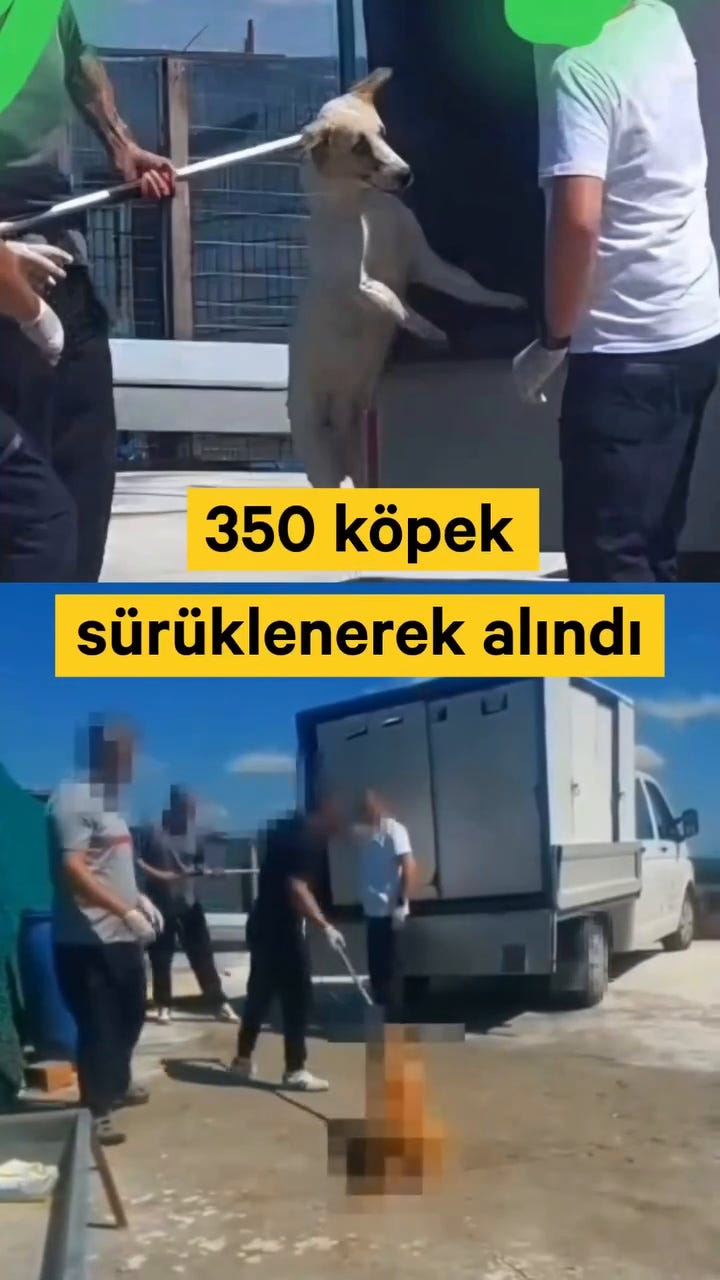
345 dogs have been taken from the private animal shelter run by Melekler Şehri Sokak Hayvanlarını Koruma Derneği in Vize, Kırklareli. Although the main part of the debate concerning the case has focused on licences, permits and administrative procedures, there is a risk that the dogs themselves end up being almost ignored in the argument. Under every discussion about paperwork lie 345 living animals which have been removed from the centre where they were being looked after, captured and handled, transported to another location and then placed into a municipal system that is already responsible for a large number of stray dogs & a large number of deaths nationwide.
The association is advocating for the dogs to be returned and states that it was not given at the time of the intervention any written and reasoned administrative decision setting out the reasons why the dogs had been removed. We are unable to judge whether the action taken by the authorities was lawful, and we would not make such a judgement without having seen the inspection reports and the administrative decision on the basis of which the intervention was carried out. There could well have been valid reasons for removing the animals. However, the reasons for the decision should have been clear, especially as the decision itself have important implications for the welfare of those animals.
A key point in the case is the regulatory status of Melekler Şehri. The association has produced an official document issued by Kırklareli İl Özel İdaresi on 13 September 2023 relating to Akpınar Village, block 101, parcel 41, and this document refers in particular to a Yapı Ruhsatı, that is, a Building Permit, for an Animal Shelter Facility. This shows that the shelter building had not simply been constructed without a building permit. It must be noted, though, that a building permit is not equivalent to all the permissions needed in order to run a private animal shelter. The association admits that the later licensing and building occupancy procedures had not been carried out and assigns the cause of these delays to the iskan process. It has also asked for help with completing the microchip registrations.
Private animal shelters in Turkey function under a regulatory system and have to receive official approval as well as inspection and continuous supervision. The authorities also have the power to take action if they believe legal requirements are not being met, they also have the power to seize animals. Although 345 dogs were taken in this instance, that fact by itself does not prove that an unlawful act has taken place; it does, however, require an explanation of what the inspectors discovered and why it was deemed appropriate to remove so many animals.
If serious neglect, hazardous conditions, or welfare issues were found which could not safely be put right while the dogs stayed in Melekler Şehri, it might have been necessary to remove them even if this meant facing financial or logistical difficulties, since animal welfare must be the top consideration. But if the main problems were instead about licensing, occupancy records, microchip registration or other matters that could be sorted out with the help of the authorities, then it is reasonable to ask why it wasn’t considered better to assist the facility in bringing itself into compliance rather than removing the 345 dogs.
Each of those dogs needs a place to sleep, daily food, clean water, veterinary care, medication when necessary, cleaning, the disposal of waste, exercise, monitoring and staff to look after them. Some will certainly need more assistance than others. Given the size of the population there will probably be older dogs, dogs that are frightened, animals that are being given treatment, dogs with behavioural needs and those used to having particular companions or routines. Putting them into unfamiliar environments causes extra stress, and taking them away from people who know their histories can make their care more difficult.
There is also the question of where all those additional hundreds of dogs can actually be housed. The Vize Municipality already runs a Temporary Street Animal Care and Rehabilitation Centre, which was opened in March 2024 on about five dönüm of land and includes areas for dogs and cats, accommodation for sick animals, observation facilities, an operating theatre and exercise areas. This facility is also part of a broader regional arrangement; a decision by the municipal council in 2025 approved cooperation with the municipalities of Ahmetbey, Kıyıköy and Çakıllı, regarding the treatment, sterilisation, identification, vaccination, registration and rehabilitation of stray animals. Thus, the municipal shelter system already has animals in its care and is responsible on a wider regional basis before any additional hundreds of dogs are added.
We still do not know how many of the dogs from Melekler Şehri were sent to Vize or whether they were split among various municipal facilities. In a case where hundreds of dogs have been distributed throughout the municipal system, each shelter had to find room for them right away while at the same time looking after the animals they already there. The capacity of the kennels does not automatically increase just because another vehicle has arrived at the gate. The veterinary staff do not suddenly get extra hours during the day, and food, medicines, cleaning supplies and staffing do not become available simply because the animals have been transferred as a result of an administrative decision.
The fact that there is a financial burden involved should not be understood as meaning that cost must always be given priority over real animal welfare issues, since the dogs had already been being looked after in a facility funded by private money. Prior to their removal, the costs of their accommodation, feeding and general care had not been borne by municipal budgets; it is now the case that, since they have been placed in publicly funded shelters, those costs have followed them at a time when local authorities across Türkiye are already struggling with the massive task of housing large numbers of dogs.
We cannot find any reliably published daily cost per dog for the Vize municipal system but the scale is clear. The expenses involved in food, veterinary care, medicines, staffing, cleaning, utilities, transport and accommodation, when multiplied for 345 dogs, amount to a considerable ongoing commitment, especially since some of the animals might stay in the shelters for months or even years. The fact that Vize actively encourages adoption from its municipal facility and has recruited volunteers is a good thing, but these actions also show the pressure there is on keeping a large number of animals within a limited shelter system.
That is the reason why the inspection record of Melekler Şehri is so important. We have to find out what had been discovered in earlier inspections, whether there had been notes of serious welfare concerns, whether the association had been given any requirements or deadlines to deal with the deficiencies, and whether the authorities had been working with them to finish the outstanding licensing process. If the facility had serious problems which made it unsafe to continue housing animals there, this should have been recorded. On the other hand, if the previous inspections had found the animals to be adequately looked after and the remaining issues had been mainly administrative, this would raise a completely different question as to whether the removal of hundreds of dogs was the most appropriate response.
Above all, there must be a clear account of the animals in question. We need to find out exactly where they were taken and how many reached each centre. We need to know if veterinary examinations were carried out when they arrived, whether dogs which were already being treated continued to receive treatment, and whether any of them have since fallen ill, been hospitalised, had to be transferred again, been adopted or died. We also need to know if bonded animals were kept together whenever possible and if their individual records followed them.
The discussion concerning whether Melekler Şehri has fulfilled all the requirements of its licensing process will continue, and it goes without saying that private shelter facilities should be required to comply with the law. However, since the purpose of regulation is to protect animals, the effects of any regulatory action also have to be considered. To remove 345 dogs from a well-established location and transfer them into a shelter system which is already under great pressure is not simply an administrative matter; it is a significant decision relating to animal welfare that has an impact on hundreds of individual animals.
There is possibly evidence that fully supports the decision. In that case, releasing the relevant inspection results would give the explanation which is presently absent. If the deficiencies could have been rectified, and at the same time the dogs had remained safely housed and had been privately supported, then it is worth giving serious thought to the reason why that option was not chosen.
They were taken from the place where they had been living, and from the very moment they were loaded onto the vehicles that removed them, responsibility for their welfare was transferred to the people who took them. Although there may have been a disagreement about the permits and licences, the criterion by which one must judge what happened next must in the end be extremely simple: are all 345 dogs safe and are they in a better position than they were before they were removed.
Support the campaign to get the dogs returned
Joint Voice specifically calling for the 345 dogs to be returned
https://jointvoice.com/campaign/1214/
A Change.org petition is calling on Türkiye’s Ministry of Agriculture and Forestry to return the dogs safely to Melekler Şehri and to support the association in completing its outstanding licensing and microchip registration requirements.
https://www.change.org/p/hukuka-ayk%C4%B1r%C4%B1-fiili-durumu-durdurun-ve-hayvanlar%C4%B1-iade-edin