

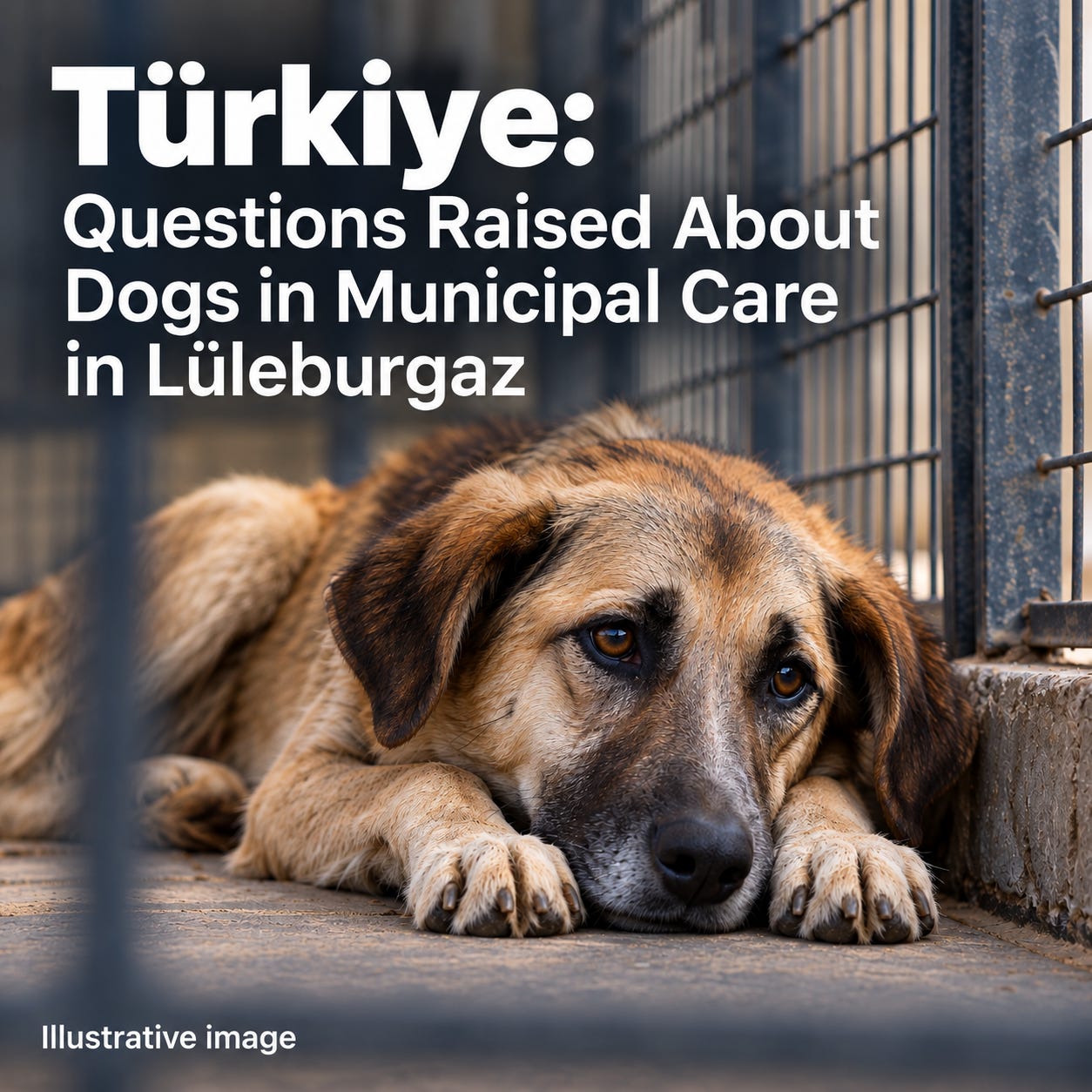
Questions are being raised about the welfare and whereabouts of dogs collected by Lüleburgaz Municipality in Türkiye’s Kırklareli province.
At a public statement on 12 October, local animal welfare campaigners raised concerns about conditions at the municipality’s Temporary Animal Care Centre, including veterinary treatment, sterilisation and the procedures used to collect dogs from the streets.
Among the animals highlighted were dogs suffering from skin conditions and injuries, together with a mother dog that had given birth inside the facility. Campaigners are seeking information about the care these animals received and what subsequently happened to them.
Questions have also been raised about the use of sedatives during collection operations, whether veterinarians accompanied collection teams and whether any dogs died during or following collection.
The concerns are significant because collecting a dog is only the beginning of a municipality’s responsibility towards that animal. Dogs entering care may already be sick, injured or frightened. Some will need immediate treatment, others prolonged veterinary attention, and all require appropriate accommodation and handling.
Perhaps the most important question being asked in Lüleburgaz is a straightforward one: where are the dogs now?
Since Türkiye amended its animal protection legislation in 2024, municipalities have faced increased responsibilities for collecting free-roaming dogs and accommodating them in designated facilities. This has brought shelter capacity, veterinary resources and animal welfare outcomes into sharper focus.
Across Türkiye, considerable attention has been paid to the number of dogs collected from public spaces. Far less visible is the information needed to establish what happens afterwards.
How many dogs remain in municipal care? How many have been transferred to other facilities or adopted? How many have died, and what were the recorded causes? These figures are essential to understanding the consequences of collection policies, particularly when facilities are receiving large numbers of animals.
Accurate records are an important part of animal welfare management. They help ensure continuity of veterinary care, support the planning of resources and provide a clearer understanding of the needs and outcomes of animals entering municipal facilities.
The concerns raised by local campaigners deserve clear answers through the appropriate channels, with the welfare of the animals at the centre of that process.
A dog does not disappear from our responsibility when it disappears from the street. What happens next is every bit as important.