

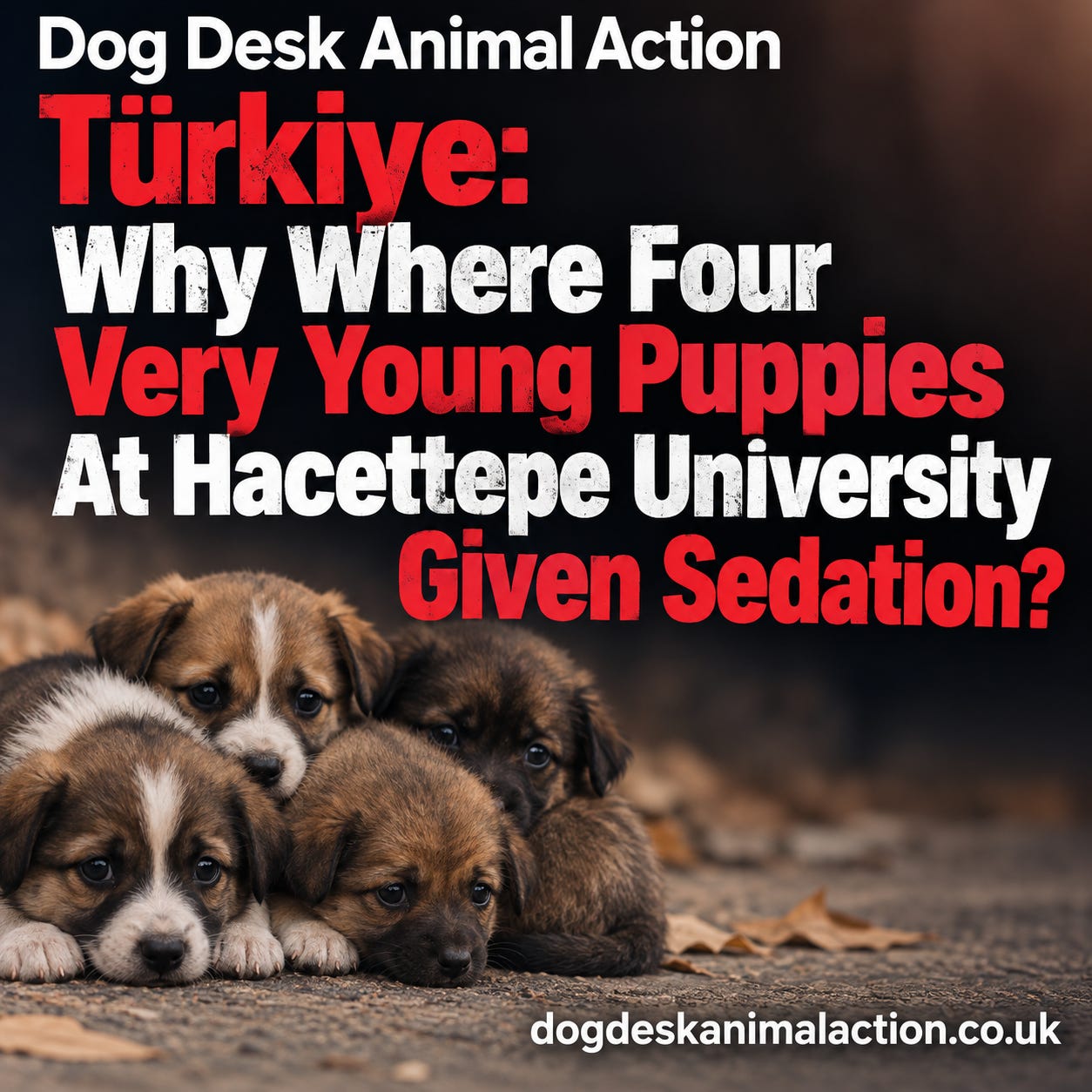
Four very young puppies were collected from Hacettepe University’s Beytepe Campus in Ankara on 10 October 2026, prompting concerns about the methods used to remove them and what has happened to them since.
According to information made public by the Animal Rights Confederation (HAYKONFED), the puppies were so young that their milk teeth had not yet erupted. The organisation alleges that they were administered anaesthetic medication before being transported away in a commercial vehicle bearing an Ankara registration.
The circumstances have raised an immediate question: why would puppies of such a young age need to be sedated for collection?
Sedation can be necessary in certain circumstances, particularly when an animal cannot be handled safely or requires a medical procedure. However, very young puppies would ordinarily be expected to be manageable using gentle handling and suitable transportation equipment. The decision to administer medication should take account of the individual animal’s age, weight, health and circumstances.
Puppies are particularly vulnerable to complications associated with sedation and anaesthesia. Their immature physiology, limited ability to regulate body temperature and susceptibility to low blood glucose require careful assessment, appropriate dosing and close monitoring.
If the puppies were as young as described, their age would also raise questions about their nutritional needs, whether they were still dependent on their mother and what arrangements were made for their care following collection.
HAYKONFED has questioned the reported administration of medication and requested information about the personnel involved, veterinary supervision, the drugs used and the puppies’ subsequent treatment. The organisation has also sought access to collection documentation, veterinary records and CCTV footage.
The allegation that high doses of anaesthetic were administered is particularly concerning, although determining whether a dose was excessive would require information about the medication, the quantity administered, the puppies’ individual weights and their clinical condition.
There is a difference between sedation being medically justified and sedation being carried out safely. Both questions are relevant here.
The reported use of a commercial vehicle raises further questions about transportation arrangements, particularly for animals of such a young age. Puppies require suitable ventilation, protection from temperature extremes and appropriate monitoring during transport. If they had received sedative medication, their condition during the journey would be especially important.
At present, the identity of the collection team and the facility to which the puppies were reportedly taken have not been established in the information publicly available. Nor has a subsequent update been identified confirming their health, welfare or current whereabouts.
This is perhaps the most pressing aspect of the case. Whatever the circumstances of their collection, the immediate concern is whether all four puppies are safe, receiving appropriate veterinary care and, if still dependent on their mother, having their developmental and nutritional needs met.
The incident comes against the background of changes to Türkiye’s animal protection legislation introduced in 2024, which increased municipal responsibilities for collecting free-roaming dogs and accommodating them in designated facilities.
Hacettepe University’s Beytepe Campus has previously been the subject of animal collection activity. In July 2026, reports described an operation involving multiple municipalities during which 39 dogs were reportedly removed from the campus. That earlier operation is separate from the allegations concerning the four puppies in October.
The latest concerns demonstrate why the circumstances of individual collection operations deserve careful attention. Age, health, handling methods, veterinary oversight and transportation arrangements can all have a significant bearing on animal welfare, particularly when very young or medically vulnerable animals are involved.
HAYKONFED has indicated that it is pursuing information through formal channels, including documentation that may help establish what occurred on 10 October.
For now, the most important questions remain unanswered. Were the puppies sedated, and if so, why was this considered necessary? Was a veterinarian responsible for assessing and supervising the procedure? Where were the puppies taken, and what arrangements were made for their care?
Above all, where are the four puppies today, and are they safe?