
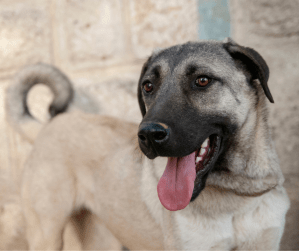
Turkiye’s Proposed Amendments To Animal Welfare Regulation 5199
President Erdogan recently made a statement about stray dogs at the AKP TBMM group meeting in which he urged action to be taken to reduce human / animal conflict.
In recent times the President has been under increasing pressure to control the number of stray dogs considered aggressive & find a solution which prevents accidents, injury & serious harm to people on the streets. In a country such as the UK it is very easy to dismiss some of the negative interactions that cause people to complain about stray dogs.
Most dogs living on the streets are docile & friendly, but not all. Some will have had negative experiences with people which make them nervous & afraid. Some may have litters of puppies they are protecting. Others will have become dependent on people for food & in some cases when that food source has been removed, they will seek it out from whoever crosses their path. Most dogs will move on when they realise that no food is to be had while others will become aggressive. Imagine this scenario. A community feeder hasn’t been able to visit the area for a few days or is completely absent. Somebody approaches the dogs with a bag containing food. This could be from the supermarket, a packed lunch or similar. When they don’t offer the food to the dog it is not difficult to understand that the dog will do whatever they can to access the meal.
It is in the nature of some but not all dogs to chase moving objects such as cars & bicycles. This is due to prey drive & varies from dog to dog. Road accidents & injury to cyclists can occur in some instances.
Currently Turkiye is considered a high risk rabies destination for travellers with this zoonotic disease found in both wild & domestic animals. Gülşen et al quote more than 200,000 rabies risk contacts reported in one year alone. So often we see fear of dogs stem from a fear of contracting rabies & we understand this. It is a very real risk & not something to be underplayed. To mitigate the risk & stop the fear every dog should receive a rabies vaccination. Vaccines are inexpensive & easy to administer, record keeping needs to be meticulous.
President Erdogan has mentioned rabies as a concern to foreign travellers not wishing to visit Turkiye. On the GOV UK website Turkiye is listed as a high risk area. Tourism brings in 500 billion Lira per year to the economy. With many calls to boycott Turkiye on the grounds of humanitarian concerns in addition to animal welfare worries it is unsurprising that the President wants to remove the threat. But killing dogs should never be a treatment plan to prevent infection. There is only one way to eradicate rabies risk in a stray dog population & that is to vaccinate every dog. A monumental but not impossible task.
Erdogan has expressed a need for Turkiye to adopt a European dog management programme. He wishes to see dogs taken from the streets in to European type shelters where they will be spayed & neutered, vaccinated & made ready for adoption. Shelters would advertise the dogs being kept there for perspective pet parents to view & visit. However, he has said that dogs not adopted within 30 days could have their lives ended.
This is most definitely what we do not want to see & we are not alone.
The Turkish Veterinary Association has made its members position very clear. They will not be complying with calls to euthanise healthy animals.
Many Mayors object to the proposal, contrary to what you may see on social media there are many conscientious Mayors who do not wish to harm dogs & many of them are dog lovers themselves with dogs living at home with them & their families.
We vehemently oppose all 30 day rules. Dog Desk Animal Action believes that each life is important, no dog is worth more or less than the next & they all have the right to live their best lives to the fullest. We strongly oppose culling & have made our feelings known at government level
I have always felt that misinformation exists among some of our Turkish friends. Many believe that in the UK we simply end the lives of unwanted dogs in a wanton way in order to remain stray free. That isn’t the case. While it is true that unwanted dogs ARE killed (we don’t know the numbers) there are hundreds if not thousands of folks trying their very best to avoid that happening every day. Dog Desk Animal Action is but one speck in a huge network who spring as many dogs as possible from council pounds that have “7 days to live” policies and place them in rescue or foster. I witness this each & every day with the greatest respect for all involved. While there are “rescue” networks in Turkiye I worry that they will buckle under the pressure of this proposed amendment due to there being so few of them & such a large volume of dogs.
There are far better ways to manage stray dog populations.
In a country with a high stray dog population, it is very easy to toss an unwanted family pet on to the street & this happens with alarming regularity. Before our work in country, we believed the popular opinion of those living overseas that all stray dogs were descendants of dogs born on the streets centuries ago. While that is true to an extent a high percentage of strays were bought as pedigree family pets discarded when no longer wanted, or the mixed breed puppies of these dogs.
The government needs to come down hard on this behaviour, increase policing & fines for abandonment.
In a country with so many unwanted dogs the issue of breeding should be investigated & measures implemented to control the numbers of puppies being born to trade. When pups from unregulated breeding are born in an unsellable condition or are surplus to demand what happens to them? Are they too tossed out to fend for themselves? Should there be a moratorium on breeding in a country with such a high unwanted dog population?
Shepherds widely use Livestock Guardian Dogs & do not sterilise them because they are concerned that the process will make them more docile & less effective at their job. The puppies born are a secondary form of income but when no market for them can be found they are tossed away & left to fend for themselves. Would it not be wise to roll out a scientific programme to measure the dogs effectiveness when not entire. Are dogs who are chemically castrated as docile as those who are surgically castrated. Does spaying affect a females ability to do her job in the field? Can shepherds be compensated for the pups they will no longer have to sell. Should a regulated breeding programme of dogs for the field be in place so as not to over produce working dogs?
People living in remote areas & villages away from the larger towns & cities often lack education regarding population control & the benefits of spay & neuter. They allow unsterilised dogs to roam & produce litter after litter of unwanted puppies to live on the streets. An education officer would be able to explain to them the benefits of spay & neuter. These programmes exist in countries such as Romania & are very effective. Many people lack the financial resources to pay for veterinary care. Free spays for folks on low incomes are available in every municipality, a fact that many people are unaware of. This needs to be better publicised.
Increasing dog ownership & adoption rates will be extremely challenging. In a country with only 5% of homes available to dogs & much of that percentage taken up by breed dogs persuading folks to welcome a stray dog in to their homes will be difficult. Currently most animal lovers are multi dog households who take in as many dogs as they can afford / manage.
Will there be any barriers to adoption if folks can be persuaded to adopt?
High density living is a common feature in many towns & cities. While this shouldn’t be a barrier to dog ownership sadly landlords & property management committees sometimes add no dogs clauses to agreements. The government will need to look at this & ensure that any such caveat to a property is removed. High rise living with dogs isn’t something that is freely accepted in the UK sadly. In many countries dogs live in apartment blocks with their families without incident. As long as walks are given twice a day & requests to go out to the toilet are observed all will be well.
I wonder how the government will build the infrastructure needed to support the proposed amendments if they are voted in?
There are 81 cities & 922 towns in Turkiye most of them do not have a government shelter. In fact very few do. A huge building project will need to be implemented right across the country, which is vast.
Shelter maintenance costs will be significant. The food costs alone will be enormous. How will the pet food producers handle a sharp spike in demand, will they be able to handle the extra volume? Currently the dogs on the street are fed by community carers who feed them whatever they can. Stale bread, pasta & leftover food from restaurants & cafes are given along with any dog food the carer is able to secure.
How will the shelters be staffed?
Each shelter should have at least one animal advocate employed to ensure the dogs needs are being met. Volunteers from local animal associations should be invited to help out with walking, grooming & playing with the dogs. Ideally we would like to see a foreign NGO having some kind of a presence also. Shelters as we know them do not exist in Turkiye, only nursing homes. European NGO’s could bring a great deal of experience & support to Mayors. Street dogs are incredibly well socialised, far more so than most of our dogs. They know all about life outside from traffic lights to icicles. But they don’t know about walls & ceilings & the expectations that living in a human world will place on them. Home from home environments would be wonderful to see in the form of container homes or similar where the dogs can get used to human rules & home environments.
Culling stray dogs has & will NEVER solve the stray dog problem. It has been proven that spay & neuter is an effective tool in population reduction eventually resulting in no stray dogs occupying the area where the TNR has taken place. I am yet to see the report which advises the President against spay & neuter but I have seen multiple others which clearly demonstrate that TNR yields results. It isn’t an instant solution but neither is culling. Other dogs will simply move in to the spaces left by the culled dogs. I cannot imagine that there will be places for every dog in Turkiye to be cleared from the streets at once. Those left behind waiting for their turn will continue to breed.
And what about unintended consequences? It is not unusual for owned dogs to be latchkey, leaving the home or garden & wandering at will returning home for food etc. Microchipping is law in Turkiye but there are always individuals who will neglect to follow the law. Should these unchipped owned dogs be picked up by the municipality they would either be rehomed or killed. You may argue that they shouldn’t be roaming in the first place & you would be right but until that becomes an unacceptable behaviour in communities it will continue to happen.
I believe that we all need to work together to ensure that these amendments are not written in to law. Our Turkish friends are doing a great job of making their feelings known in country. We have been bombarded with requests from activists which sadly we are not able to respond to. We are a charitable organisation & cannot get involved in politics in that way. A clause in our governing document forbids it. But we can advise the government & gather documents for them which support our viewpoint, which we are doing.
We would also request that we are not tagged in social media posts which carry high emotion. We fully understand that folks are worried & upset but we need to be laser focused on the things we can do to ensure the safety of as many dogs as possible. Any distraction from that just hampers progress.
We very much hope that the law is not changed but if it is we are ready. The dogs in the vicinity of the shelter project will be safe from harm. Our only regret is that we are not supported enough to replicate the groundbreaking work we have achieved so far.


