

Viral Comfort vs Brutal Reality: The Social Media Myth About Turkey’s Street Dogs
Historic images still dominate the internet while the reality after the 2024 slaughter law is something very different.

A Quote for Difficult Times
“In a time of universal deceit, telling the truth is a revolutionary act.”
The quote is widely attributed to George Orwell, though there is debate about whether he wrote those exact words. Regardless of its origin, the sentiment captures something very real about the current moment.
For those of us working on the ground for animals, telling the truth can feel like an act of resistance.
Because on social media, the truth rarely travels as easily as a comforting story.
The Algorithm Prefers Comfort
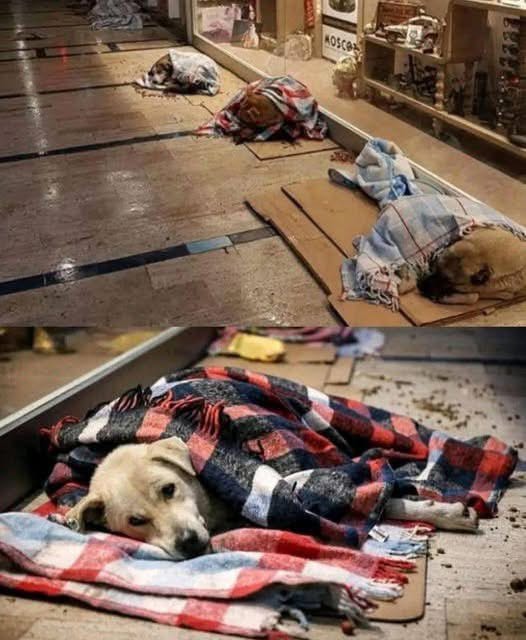
Platforms like X are filled with heart-warming videos of street dogs in Turkey.
Dogs sleeping peacefully in cafés.
Dogs being tucked into blankets.
Dogs wandering freely and happily through markets and neighbourhoods.
Many of these images are genuine. But they are historic.
Some are from years ago, long before the political and legal changes that reshaped the fate of street dogs in Turkey.
Others are reposted endlessly by content creators who have discovered that these clips generate engagement, followers, and sometimes revenue.
The result is a powerful illusion: a digital landscape that suggests everything is fine.
The Reality After the 2024 Law
In 2024, Turkey introduced legislation widely referred to as the slaughter law.
Since then, the reality facing many street dogs has changed dramatically.
Municipalities have intensified round-ups.
Shelters are overcrowded and overwhelmed.
Resources are stretched beyond capacity.
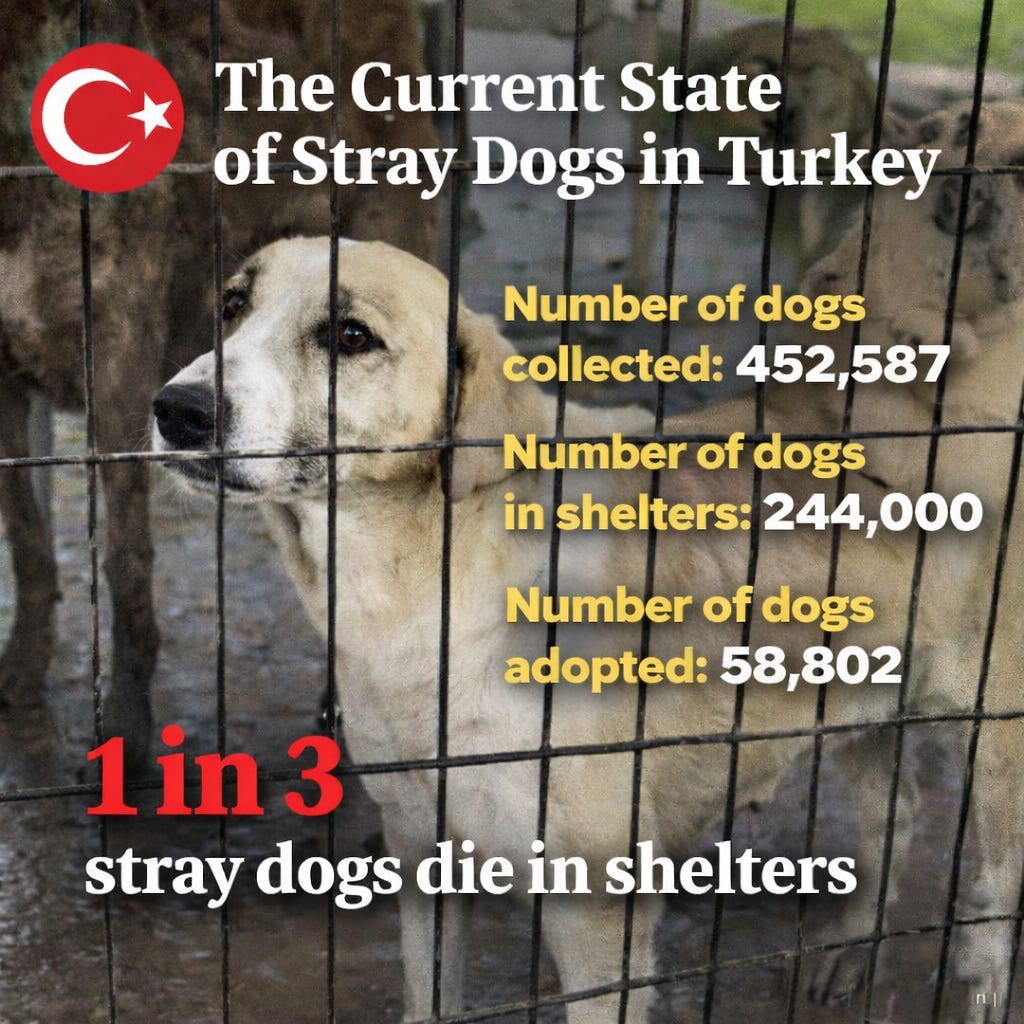
Official government figures now show hundreds of thousands of dogs collected, with large numbers dying within the system.
Behind the gates of many municipal shelters:
dogs are warehoused in overcrowded pens
veterinary care is inconsistent or absent
disease spreads rapidly
death rates are shockingly high
For those trying to document and expose this reality, social media is supposed to be a tool. Instead, it often becomes an obstacle.
The Credibility Gap
Imagine two posts appearing in someone’s feed.
One comes from a huge account with over one million followers.
The video shows dogs peacefully sleeping in a shop, curled up in soft beds.
The caption celebrates the “beautiful culture of street dogs in Turkey.”
It makes people feel good.
The second post comes from a much smaller account with 22,000 followers.
It shows overcrowded shelters & sick animals or animals being culled in horribly cruel ways.
It is uncomfortable. It is disturbing. It challenges what people thought they knew.
Who will the average viewer believe?
The large account that confirms the comforting narrative or the small account telling them something they would rather not see?
Too often, the answer is obvious.
When Truth Is Dismissed
Those of us sharing the reality face a familiar pattern.
We are told:
That can’t be true.
Turkey loves its street dogs.
I saw a video where they all sleep in cafés.
Stop spreading negativity.
In other words, we are dismissed, not believed, and often not supported.
Not because the evidence isn’t there. But because the internet has already decided what the story is.
The Power of Old Images
Two examples illustrate the problem perfectly.
One is a video showing street dogs sleeping peacefully in beds inside a shop.
It’s beautiful.
But the video was filmed before 2024.
The second is a photograph taken during a snowstorm in Istanbul in 2020, showing dogs lovingly tucked into blankets by local residents.
It is a powerful image of compassion.
Both are still circulating widely today.
They are reposted thousands of times as proof that Turkey takes care of its street dogs.
But these images belong to another moment in time.
When they are presented without context, they don’t inform people.
They mislead them.
When Compassion Becomes Content
There is another uncomfortable truth.
Some accounts sharing these images are not malicious. But others clearly understand what they are doing.
Heart-warming animal content attracts followers quickly.
Followers attract monetisation opportunities.
Engagement builds personal brands.
Historic images of happy dogs are perfect fuel for that system.
The problem is that every comforting illusion makes it harder for the truth to be heard.
The Work of Telling the Truth
For smaller organisations like Dog Desk Animal Action, documenting reality is not a marketing exercise.
It is advocacy.
We show what is happening because the dogs cannot speak for themselves.
Sometimes the images are painful. Sometimes social media algoritms punish us for showing the truth. Sometimes the information challenges narratives people want to believe.
But ignoring reality does not help the animals living through it.
Why the Truth Still Matters
Social media may reward comforting stories.
But policy change, public awareness, and real animal protection require something different.
They require truth.
Truth about overcrowded shelters.
Truth about mass round-ups.
Truth about dogs disappearing from the streets.
Even when that truth is unpopular.
Even when it is drowned out by viral videos.
A Final Thought
The internet may prefer the version of reality that feels good.
But animals living through suffering do not benefit from illusions.
If telling the truth feels revolutionary today, perhaps that says more about our information ecosystem than it does about the people speaking honestly.
And until the reality changes, we will continue to document it even when we are not believed, ignored & punished for it.
Because the dogs deserve the truth to be told.