
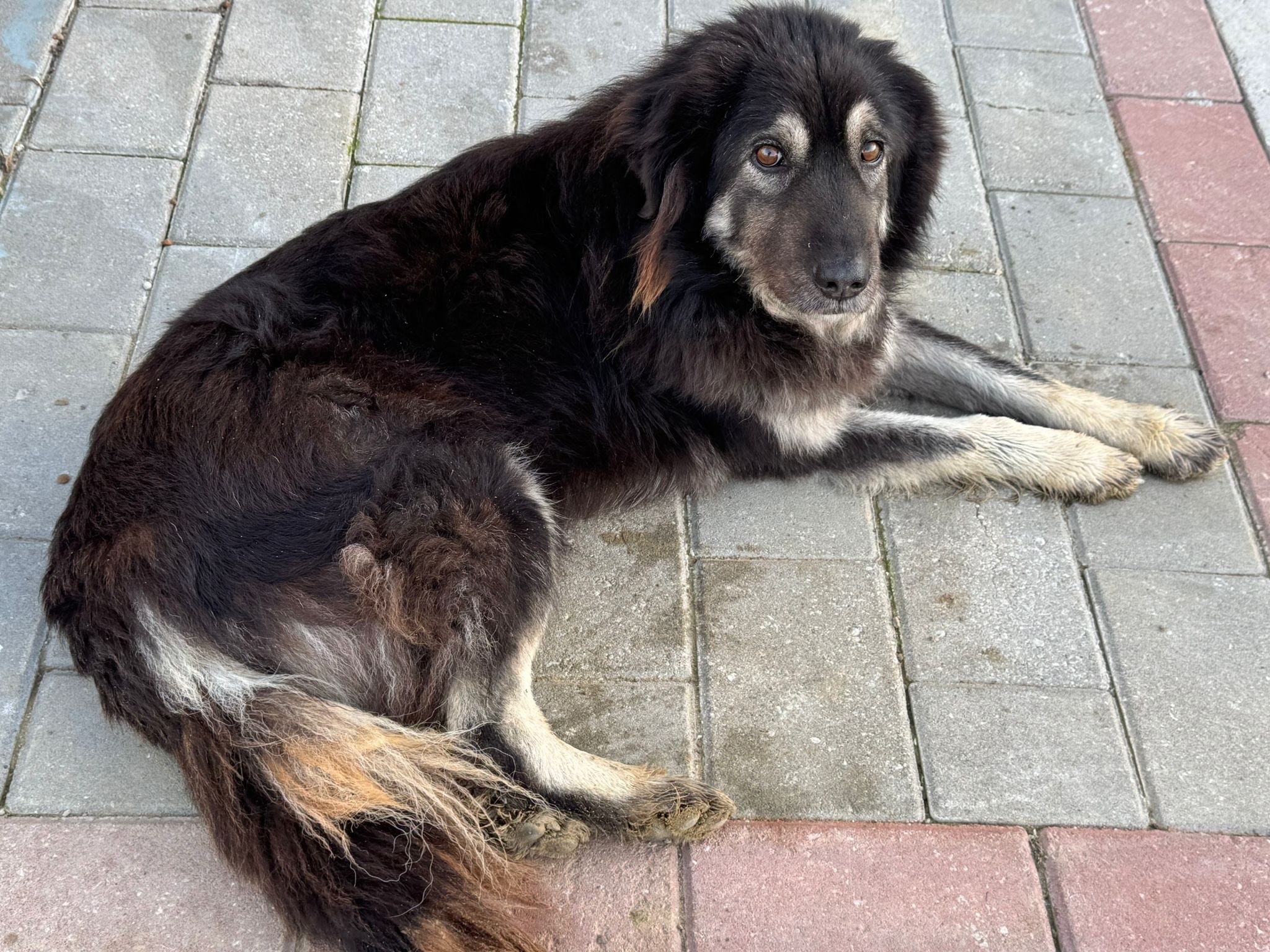
Was Frankie Ever Allowed Indoors To Feel Loved?
What One Facebook Comment Revealed About The Way We Judge Dogs
Sometimes a single comment says far more than the person writing it ever intended.
This week, following our tribute to Frankie after his death, someone asked whether he had ever been allowed indoors “to feel loved”. The comment genuinely upset me because, after almost six years of sharing his life with thousands of people, it reduced everything he had experienced to a single assumption. It suggested that love could somehow be measured by whether a dog crossed a doorway.
Those of you who followed Frankie over the years already know the answer. Of course he came indoors. Frankie lived at the Shelter Project, a large site with multiple buildings where dogs are free to move around, establish their own routines and spend their time in the places they choose. He was never confined to a gate, nor was he expected to stand there all day. What people came to know him for was something entirely different. Somewhere along the way, Frankie decided that every unfamiliar vehicle and every new visitor arriving at the shelter deserved his attention. Nobody taught him to do that, nobody expected it of him and nobody rewarded him for it. It was simply part of his personality. Being the shelter’s guardian was a role Frankie created for himself because that was who he was.
As I thought about the comment, I realised it wasn’t really about Frankie at all. It reflected a belief that many people hold without ever questioning it. In countries like the United Kingdom, we often grow up believing that a loved dog is a dog that lives inside a house. If we see a dog sleeping outdoors, our instinct is to wonder whether it is lonely, neglected or somehow missing out on the life we think every dog should have. Yet that way of thinking is based entirely on our own experiences and cultural expectations. It isn’t necessarily based on what dogs themselves value.
Working with free roaming dogs changes your perspective because you quickly learn that they are individuals with their own preferences, routines and personalities. Some enjoy spending time indoors whenever they have the opportunity. Others show very little interest in it at all. At our Sanctuary Project, where we have the privilege of knowing many dogs over long periods of time, they are free to choose whether they spend time inside, outside in their huts or move between the two. Some happily settle indoors for hours, while others would much rather remain outside with their friends. We don’t decide which is the right choice because the dogs make that decision perfectly well for themselves.
None of those dogs is loved any less because they choose to be outside.
The same is true beyond our own projects. Across the world there are community dogs that have never belonged to a single household, yet they are recognised by name, fed every day, cared for when they are injured and mourned when they die. Their lives look different from the lives of many pet dogs in Britain, but different should never automatically be confused with worse. Love is not defined by four walls. It is defined by relationships, trust, care and the freedom to live in a way that allows each dog to thrive.
That is why the comment stayed with me. It reminded me that one of the biggest challenges facing organisations like Dog Desk Animal Action is not simply helping dogs. It is helping people understand dogs whose lives may be very different from their own. If we judge every free roaming dog against the standards of a British pet dog, we risk misunderstanding almost everything about them, including what makes them feel secure, content and loved.
Frankie never needed a house to prove that he was loved. Anyone who followed his story already knows that. He knew where the people who loved him were, he knew he belonged and he spent almost six years living life on his own terms in the shelter. In the end, perhaps that is the greatest lesson he leaves behind. Before deciding what a good life looks like for a dog, we should first take the time to understand the dog who is living it.


