

We Call Dolphins Intelligent and Then Treat Them Like They Are Not

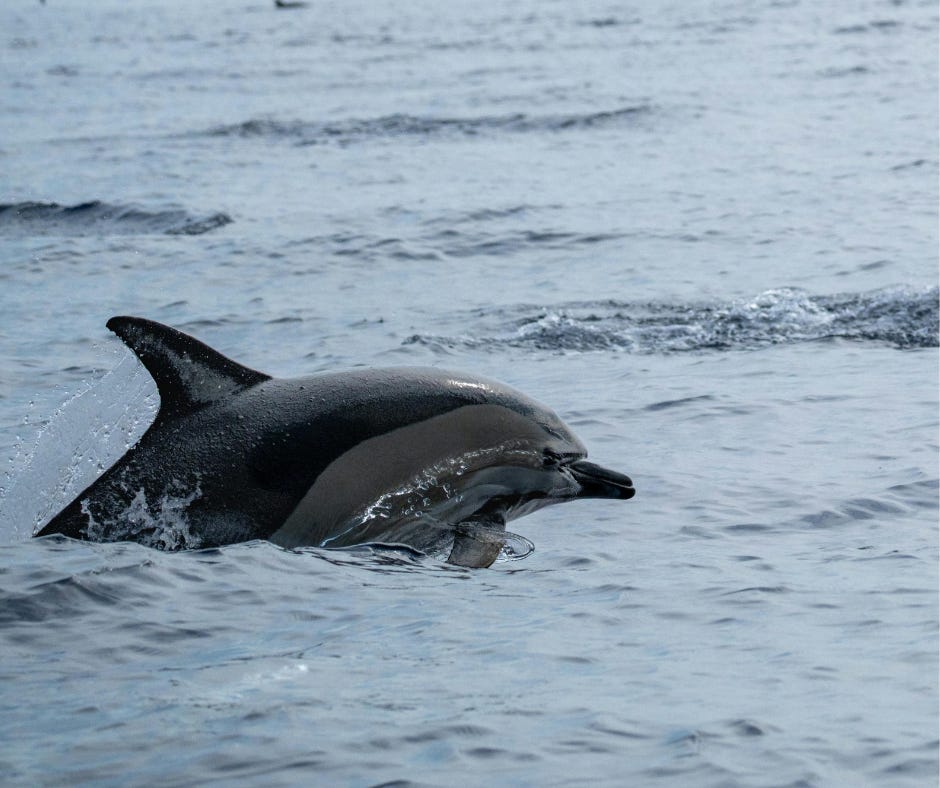
Dolphins are among the most cognitively complex animals on Earth.
They recognise themselves in mirrors. They form lifelong social bonds. They communicate using structured vocalisations that function like names.
And yet, despite knowing all of this, humans continue to exploit, confine, and kill them on a global scale.
This is not a misunderstanding.
It is a contradiction.
Scientific research over decades has established that dolphins possess:
Advanced problem-solving abilities
Strong memory and learning capacity
Complex social structures
Evidence of culture (learned behaviours passed through generations)
Some species, such as the bottlenose dolphin, demonstrate self-awareness, a trait shared with very few animals.
They are not simple, instinct-driven creatures. They are thinking, social individuals.
And that makes what follows significantly harder to justify.
Captivity: Entertainment at a Cost
Across the world, dolphins are still held in marine parks and aquariums.
They perform for audiences.
They interact with tourists.
They are marketed as smiling, willing participants.
The reality is less comfortable:
Tanks are a fraction of the size of natural ocean ranges
Social groupings are artificial and often unstable
Repetitive behaviours (circling, floating, self-harm) are widely documented
Lifespans in captivity are frequently reduced
In the wild, dolphins can travel tens of miles each day. In captivity, they swim in circles.
The issue is not simply space.
It is the removal of autonomy, social choice, and natural behaviour.
Drive Hunts and Direct Killing
In some parts of the world, dolphins are still hunted.
One of the most widely documented examples is the drive hunt, where pods are:
Forced into shallow coves
Separated
Selected for captivity or killed
The methods used are not instantaneous.
They involve prolonged stress, panic, and physical trauma.
Some dolphins are sold into the very captivity systems described earlier.
Others are killed for meat.
This is not a relic of the past. It continues today.
Bycatch: The Invisible Threat
Not all harm is deliberate.
Thousands of dolphins die each year as bycatch, unintentionally caught in fishing gear.
They become entangled in:
Drift nets
Trawl nets
Longlines
Unable to surface for air, they drown.
Because these deaths are incidental, they are often underreported and under-prioritised.
But the outcome is the same.
Noise, Pollution, and Habitat Pressure
Dolphins rely heavily on sound.
They use echolocation to navigate, hunt, and communicate.
Human activity is disrupting this:
Shipping traffic creates constant noise pollution
Military sonar has been linked to strandings
Coastal development reduces habitat
Plastic and chemical pollution accumulate in their bodies
This is a quieter form of harm, but no less serious.
It affects entire populations over time.
The Ethical Problem
The issue is not that we do not understand dolphins.
It is that we do.
We acknowledge their intelligence. We celebrate their social bonds. We describe them as almost human.
And then we:
Confine them for entertainment
Hunt them for profit
Kill them accidentally and accept it as collateral
This is not a knowledge gap. It is an ethical inconsistency.
A Familiar Pattern
For those working in animal welfare, this pattern is recognisable.
We see it with dogs:
Acknowledged as sentient companions
Yet abandoned, controlled, or culled when inconvenient
We see it with farm animals:
Proven intelligence in pigs and cows
Yet treated as production units
Dolphins are not an exception.
They are part of the same broader issue:
We adjust our treatment of animals based on human use, not animal capacity.
What Changes This
Change does not begin with outrage.
It begins with alignment.
If dolphins are intelligent, social beings, then:
Captivity for entertainment becomes difficult to justify
Hunting methods require scrutiny
Fishing practices must be re-evaluated
Marine protection becomes non-negotiable
This is not about sentiment. It is about consistency.
Closing Reflection
Dolphins do not need us to admire them.
They need us to decide whether what we know about them will change how we treat them.
Until those two things align, the problem is not awareness.
It is choice.