


The incident
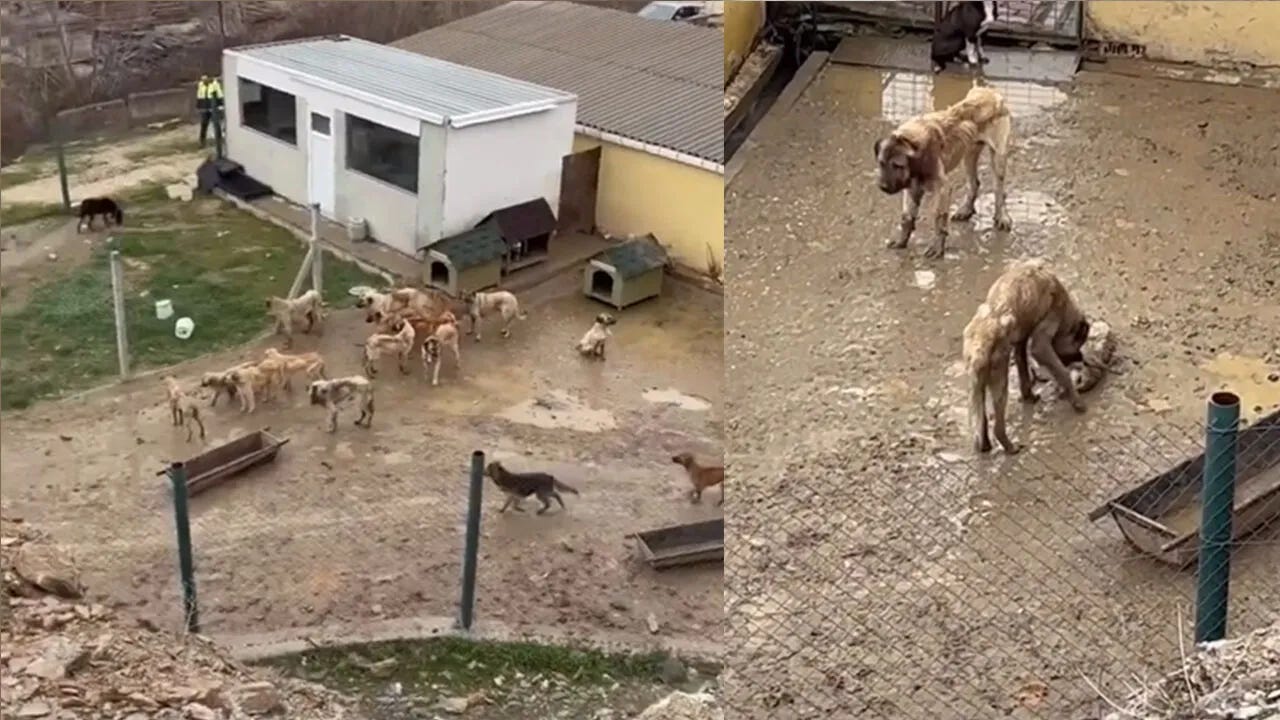
In recent days, images and footage emerging from a municipal shelter in Bozüyük, Turkey, have triggered widespread public concern.
Reports indicate that dogs inside the facility attacked one another, with allegations that some animals were severely injured or killed in the process.
The material circulated rapidly online, prompting a strong response from local residents and animal welfare groups. People gathered outside the shelter, calling for answers and transparency from the authorities.
Access to the site itself appears to have been restricted, with individuals reporting difficulties entering the shelter to independently assess conditions.
At the time of writing, public calls for a formal explanation remain ongoing.
What the footage suggests
While full verification of every claim requires official investigation, multiple accounts describing the situation point to the same underlying concerns:
Dogs appearing underweight
Evidence of aggression between animals
Poor environmental conditions, including hygiene issues
Lack of adequate supervision or intervention
These are not isolated indicators. They are consistent with environments where capacity, care, and management have fallen below the level required to safely contain large numbers of dogs.
This is not dog behaviour it is system failure
Dogs do not naturally exist in conditions where they are forced into sustained conflict over survival.
When dogs attack one another in confined environments, it is typically the result of:
Chronic stress
Resource scarcity (food, water, space)
Lack of behavioural management
Overcrowding
This is not a behavioural issue. It is a structural one.
What is being observed is not dogs being dogs. It is what happens when a system places animals into conditions they cannot cope with.
The predictable outcome of containment without capacity
Municipal shelter systems are increasingly being used as a primary response to free-roaming dog populations. But containment alone is not a solution.
Without:
Adequate staffing
Consistent feeding and veterinary care
Behavioural management
Space proportional to intake
shelters become holding sites rather than welfare environments. And when pressure builds inside those systems, it does not remain hidden. It surfaces often violently.
Public response - a demand for transparency
One of the most significant aspects of this incident is not only what was reported, but how the public responded. Citizens and animal welfare representatives gathered at the shelter, not to assign blame immediately, but to request:
Access
Visibility
Explanation
This reflects a broader shift. Communities are no longer willing to accept closed systems where outcomes cannot be independently verified.
The wider context
What is happening in Bozüyük does not exist in isolation. Across multiple regions, there is growing reliance on:
Rapid collection of street dogs
Centralised containment
Limited long-term infrastructure planning
When intake increases faster than capacity, the result is predictable. Not because anyone intends harm but because systems under pressure fail in consistent ways.
What needs to happen next
The immediate priority is clarity.
What conditions exist inside the shelter?
What caused the reported incidents?
What safeguards are in place to prevent recurrence?
But beyond that, a broader question must be addressed:
What is the role of a shelter?
If it is to protect life, then it must be resourced, managed, and monitored accordingly. If it cannot meet that standard, then the model itself requires urgent review.
A final note
When dogs are left to harm one another, the failure does not belong to them. It belongs to the system that placed them in that position. And until that system is examined honestly, these incidents will not remain isolated.