


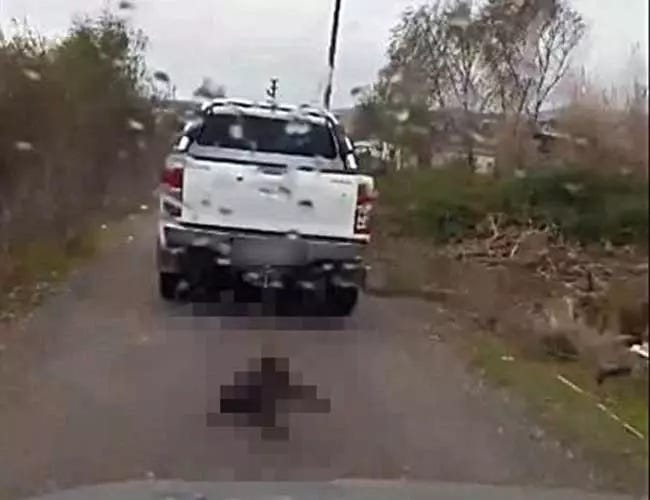
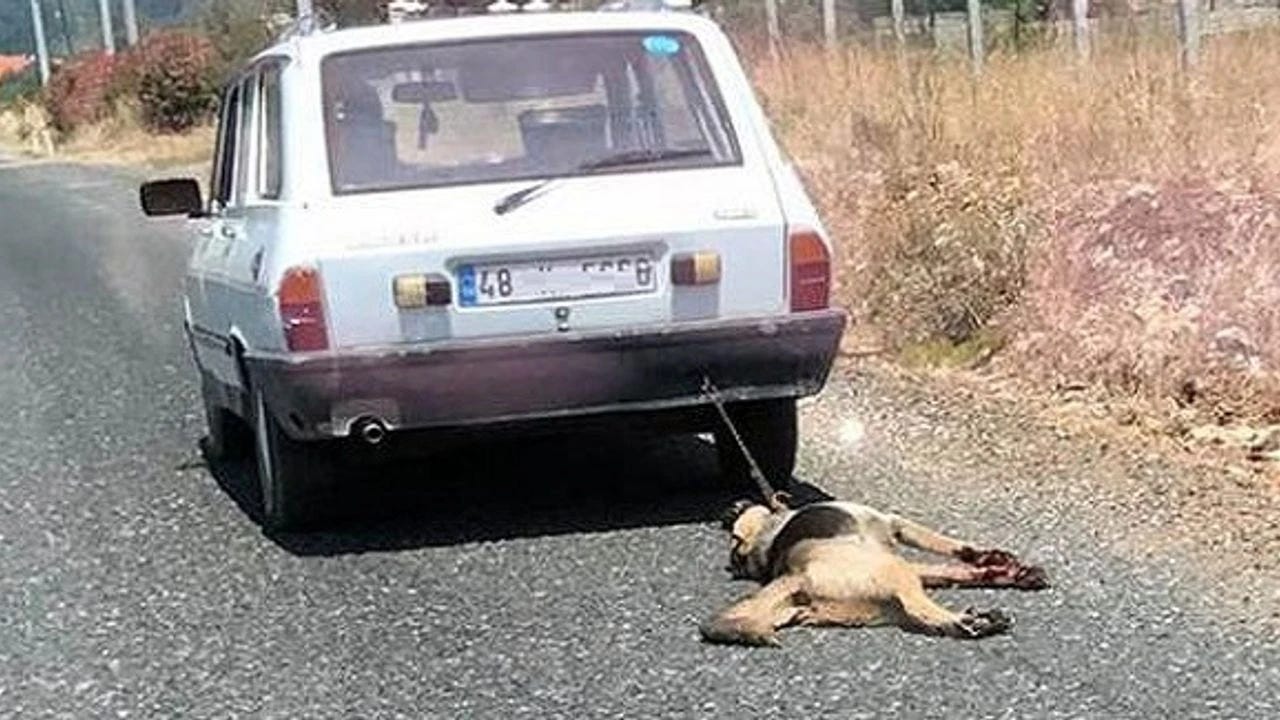
In recent years, multiple cases from across Turkey have made headlines: dogs tied to the back of cars and dragged along the road, sometimes to their death. In one widely reported case from Mersin, a man was investigated after dragging a dog to death behind his vehicle. His defence? He said he had tied the dog in to the back of the truck and did not notice it had fallen out.
In another case reported from Fethiye, a Kangal dog was tied behind a car and dragged, surviving with serious injuries; the footage sparked national outrage.
Over and over again, the public hears the same pattern of excuses:
“I didn’t realise it had fallen.”
“I was only moving it a short distance.”
“That’s how it’s always done in the village.”
These claims sit uncomfortably alongside the reality of what’s involved:
A sentient being tied to a moving vehicle
No supervision of the animal’s footing or safety
No ability for the animal to free itself if it slips, panics or is dragged
Even if there is no intention to torture, the risk of catastrophic injury is obvious to any reasonable person. Legally and ethically, that turns a supposed accident into negligence and, very often, into cruelty.
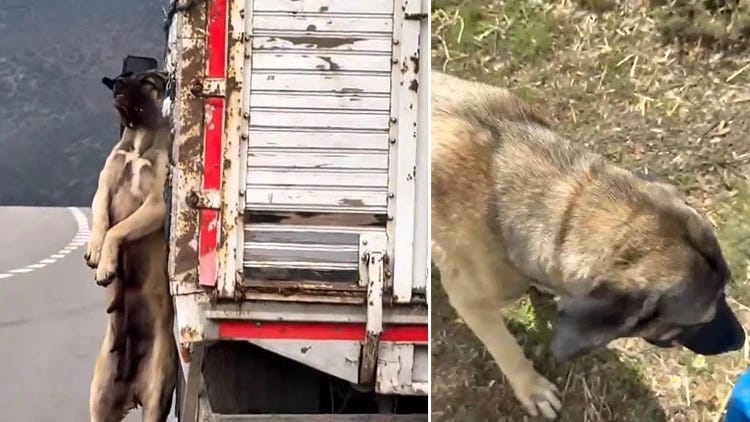
Can a dog fall out of a boot or the back of a vehicle?
Short answer: yes and that is exactly why responsible transport never relies on a dog simply being loose in a boot or tied in the back of a ute/pick-up.
We’ve personally seen:
Dogs tied into open utes (pick-ups)
Dogs placed loose in car boots
Even a cow vet assuming a patient being transferred would travel in the boot of the transport vehicle
Those aren’t edge cases; they reflect a wider mindset that animals can be stuffed into any spare space and will somehow cope.
How could a dog end up outside the vehicle?
From an open back / flatbed / ute
Jumping or falling off a moving vehicle
Losing footing on bends, hills or rough roads
Rope or chain snagging, so the dog is then dragged
From a boot or rear compartment
Boot lid not fully closed or popping open on the road
Dog crammed into a space among equipment, with no restraint
Improvised tying to interior fixtures that fail or slip
Is it physically possible a dog falls out or slips in a way the driver doesn’t immediately perceive? Yes, especially with loud engines, rough surfaces and distracted driving.
But that doesn’t make it an innocent mishap. Leaving a dog unrestrained in the back of a car, or tied to the outside of a vehicle, is as foreseeable a risk as putting a child unbelted on a trailer. You don’t get to claim surprise when the predictable happens.
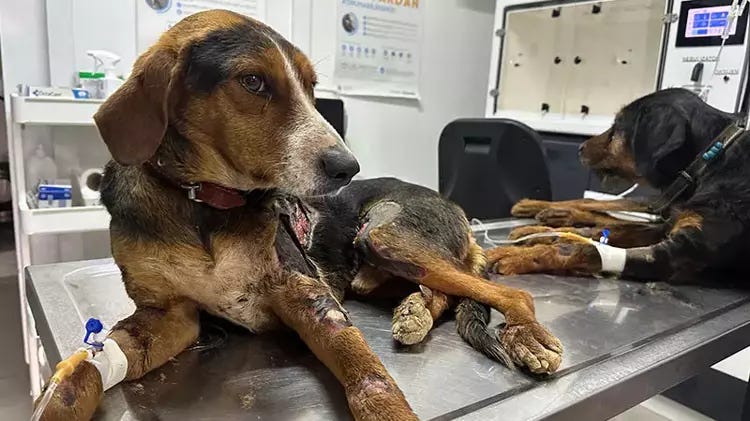
Why do people transport animals so dangerously?
None of this happens in a vacuum. Several factors come together:
1. Animals still seen as property or equipment
Although the law now recognises animals as living beings, culturally many people still treat them as replaceable tools for guarding, herding or pest control rather than as individuals who can feel fear and pain.
That mindset makes it easier to:
Toss a dog into a boot like a spare tyre
Tie a dog to a truck as if it were just cargo
Accept serious injury or death as a tolerable loss
2. “This is how we’ve always done it”
In rural areas especially, there’s a long history of transporting animals in the backs of trucks, farm vehicles and trailers with minimal restraint. Practices that might have made crude sense at low speeds on village tracks are now played out in fast, modern traffic.
When even professionals assume boot transport is normal, it reinforces to owners that this is acceptable and routine.
3. Convenience and cost
Safe transport requires:
A crate or transport box
A harness and seat-belt adaptor
Space inside the cabin rather than out of the way in the boot
For people who see animals as low priority, that feels like extra effort and extra expense. The boot or open truck bed feels free and easy and because they got away with it last time, they assume they always will.
4. Lack of education about welfare and risk
Many people genuinely don’t understand:
How quickly heat builds in a closed vehicle
How frightening and painful being dragged, jolted or thrown around can be
How often crashes are caused by loose animals distracting drivers something Turkish vets explicitly warn about, stressing that pets should travel in secured carriers.
5. A wider culture of disposability around street dogs
Turkey’s street dogs live under constant threat from poisoning, shootings, and now from new euthanasia provisions in stray dog legislation. Activists warn that such laws send a signal that dog lives are expendable.
When the state treats dogs as a problem to be removed, it becomes easier for individuals to treat them carelessly too.
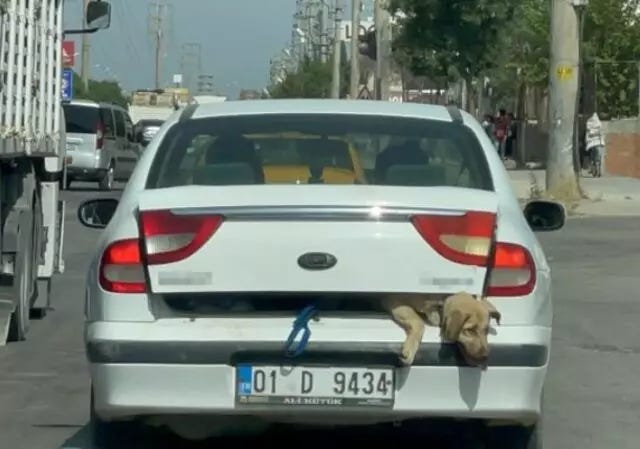
What Turkish law actually says about transporting animals
On paper, Turkish law is far stronger than many people realise and it clearly covers unsafe transport.
Animal Protection Law No. 5199 – core principles
The purpose of the Animal Protection Law (No. 5199) is:
To ensure that animals are afforded a comfortable life and receive good and proper treatment, to protect them … from the infliction of pain, suffering and torture, and to prevent all types of cruel treatment.
Critically, Article 4 sets out basic principles, including that:
Animals must be cared for, fed, sheltered and transported under conditions suited to their species.
Anyone who transports animals or has them transported must do so in a suitable environment and under suitable conditions, and must provide for their needs during transport.
Tying a dog to the outside of a car, leaving a dog loose in the boot, or failing to restrain a dog in a way that prevents it being thrown or dragged is plainly incompatible with those principles.
After hitting an animal: legal duties on drivers
The same law also regulates what happens if a vehicle injures an animal. Article 21 states that a driver who hits an animal and causes harm is legally obliged to:
Take the animal to the nearest vet or treatment unit, or
Ensure that it is taken there
Failure to do so triggers an administrative fine.
In other words, leaving an injured dog on the roadside is a direct violation of the law yet it remains common.
2021 amendments: cruelty can mean prison
In 2021, Law No. 7332 amended Law 5199 and related provisions of the Turkish Penal Code. Key changes include:
Animals are now explicitly recognised as living beings rather than mere property.
New offences and penalties were introduced, including imprisonment for:
Deliberately killing a pet or other animal
Torturing or cruelly treating an animal
Making animals fight
Legal analyses note that these crimes are now punishable by prison sentences, and administrative fines have been increased.
From a legal standpoint, deliberately tying a dog to a vehicle and dragging it, or transporting it in a way that foreseeably leads to severe suffering, can clearly fall under torture or cruel treatment and deliberate killing.
So is unsafe transport illegal?
Taken together:
Law 5199 requires animals to be transported under appropriate, safe conditions.
The same law and its amendments criminalise severe cruelty, torture and deliberate killing.
An owner or driver has a legal duty of care toward animals in their charge.
That means:
Tying a dog behind a car or on the outside of a moving vehicle is unlawful it is neither suitable conditions nor compatible with the duty to prevent suffering.
Leaving animals unrestrained in boots, flatbeds or ute backs where they can fall, jump or be thrown is at minimum negligent and arguably cruel, because the risk of serious injury is obvious.
If the dog dies or suffers serious injury, prosecutors can and should interpret this as a criminal offence under the Animal Protection Law and the Penal Code, not just a mistake.
The problem is not a lack of law, but a lack of enforcement and a lack of will to treat these cases as serious crime.
Accident or abuse? Red flags that matter
When assessing a case, some questions are helpful:
Was the animal tied outside the vehicle or left unrestrained in a risky place?
Did the driver notice public distress, shouting or honking and continue anyway?
Did the driver stop immediately when informed?
Did they seek veterinary help, or drive on as if nothing had happened?
Is there a pattern other reports of neglect or cruelty?
Almost all it was an accident stories collapse under these questions. An honest mistake is possible; wilful disregard for suffering is far more common.
What needs to change?
1. Normalising safe transport
Inside Turkey, vets and welfare organisations already advise:
Transport dogs inside the vehicle, not on top, not on the outside
Use a crate, carrier or crash-tested harness, fixed to a seatbelt point
Never leave an animal alone in a parked vehicle, especially in heat
These basic messages need to be repeated everywhere: at veterinary clinics, police checkpoints, driving schools, petrol stations and by every professional who handles animals.
2. Zero tolerance from professionals
It is not acceptable for any vet to suggest boot transport as normal. Every professional who touches animal welfare should:
Refuse to load animals into unsafe spaces
Insist on crates or suitable restraints
Document and report unsafe practices when they are forced to witness them
When professionals treat cruelty as just how things are done, they legitimise it for everyone else.
3. Real enforcement of existing law
Authorities in Turkey already have:
The Animal Protection Law, with explicit transport and cruelty provisions
The power to impose fines and initiate criminal investigations in serious cases
They need to use those tools consistently:
Immediate seizure of animals being transported dangerously
Prosecution in cases of dragging, heatstroke in cars, and grossly unsafe boot/ute transport
Publicising convictions to send a message that these acts are crimes, not accidents
4. International pressure and solidarity
As new stray dog laws threaten to make dogs even more disposable in practice, international voices matter more than ever.
Campaigners, NGOs and foreign visitors can:
Call out unsafe transport when they see it
Support Turkish activists who have been fighting this battle for decades
Press embassies, institutions and tourism bodies to recognise and condemn visible cruelty, including dogs being carried or tied unsafely on roads
In summary
Yes, a dog can fall out of a boot. Yes, a dog can slip from the back of a ute. But when an animal is dragged until its body gives out, that is not a random twist of fate. It is the final, horrifying consequence of a choice, the choice to treat a living being as luggage.
Turkish law already demands that animals be transported safely and bans cruel treatment. The question is no longer what the law says; it is whether society is prepared to enforce it and admit that these “accidents” are, in truth, preventable acts of cruelty.
Canakkale October 2025
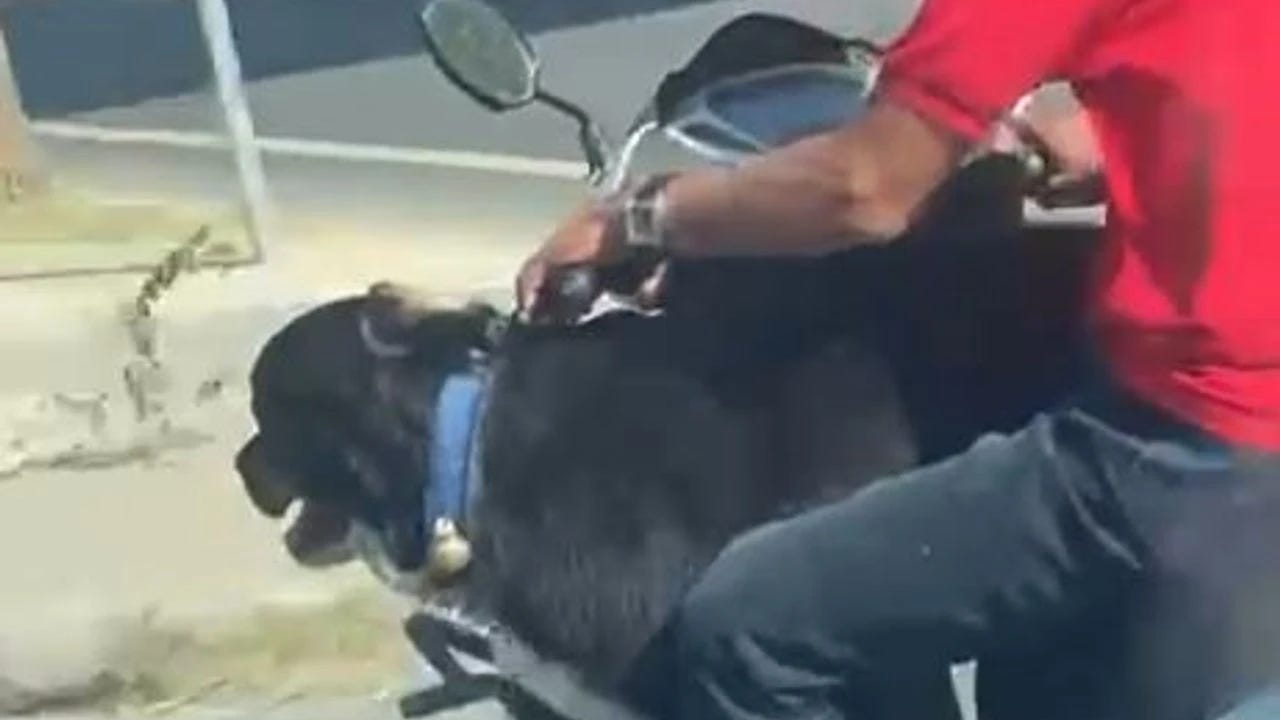
Unsecured Dogs on Motorbikes Viral Cruelty Disguised as Entertainment
Transporting dogs unrestrained on motorbikes is not quirky or adventurous it is dangerous, negligent, and often illegal. Yet some social media content creators and influencers have turned it into entertainment, posting viral clips of dogs perched on scooters or motorcycles simply to gain views, followers, and monetisation.
This trend normalises risk and disguises cruelty as comedy. A single pothole, sudden brake, or horn blast can throw the dog off balance and kill them instantly but these dangers are ignored when virality becomes more valuable than welfare. These influencers are not raising awareness; they are creating content at the expense of an animal’s safety.
Worse still, when millions of people view this content, it sends the false message that such behaviour is acceptable or even cute encouraging copycat behaviour and undermining animal welfare laws that exist to prevent exactly this kind of neglect.
A living being is not a stunt prop. Influencers have a responsibility to set an example, and platforms should not reward content that places animals in avoidable danger. True advocacy means protecting animals from harm not putting them at risk for clicks.
Whenever you see unrestrained dogs travelling on motorbikes or mopeds please call it out for what it is. Dangerous monetising behaviour with no regard for welfare.