

When a Hybrid Becomes a Headline, Welfare Gets Left Behind

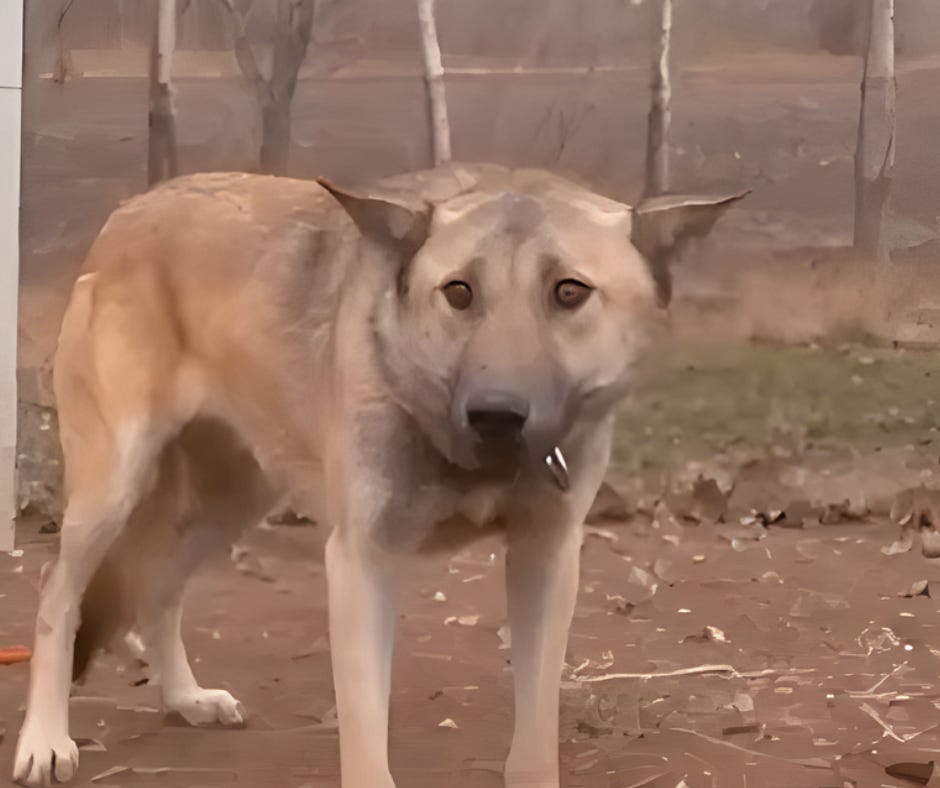
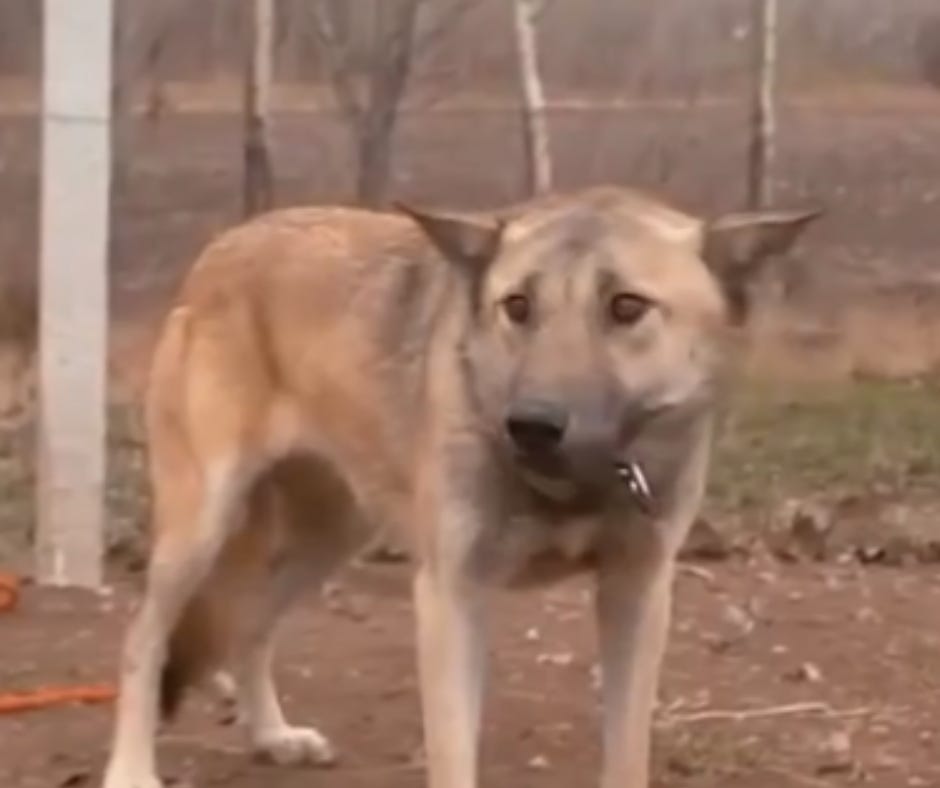
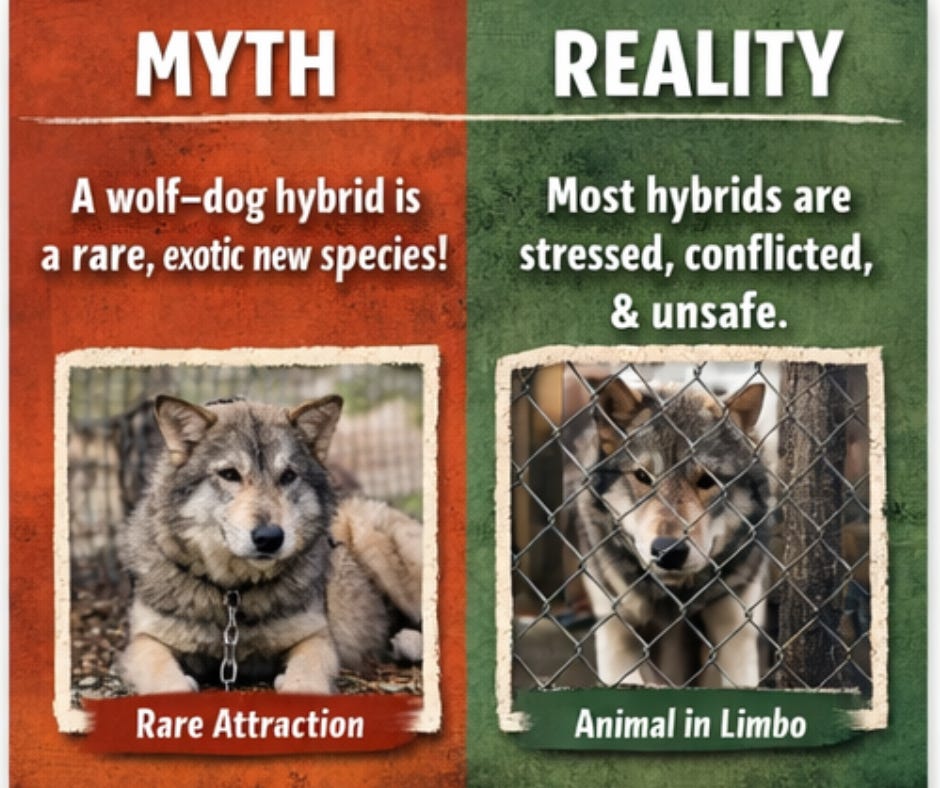
A recent local news story has begun circulating online claiming that the mating of a wolf and a Kangal Shepherd Dog has produced a so-called hybrid species, now attracting visitors and curiosity.
The coverage frames the animal as unusual. Rare. Fascinating.
Something to see. But from an animal welfare perspective, stories like this don’t spark excitement. They raise red flags. Because whenever animals are treated as spectacles rather than individuals with needs, the outcome is rarely positive for them.
At Dog Desk Animal Action, we believe it’s important to slow the narrative down and ask a simpler question:
Is this actually good for the animals involved?
Headlines describing a new type of animal make it sound extraordinary.
But biologically, it isn’t. Dogs are descendants of wolves. Genetically, they’re extremely close. A Grey wolf and a domestic dog can interbreed.
That doesn’t create a new species. It simply creates a hybrid. And hybrids are not automatically special or beneficial. In fact, they often come with complications.
So the more important conversation isn’t novelty. It’s welfare.
The welfare risks nobody is talking about
Hybrids don’t neatly inherit the “best of both”. More often, they inherit conflicting instincts.
Dogs have evolved for thousands of years to live alongside humans. Wolves have evolved to survive independently in the wild. A hybrid can end up stuck between those worlds. Not fully suited to either.
This can mean:
fearfulness or mistrust of people
high prey drive
strong roaming or escape instincts
stress in confinement
difficulty training or socialising
unpredictable behaviour under pressure
And when an animal doesn’t behave like a typical pet or farm dog, what usually happens?
They aren’t given more understanding. They’re labelled “problematic”. Too often they are chained, isolated, surrendered or destroyed.
The animal pays for our curiosity.
How natural is this really?
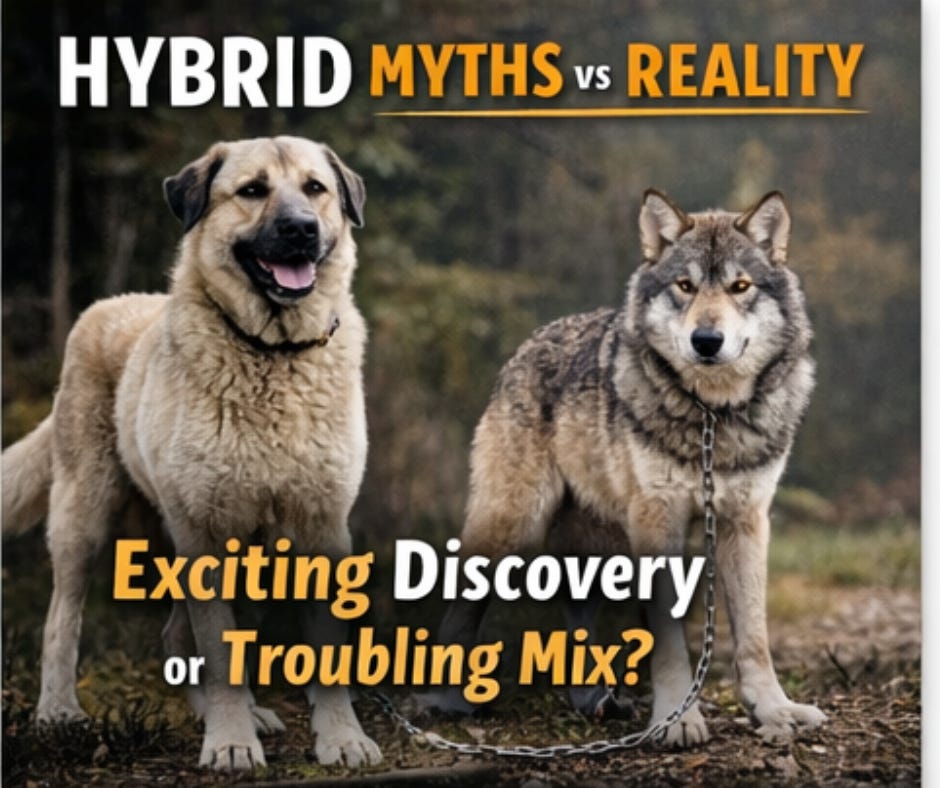
Stories like this are often framed as if two rivals met in the wild and nature simply took its course. But behaviourally, that’s unlikely. Kangals weren’t bred to socialise with wolves. They were bred to drive them away.
For centuries their job has been to:
patrol
guard
bark
chase
deter predators
A wolf approaching a working Kangal isn’t romance it’s conflict. In genuinely wild conditions, avoidance is far more likely than mating.
So when hybrids do occur, human factors are usually involved:
poor fencing
confinement
animals kept unnaturally close together
free-roaming dogs entering wolf territory
or intentional/accidental breeding
In other words, these pairings are often the result of human management, not some magical wildlife moment. That distinction matters. Because it changes the story from nature created something fascinating to:
why were these animals in a situation where this could happen at all?
Health and long-term risks
Beyond behaviour, there are physical concerns too:
unpredictable size and strength
difficult births for the mother
stress sensitivity
inconsistent temperaments
unknown long-term health outcomes
Unlike conservation programmes or carefully managed breeding plans, these situations rarely include any welfare planning at all.
The animals simply exist and then people decide what to do with them.
That’s not protection. That’s chance.
The danger of sensationalising hybrids
Perhaps the biggest risk isn’t genetic. It’s cultural. When media presents hybrids as:
attractions
curiosities
rare mixes
photo opportunities
it encourages people to seek or even recreate them. We’ve seen this pattern before with wolfdogs, exotic crosses, and designer animals. It starts with fascination. It ends with abandonment.
Trends fade.
Animals don’t.
Where we stand
We don’t see hybrids as entertainment.
We see individuals with complex needs who may struggle to live safely in either world.
Wild animals deserve to remain wild. Domestic dogs deserve stable, secure lives with people.
Blurring that line for novelty rarely benefits the animal.
So instead of asking:
“How interesting is this mix?”
We should be asking:
“Will this animal have a good life?”
If the answer isn’t clearly yes, then the story isn’t heart-warming. It’s concerning. And that’s exactly how we believe it should be reported.