

When One Rescue Dog Story Overshadows a Million Others

Every few weeks, the internet falls in love.
A single dog’s story breaks through the noise: a wounded puppy pulled from rubble, a paralysed stray learning to walk, a street dog boarding a plane to a new life. The video is perfectly edited. The music swells. The comments explode with hearts, tears, and promises of adoption. Within hours, applications flood in. Donations pour. That dog’s future is secured.
And then the feed refreshes.
Behind that one miracle are thousands of dogs who will never trend, never be shared, never be chosen. Dogs with the same injuries, the same fear, the same capacity for love but without the lighting, the algorithm, or the story that fits into a 30-second reel.
This is the uncomfortable truth:
Viral rescue saves individuals, but it can distort how we see the crisis as a whole.
The Illusion of Problem Solved
Viral stories create a powerful emotional payoff. We watch suffering turn into safety. We feel hope. We feel relief. We feel like we have witnessed a victory.
But this can quietly create the illusion that rescue is mostly about happy endings that for every dog in danger, there is a queue of people waiting to help. In reality, for every animal who goes viral and finds a home in days, there are hundreds who wait months or years, and many who never leave the shelter alive.
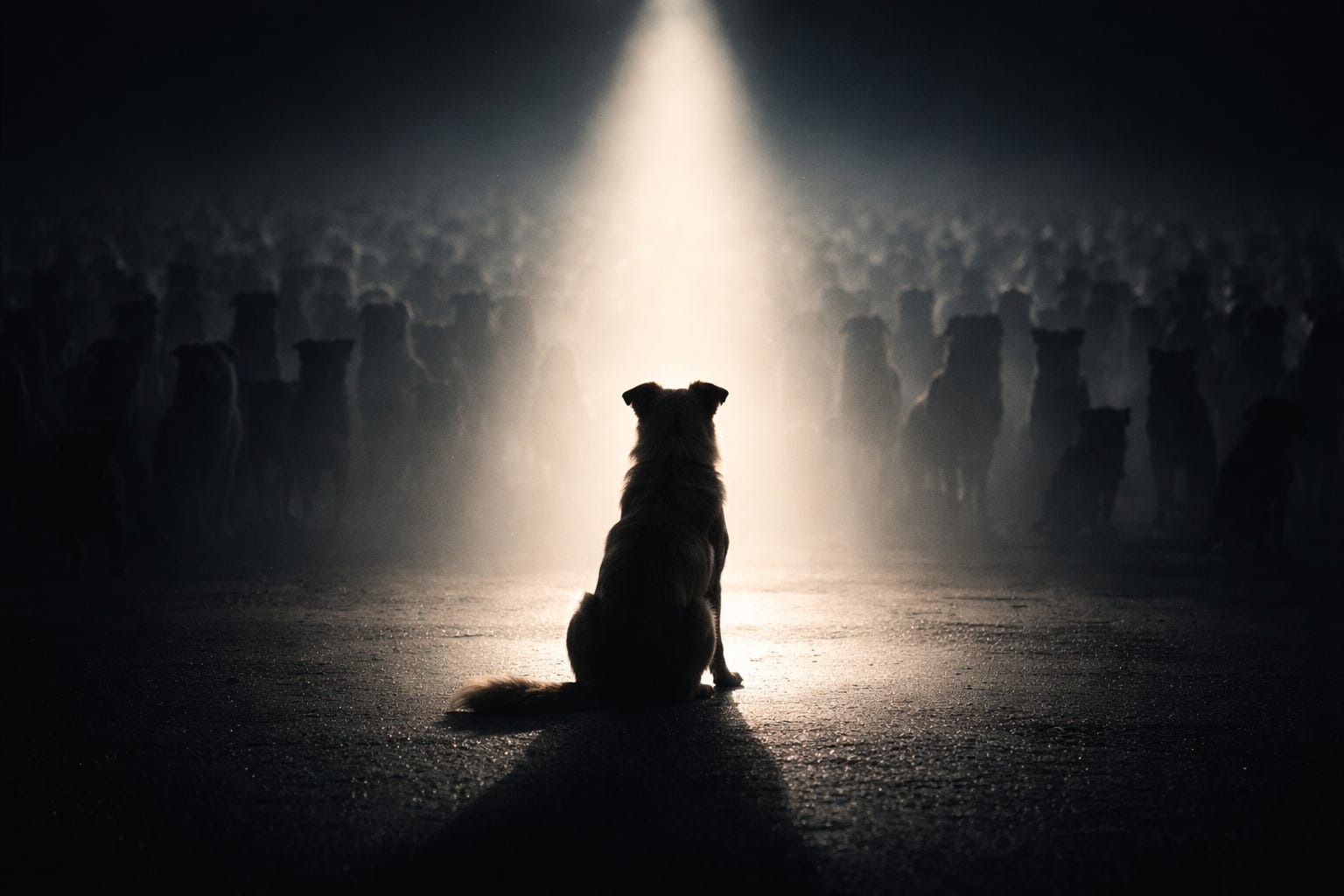
The spotlight makes one dog visible.
The darkness hides the rest.
The Bias of Beauty, Youth, and Drama
Algorithms favour what is visually striking and emotionally intense:
Puppies over seniors
Light-coloured dogs over black dogs
Injured-but-salvageable over chronically ill
Dramatic rescues over quiet neglect
Before and after transformations over slow, unglamorous recovery
As a result, public empathy becomes skewed. People do not mean to be selective, but they are trained by what they are shown. The ideal rescue dog becomes a narrative, not a reality.
Yet in shelters and on the streets, most dogs are:
Adult or elderly
Plain-looking mixed breeds
Not photogenic
Sick in ways that don’t make for cinematic recovery videos
Simply ordinary
Ordinary dogs suffer just as much. They love just as deeply. They deserve just as fiercely.
When Compassion Becomes Competitive
Another hidden harm of viral rescue culture is comparison.
Rescue organisations feel pressure to produce “content” rather than focus on care. Animals become unintentionally ranked by shareability. Cases that don’t perform well online can struggle to receive funding, even when their medical needs are greater.
The value of a life should never be measured in views.
When Speaking for the Unseen Brings Backlash
I learned first hand how uncomfortable this conversation can be.
When one particular rescue dog went viral, I wrote a kind, caring post congratulating him and wishing him a beautiful future. Alongside that, I gently tried to highlight a wider truth: that for this one dog receiving global love and adoption offers, there are countless others just like him who will never be seen, never be chosen, never celebrated.
The intention was never to take anything away from him. It was to remind people that his story, as wonderful as it was, represented only one life among millions still waiting.
The response was not compassion.
It was hostility.
Supporters of the organisation connected to the viral dog began harassing both me and other small rescues. The reaction was so aggressive and relentless that, in the end, I was forced to delete the post entirely.
That experience revealed something deeply troubling.
Somewhere along the way, rescue had become tribal. One dog’s story had become untouchable, as though acknowledging the millions still suffering somehow threatened the happiness of the one who made it out. As if compassion were a limited resource that had to be defended, rather than expanded.
But advocating for the unseen is not an attack on the seen.
It is the very heart of rescue.
The Million Who Never Go Viral
For every dog the world rallies around, there are a million like him:
Lying quietly in a kennel, overlooked
Hiding in a corner, too afraid to perform
Ageing behind bars while puppies are chosen
Black, shy, scarred, sick, or simply unlucky
They will never be the face of a campaign.
They will never trend.
But their need is no smaller.
What Real Awareness Looks Like
Viral stories are not the enemy. They can open hearts and wallets. They can introduce people to rescue who might never have cared before. But they must be framed responsibly.
True advocacy reminds people that:
The viral dog is not the exception he is the representation.
For every success story, there are countless silent ones.
Adoption should not be driven by trends, but by commitment.
Support must extend beyond the one face on the screen to the invisible many.
A Call for Wider Compassion
The goal is not to stop celebrating viral dogs.
The goal is to stop forgetting the masses.
Love the viral dog.
Donate for him.
Cheer for his happy ending.
But then look past the spotlight.
Look into the shadows where hundreds of silhouettes wait.
Not famous. Not filtered. Not chosen.
Yet just as alive.
Just as hopeful.
Just as worthy.