


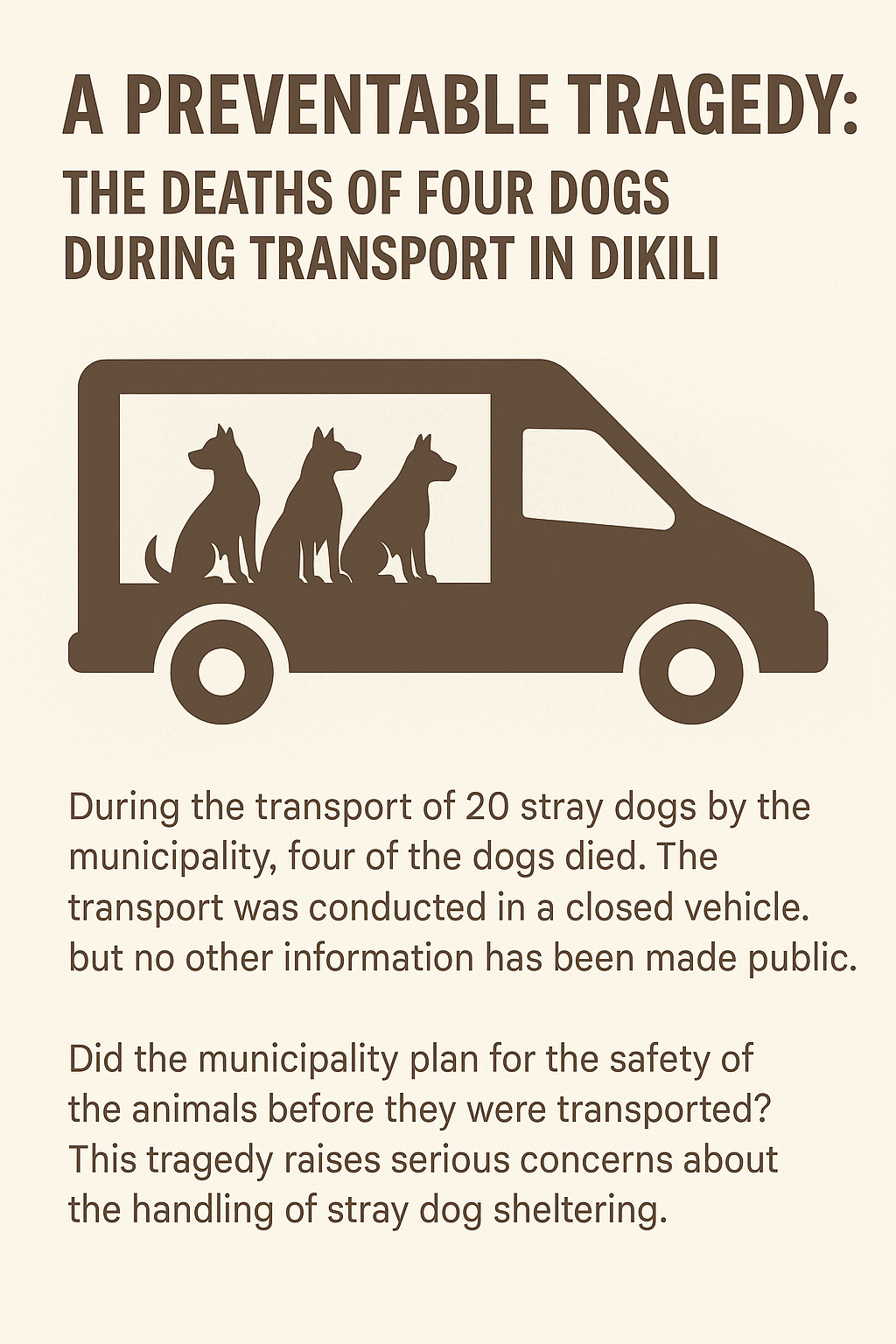
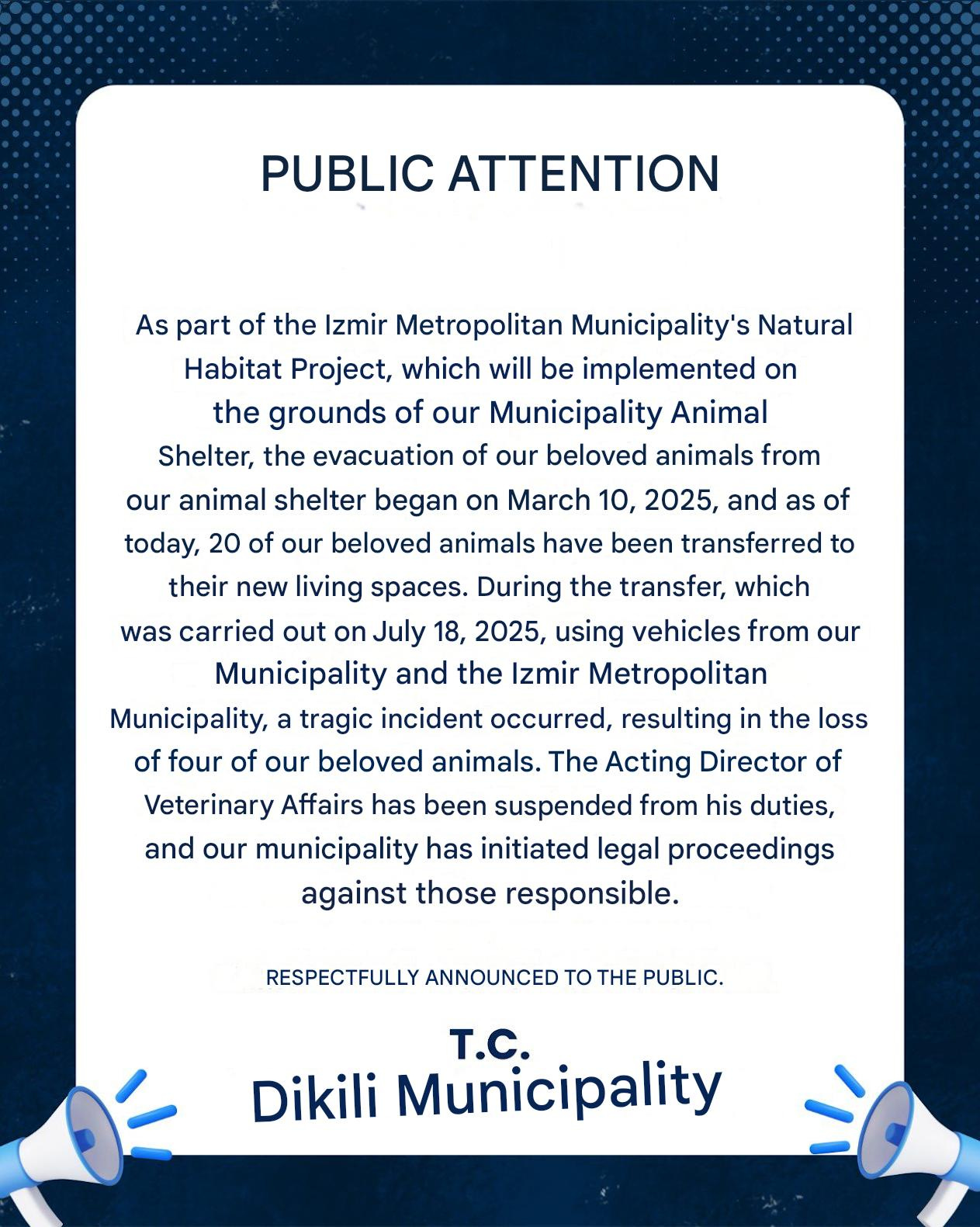
In the coastal town of Dikili, a tragedy unfolded during the transport of 20 stray dogs by the municipality. Four of those dogs died in transit.
The precise cause of death has not been publicly confirmed, but the transport was reportedly conducted in a closed vehicle—and beyond that, no further information is available.
How did a municipal operation intended to help animals end with multiple fatalities?
Why was there no planning to ensure the dogs' safety during transport? And how can such an incident be prevented from happening again?
What We Know
20 stray dogs were being transported by Dikili Municipality.
4 dogs died during this journey.
The dogs were moved in a closed vehicle.
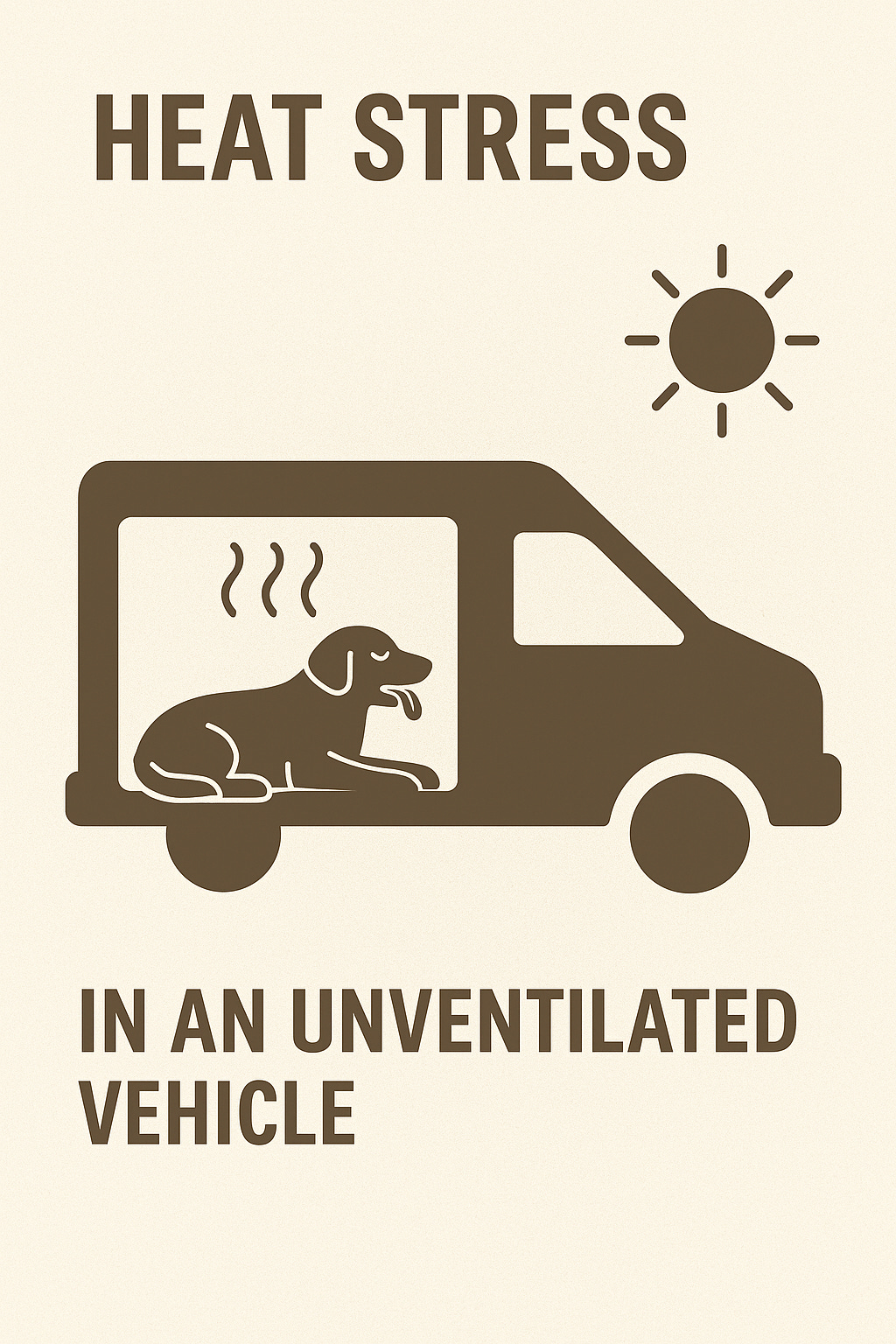
We don’t know the duration of the journey, the internal conditions of the vehicle, whether the animals had ventilation or water, or what protocols—if any—were in place to monitor their welfare.
Why Were These Dogs Not Protected?
Transporting live animals, especially vulnerable stray dogs, requires careful planning and consideration. It cannot be an afterthought in the broader strategy of managing stray populations or relocating animals to shelters.
Tragically, the evidence so far suggests that the dogs' safety was not prioritised. Why were basic transport standards not in place:
Were the animals checked before, during, or after the journey?
Was the vehicle equipped for animal transport?
Were trained personnel monitoring the animals?
Were the animals given water, airflow, or breaks?
What Should Have Happened
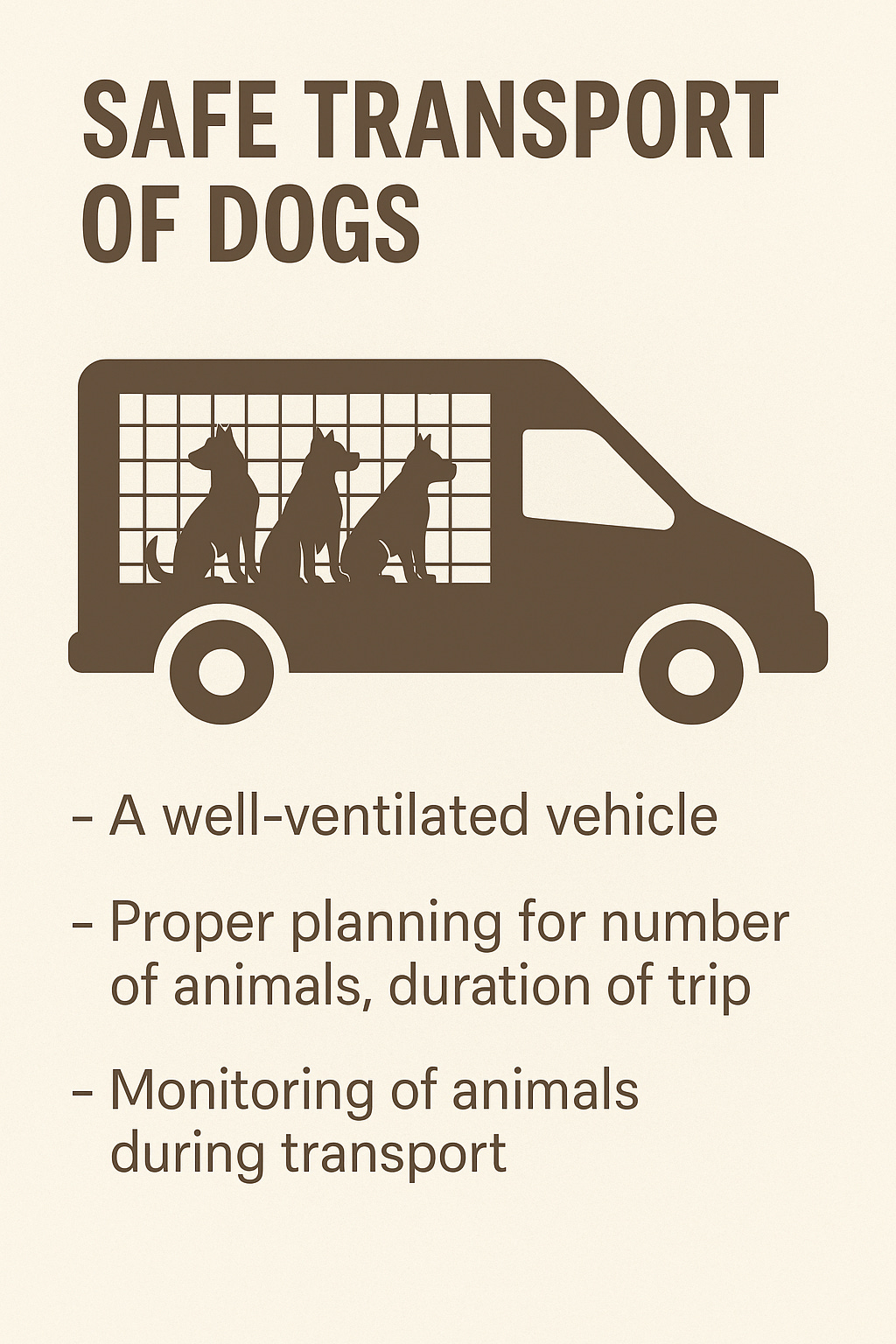
To ensure animal safety, the following measures should be non-negotiable in any municipal operation involving the movement of live animals:
Use of Purpose-Built Vehicles
Transport should only take place in vehicles designed for animal welfare—equipped with ventilation, non-slip flooring, temperature regulation, and secure compartments.Pre-Transport Assessments
Animals should be evaluated by a veterinarian or trained professional before transport to assess their health and suitability for travel.Onboard Monitoring
Trained handlers should accompany the animals, regularly monitoring their condition and responding to any signs of distress.Access to Water and Airflow
Even on short journeys, animals must have access to fresh air and water, especially during hot weather.Emergency Contingency Plans
There should be a clear procedure for responding to emergencies—heatstroke, injury, vehicle breakdowns—during transport.Public Accountability and Transparency
Municipalities must be prepared to report on animal welfare procedures and any incidents, with openness, honesty & thorough details.
These Dogs Were Failed
These four dogs were not just “strays.” They were living beings whose lives were entrusted—however briefly—to municipal care. They had no choice, no voice, and no protection. Their deaths are not simply a tragic footnote—they are the result of systemic neglect.
If their deaths are met with silence, if no changes follow, then the failure is not just operational—it becomes moral.
A Call for Reform
At this time, we call on Dikili Municipality to:
Commit to animal welfare transport protocols going forward;
Engage with animal welfare organisations to develop humane, transparent, and accountable systems.
This must be a turning point—not just for Dikili, but for all municipalities across Turkey.
Transport is not a technical detail. It is a life-or-death matter for the animals in our care.
Let these four dogs not be remembered only in silence. Let them be remembered as the reason everything changed.
An Announcement Is Made
What You Can Do
Raising awareness is a powerful tool in the fight for animal welfare.
If you are as saddened and outraged by this incident as we are, please help us shine a light on what happened.
Follow our work on social media, share this post, and help us hold those in power accountable.
The more people who know about these preventable tragedies, the harder it becomes for authorities to ignore them. Together, we can demand better standards, greater transparency, and real change for the animals who cannot speak for themselves.