


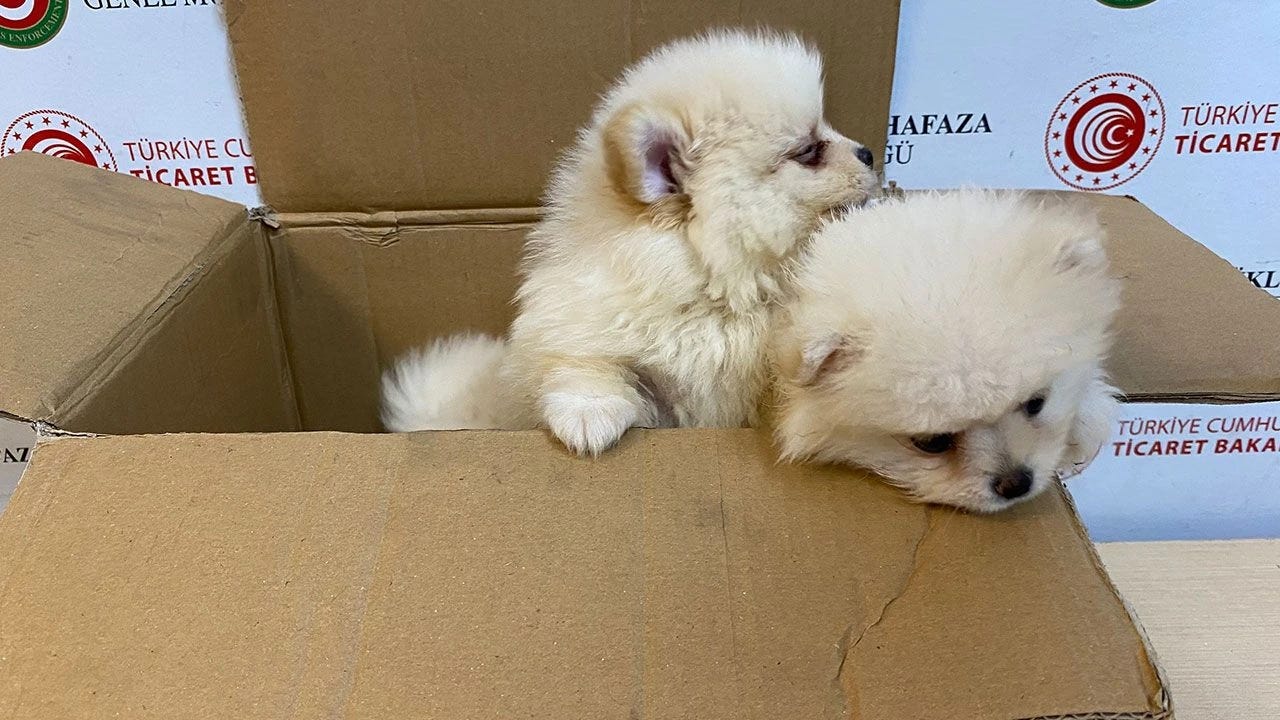
There are moments during our research when two completely separate news stories seem to collide, exposing a contradiction that is impossible to ignore. This week was one of those moments. While municipalities across Türkiye continue implementing one of the largest free roaming dog collection programmes in the country’s history, customs officers at the Kapıkule border crossing intercepted six Pomeranian puppies that had allegedly been smuggled into the country. The puppies were seized, placed under official protection and a criminal investigation was opened. On the surface, these appear to be unrelated events. To me, they are deeply connected.
The significance of the smuggling case is not simply that somebody attempted to move puppies across an international border illegally. The far more uncomfortable question is why anybody believed it was worth doing in the first place. Puppy smuggling is driven by demand. People do not take the risk of transporting live animals illegally unless they believe there are buyers waiting at the other end. That means that, while thousands of existing dogs are being removed from the streets and shelters continue to absorb enormous numbers of animals, there remains a market for producing, buying and, in this case, allegedly trafficking yet more puppies.
I find that incredibly difficult to understand because my view of dogs has been shaped not by glossy photographs of perfect puppies but by the reality of animal welfare. My days are spent watching dogs fight diseases that no animal should have to endure. I have watched puppies suffering from distemper, their small bodies gripped by repeated seizures. I have watched dogs become so desperately ill that they lose the ability to swallow. I have watched animals recover from catastrophic injuries while others never make it at all. Once you have seen that reality, it becomes impossible to look at the commercial production of more puppies without asking whether we have completely lost sight of what really matters.
One of the explanations I hear repeatedly is that people do not want a rescue dog because “they all have problems.” That statement has never reflected the reality I have seen. Rescue dogs arrive in shelters for countless reasons. Some have experienced neglect or abuse, but many have not. Some have lost their homes because their owners died, became seriously ill, experienced financial hardship or simply found themselves unable to keep the dog any longer. Their circumstances are as varied as those of the people who once cared for them. Reducing every rescue dog to the same stereotype is not only inaccurate, it overlooks the individuality of thousands of animals who are simply waiting for somebody to give them a chance.
What troubles me most is the value we appear to place on dogs according to their breed. A pedigree puppy can become so desirable that somebody is allegedly prepared to smuggle it across a border for financial gain, while a mixed breed dog can spend months or years waiting in a shelter simply because it does not have the right appearance or pedigree. Yet neither dog chose the circumstances into which it was born. Neither loves any less. Neither suffers any less. The only difference is the value that human beings have decided to attach to them.
I know this is an opinion that not everybody will share, but I cannot support breeding dogs for commercial sale while shelters remain full and free roaming dogs continue to struggle for survival. To me, the ethical question is unavoidable. Every new litter is brought into a world where countless dogs are already alive, already capable of love and companionship, and already waiting for somebody to choose them instead. I cannot reconcile creating more dogs to satisfy consumer demand while existing dogs continue to die from neglect, disease, abandonment and overcrowding.
The six Pomeranian puppies deserved to be rescued, just as every dog deserves protection from exploitation and suffering. My concern is not with those puppies, but with the culture that creates a market for them while overlooking so many other dogs whose only misfortune was to be born without a fashionable breed or a commercial value. Until we begin valuing dogs for the lives they already possess rather than the breed they were born with, stories like these will continue to sit side by side, exposing an uncomfortable contradiction that too many people have learned to accept.