


Turkey’s stray dog crisis has become one of the most contentious public policy issues in the country. Supporters of the government’s approach point to dog attacks, public safety concerns and the need for municipalities to regain control of streets and public spaces. Animal welfare organisations warn of overcrowded shelters, inadequate infrastructure and the risk of large scale suffering hidden from public view.
Reasonable people can disagree about the best way forward. What should not be controversial, however, is the importance of consulting all relevant stakeholders when shaping and implementing policy of this magnitude.
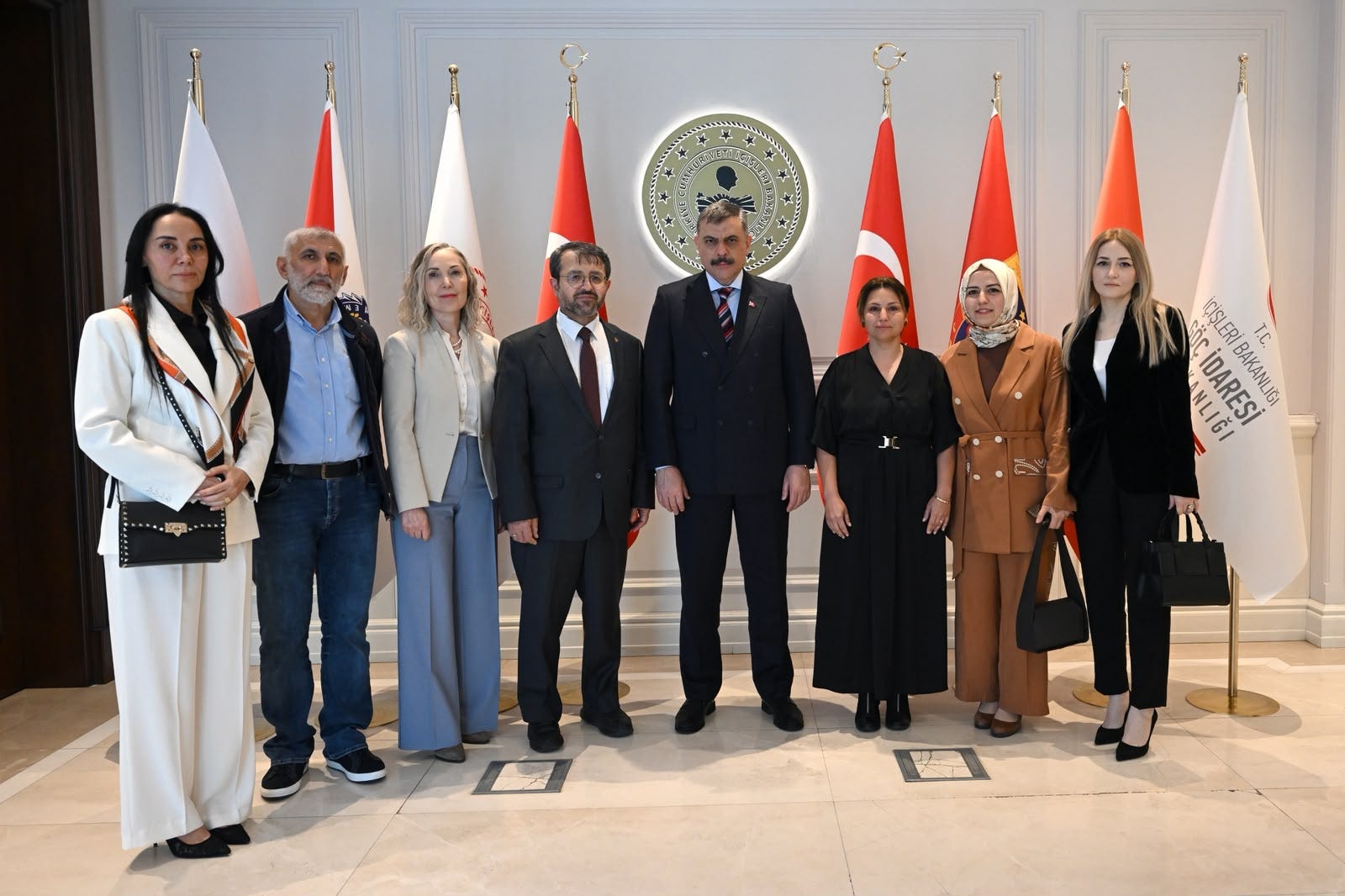
That is why the recent meeting between Interior Minister Mustafa Çiftçi and GÜSODER has attracted attention.
The meeting was publicly promoted by the ministry. Photographs were released. Statements were shared. The organisation was thanked for its contributions to discussions surrounding the management of stray animals. The meeting demonstrated that GÜSODER was afforded direct access to senior government decision-makers regarding implementation of the policy. No democratic society should object to that. Public safety groups have every right to participate in discussions about public policy.
Since the implementation of Law 7527, animal welfare organisations, veterinarians, academics and volunteers have repeatedly raised concerns about both the law itself and the practical realities of carrying it out. Questions have been asked about shelter capacity, disease control, transparency, long term population management and animal welfare standards.
Yet despite extensive searching of publicly available records, it is difficult to identify equivalent high profile meetings between senior government figures and major animal welfare organisations such as HAYTAP or DIHFED concerning implementation of the policy. If such consultations have occurred, they have not received the same public visibility.
This is important because the issue extends far beyond a simple disagreement between people who care about animals and people who care about public safety.
The reality is that solving a complex national problem requires expertise from many different sectors. Veterinary organisations understand disease control, animal behaviour and population management. Veterinary faculties contribute research and evidence based solutions. Shelter operators understand the challenges of capacity, staffing and long term care. Animal law specialists can assess the legal implications of policy decisions. Volunteers and welfare organisations possess years of practical experience working with street animals and local communities.
Public safety advocates bring equally important perspectives regarding attacks, public concerns and community wellbeing.
Each group sees a different part of the picture. Good policy emerges when all of those perspectives are brought together.
Several critics of the current approach have therefore focused less on the policy itself and more on the consultation process behind it. Sustainable solutions should be developed alongside veterinary professional bodies, veterinary faculties, animal rights centres, non governmental organisations and volunteers. The point was not that one side should dominate the discussion, but that effective policy requires a broad range of expertise.
That is a principle that should be difficult to dispute.
A policy affecting millions of animals, hundreds of municipalities and communities across an entire nation should not be informed by a single perspective.
For public confidence to be maintained, consultation should involve a broad range of perspectives, including those that support and those that question the chosen approach.
The government’s public engagement with GÜSODER has been highly visible. What remains less clear is the extent to which equivalent opportunities have been provided to organisations responsible for much of Turkey’s animal welfare, sterilisation, rescue and veterinary work.
We have been unable to identify publicly promoted meetings between the Interior Minister and major animal welfare federations such as HAYTAP or DIHFED concerning implementation of Law 7527. If such consultations have taken place, they have not received the same public visibility as meetings involving GÜSODER.
All relevant stakeholders should be given a meaningful opportunity to contribute to a policy that will affect millions of animals, hundreds of municipalities and communities across Turkey.
Equally important, stakeholders should be treated equally. Public safety organisations, veterinary bodies, animal welfare federations, shelter operators, legal experts, academics and volunteers may hold different views, but each brings valuable experience and expertise to the discussion.
Effective policymaking does not require agreement between all parties. It requires that all relevant perspectives are given a fair opportunity to be heard.
Because in the end, the future of Turkey’s street animals may depend not only on the policies adopted, but on who was given a seat at the table when those policies were shaped.