


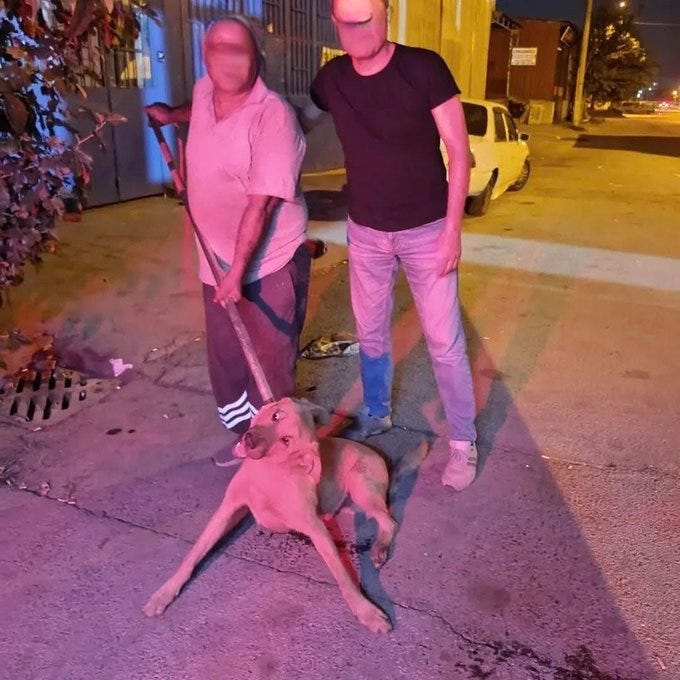
A photograph from Nazilli, in Türkiye’s Aydın Province, has prompted widespread anger and renewed questions about the welfare of free roaming dogs during municipal collection operations.
The image, which has been widely shared by Turkish animal welfare organisations, shows municipal workers handling a dog roughly. Campaigners allege the dog was dragged in a way that caused unnecessary suffering before workers posed for photographs. The allegations have led to calls for a full criminal investigation and stronger accountability.
Following the public reaction, Nazilli Mayor Dr. Ertuğrul Tetik issued a public statement acknowledging the incident. He said the image “did not befit the institutional identity of Nazilli Municipality”, confirmed that an investigation had been launched and stated that “the responsible personnel have been given the necessary warnings.” He also apologised to the people of Nazilli and to animal lovers.
For many people, however, the response has left an uncomfortable question. If the allegations surrounding the photograph are accurate, is a warning an adequate response?
Animal welfare organisations believe the incident should be examined under Türkiye’s Animal Protection Law No. 5199 and have called for those responsible to be held fully accountable if animal welfare legislation has been breached.
The photograph also highlights something that receives far less attention than the number of dogs being collected.
Collecting frightened free roaming dogs is not straightforward. They may be frightened, injured or simply trying to escape an unfamiliar situation. That is precisely why the people carrying out these operations should receive thorough training in humane handling techniques, animal behaviour and the correct use of equipment. Their role is not simply to remove dogs from the streets. It is to do so in a way that protects their welfare from the first moment they come into contact with them.
Across Türkiye, municipalities are under increasing pressure to collect free roaming dogs following changes to national legislation. As those programmes expand, proper training and oversight become even more important. Every municipality should be able to demonstrate that staff understand how to minimise fear, avoid unnecessary suffering and respond appropriately when an animal is distressed.
Whether this particular incident was the result of inadequate training, poor judgement or something more serious is now a matter for the investigation. That investigation should establish exactly what happened and whether any laws were broken.
At Dog Desk Animal Action, we remain firmly opposed to healthy free roaming dogs being removed from their communities only to be placed in inadequate shelters where their welfare cannot be guaranteed. If municipalities choose to carry out collection operations, every dog must be handled humanely by properly trained staff using appropriate methods.
The photograph from Nazilli has disturbed many people because it shows a dog in obvious distress. If that distress resulted from the actions of those entrusted with its care, then the public deserves more than reassurance that warnings have been issued. They deserve to know that standards are being enforced, that staff are properly trained and that every reasonable step is being taken to ensure incidents like this do not happen again.