

Why Are Stories of Disabled Dogs Being Hidden Online?

Across social media, animal welfare organisations are encountering a growing and deeply frustrating problem: content featuring disabled dogs is being restricted, flagged, or suppressed as graphic.
These are not scenes of cruelty. They are stories of survival, recovery, and adaptation.
Yet increasingly, they are treated by automated systems as something harmful or inappropriate.
To understand why this is happening, we need to look not at the dogs but at the systems deciding what we are allowed to see.
What Social Media Algorithms Are Designed to Do
Social media platforms rely heavily on automated moderation systems, algorithms trained to detect and filter content at scale.
These systems are not capable of understanding context in a human sense. Instead, they work by identifying patterns:
Visual indicators (wounds, missing limbs, medical equipment)
Language cues (words like “injured,” “rescue,” “death,” “suffering”)
Historical data (what similar content has previously been flagged)
Their purpose is to reduce exposure to genuinely distressing or harmful material.
But in doing so, they often overcorrect.
This is where the problem begins.
Why Disabled Dogs Trigger Graphic Content Flags
Content featuring disabled dogs frequently contains visual markers that algorithms associate with harm or injury, even when no harm is occurring.
This includes:
Amputations or missing limbs
Visible scars or healed wounds
Mobility aids such as wheelchairs or slings
Dogs learning to walk again after surgery
Close-up veterinary care or rehabilitation scenes
To an algorithm, these features resemble the same patterns found in:
Animal cruelty footage
Accident or injury documentation
Emergency or medical trauma content
The system does not distinguish between:
a dog in pain
and
a dog in recovery
Both may be flagged under the same category: “potentially graphic.”
The Role of Language in Flagging
It is not only images that trigger restrictions.
Captions and overlays also play a significant role. Words commonly used in rescue work such as:
injured
abandoned
hit by car
died
critical condition
can contribute to automated moderation decisions. I even got a rejection for using the word tragedy
Even when used responsibly and factually, these terms can signal high-risk content to the system.
This creates a situation where organisations are forced to self-censor reality in order to remain visible.
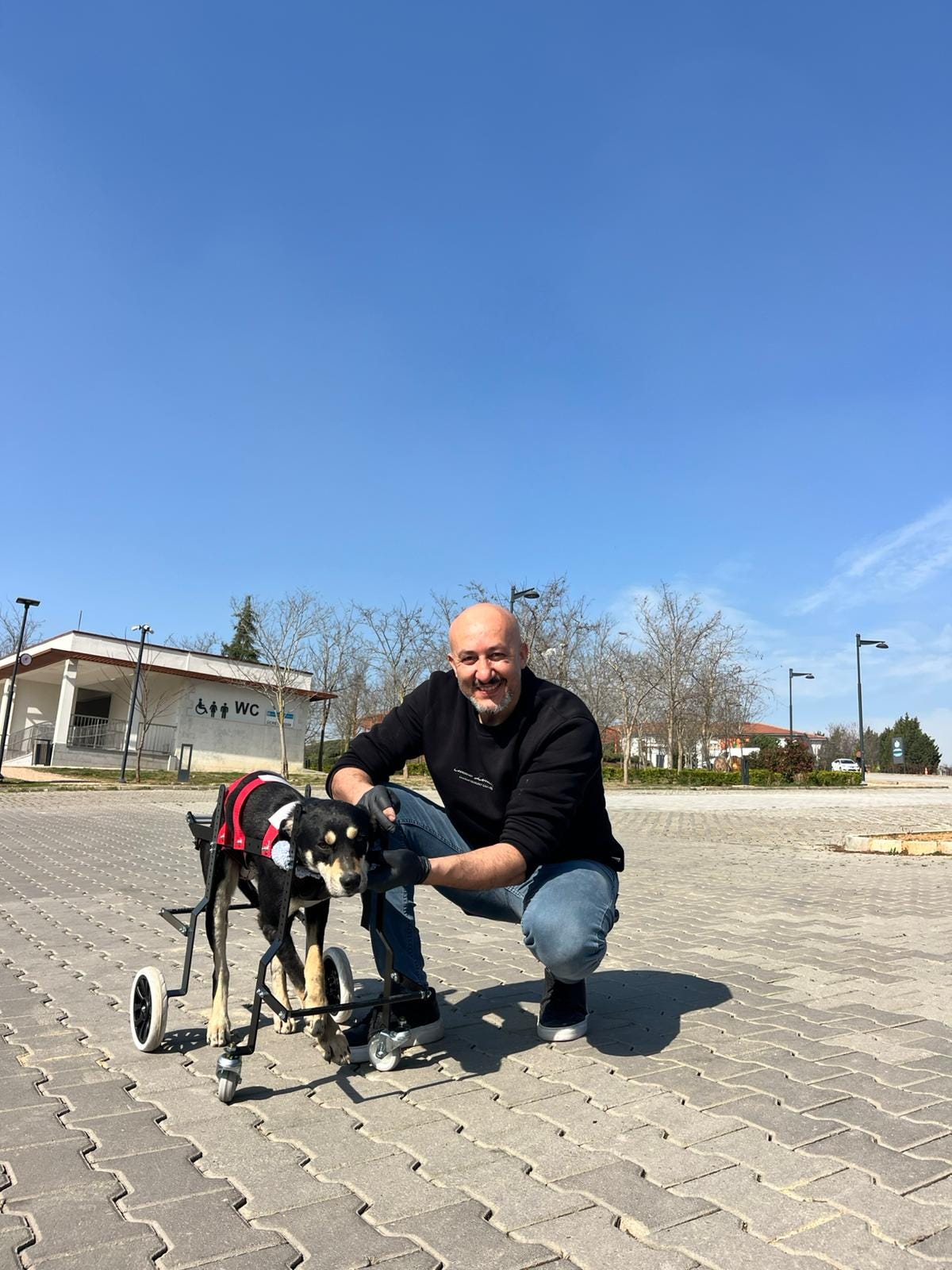
False Positives: When the System Gets It Wrong
In moderation systems, a false positive occurs when content is incorrectly flagged as violating guidelines.
Disabled dog content is particularly vulnerable to this because it sits at the intersection of:
Medical imagery
Emotional storytelling
Visible physical difference
Algorithms tend to err on the side of caution.
It is safer, from a platform perspective, to hide content that might be distressing than to risk allowing something genuinely harmful through.
The result is a disproportionate impact on:
Rescue organisations
Veterinary accounts
Rehabilitation and sanctuary work
All of which rely on showing real conditions to educate, fundraise, and advocate.
The Unintended Consequences for Animal Welfare
When content about disabled dogs is suppressed, the effects extend far beyond visibility metrics.
1. Reduced Public Awareness
People cannot support what they do not see.
If stories of recovery are hidden, understanding of canine resilience is diminished.
2. Barriers to Adoption
Disabled dogs already face stigma.
If their stories are restricted, potential adopters are less likely to encounter them.
3. Fundraising Impact
Many organisations depend on storytelling to generate support.
If content is flagged or reach is limited, essential funds are harder to secure.
4. Distortion of Reality
Audiences are shown a sanitised version of animal welfare.
The difficult beginnings and the work required to overcome them are quietly removed.
Why Context Matters (But Algorithms Struggle With It)
A human viewer understands the difference between:
a dog suffering
and a dog healing
An algorithm does not.
It sees:
exposed skin → risk
missing limb → injury
medical setting → trauma
It cannot interpret:
safety
care
progress
or love
This lack of contextual understanding is the core limitation of automated moderation.
The Emerging Shift: Sanitised Content
As a response, many organisations are adapting their content strategies:
Avoiding certain words entirely
Cropping or softening images
Sharing after stories without the before
Using vague language to bypass filters
While this may preserve reach, it introduces a new issue:
The truth becomes diluted.
And for advocacy work, truth is not optional it is essential.
Finding a Balance
There is a clear need for balance between:
protecting users from genuinely harmful content
and allowing responsible, educational material to be seen
Possible improvements could include:
Greater weight given to account credibility (e.g. registered charities)
Improved context recognition in AI moderation
Clearer distinctions between harm and healing
Transparent appeal processes for flagged content
Until then, organisations are left navigating an opaque system with significant consequences for their work.
Conclusion
Disabled dogs are not graphic content.
They are living proof of resilience, care, and second chances.
When their stories are hidden, it is not just a technical issue it is a loss of visibility for some of the most vulnerable animals.
Social media has become one of the most powerful tools in animal welfare.
But as algorithms increasingly shape what is seen and what is hidden, it is vital to recognise:
Not everything that looks difficult is harmful.
And not everything worth seeing is comfortable.
For disabled dogs, being seen is often the first step toward being helped.
And that visibility should not be algorithmically erased.