
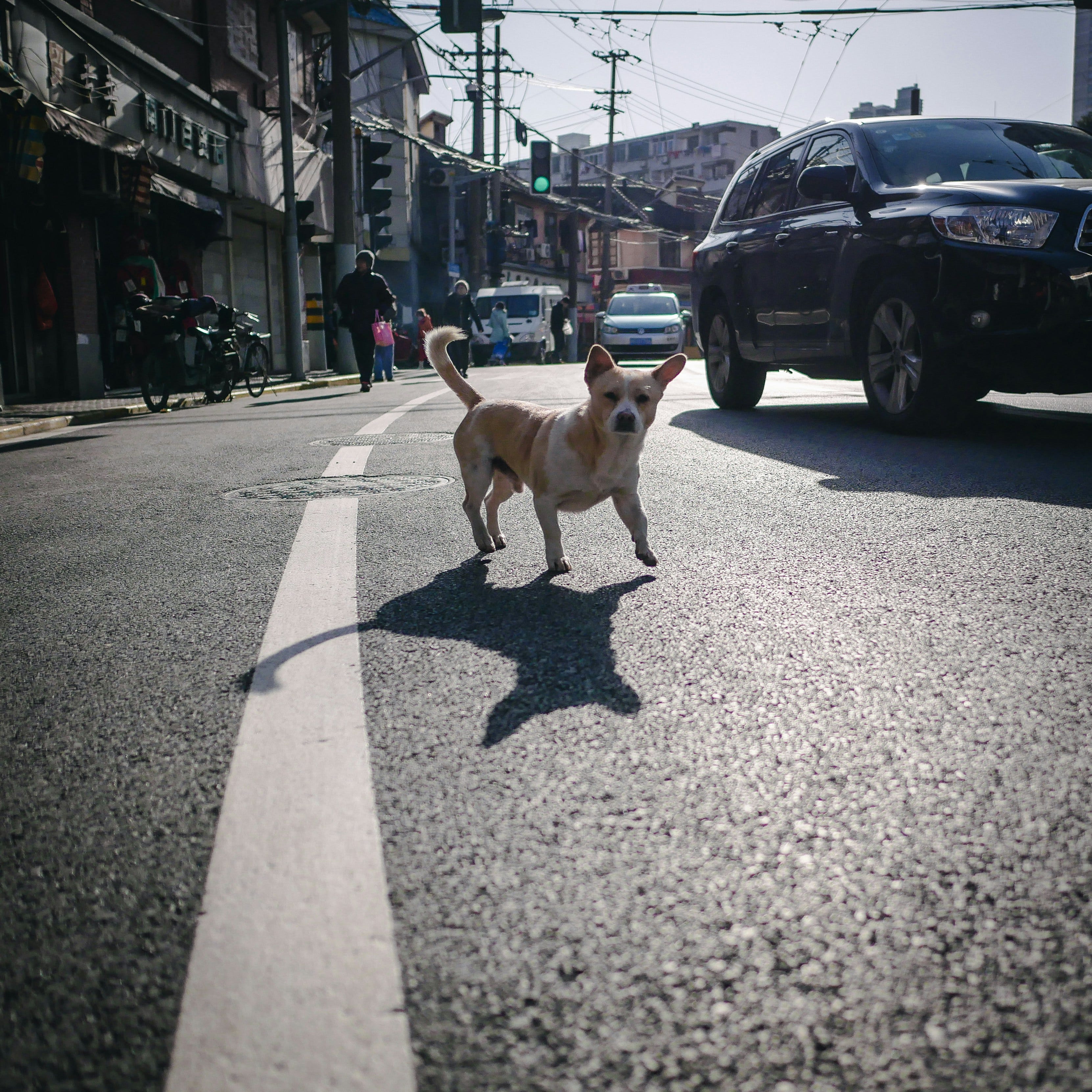
Why Do Dogs Chase Cars?
Few sights are as distressing as a dog sprinting after a moving vehicle. What may look, at first glance, like playful behaviour is in fact one of the most dangerous impulses a dog can act upon often ending in severe injury or death. To protect dogs effectively, it is essential to understand why they chase cars in the first place.
1. Prey Drive and Movement Triggers
Dogs are descendants of predators. Fast-moving objects instinctively trigger their chase response in the same way that fleeing prey would. A car’s speed, noise, and sudden appearance can activate this deeply rooted reflex, even in well-fed, well-cared-for dogs who have never hunted.
2. Territorial Defence
Some dogs view roads as part of their territory. When a vehicle passes, they may interpret it as an intruder and chase it away in an attempt to defend their space. This behaviour is especially common in dogs who live near busy streets without secure boundaries.
3. Fear and Startle Response
For nervous or traumatised dogs, the loud sound and vibration of a car can provoke a fear reaction. Chasing may be a panic-driven attempt to make the frightening object go away, rather than an act of aggression or play.
4. Boredom and Frustration
Dogs with insufficient mental stimulation and exercise may develop obsessive behaviours. The constant movement of traffic can become an outlet for pent-up energy, turning car-chasing into a self-reinforcing habit that grows stronger over time.
5. Learned Behaviour
If a dog once chased a car and it “went away,” the dog may believe their action caused the result. This creates a dangerous feedback loop: chase → car disappears → behaviour is reinforced.
Why This Matters So Urgently
For stray and free-roaming dogs, especially in countries where traffic is chaotic and animal protection laws are weak, car-chasing is often a death sentence. Broken limbs, spinal injuries, internal bleeding, and instant fatalities are tragically common. Even dogs who survive are frequently left permanently disabled.
Car-chasing is not a naughty habit. It is a survival issue.
Prevention Saves Lives
Understanding the cause allows us to prevent the outcome:
Secure environments prevent access to roads.
Enrichment and exercise reduce frustration-based chasing.
Behavioural training and desensitisation can retrain the response.
Public education and humane urban planning can reduce risk for community dogs.
Sterilisation and stable feeding programs decrease roaming and territorial aggression.
Compassion Over Blame
Dogs do not chase cars out of recklessness or stupidity. They do so because their instincts, fears, and unmet needs collide with an environment never designed for them to survive.
Every time a dog is hit by a vehicle, it is not a tragic accident alone it is a failure of human responsibility.
Understanding is the first step toward protection.


