
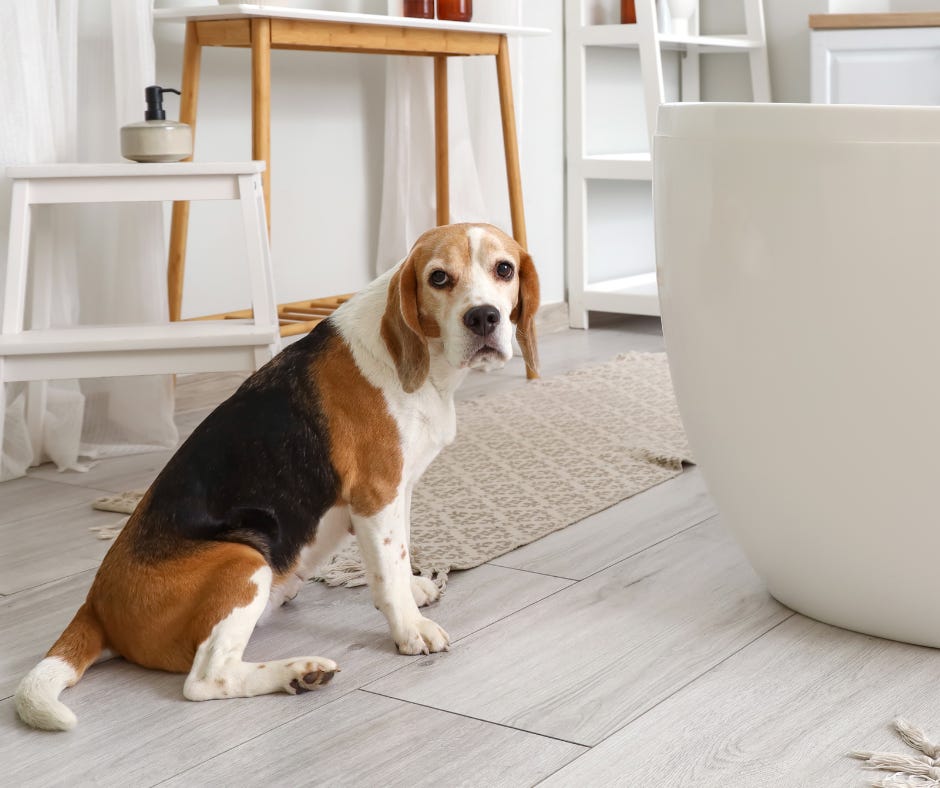
Why Do Dogs Follow You to the Bathroom?
It is a familiar experience for many dog guardians. You stand up, walk toward the bathroom, and your dog follows. If the door closes, they may wait outside. If it remains open, they may quietly settle nearby.
While this behaviour is often treated as humorous, its roots are grounded in instinct, attachment, and social structure.
A Social Species
Dogs are descendants of the grey wolf and retain many social traits shaped by cooperative living. Survival historically depended on proximity to the group. Separation, even brief, could signal vulnerability.
Although domestic life is far removed from the wild, these instincts remain. Movement within the home particularly when it involves leaving a shared space can trigger a simple, natural response: follow.
To a dog, remaining near a trusted human is not unusual behaviour. It is normal social cohesion.
Attachment and Security
Modern dogs form strong bonds with their human caregivers. Research into canine attachment patterns suggests that dogs often view their primary human as a secure base a source of safety and predictability.
Following you into another room, including the bathroom, may reflect this bond. Proximity reinforces reassurance. In rescue dogs or those who have experienced instability, this attachment can be especially pronounced.
Closeness is not always dependency. Often, it is simply trust.
Environmental Awareness
Dogs are highly attuned to routine. Small changes in movement, posture, or direction can signal that something is about to happen.
Walking toward a closed room is a break in the usual flow of shared activity. A closed door introduces temporary separation. Many dogs respond by maintaining visual or physical proximity until the routine resumes.
This is not surveillance. It is attentiveness.
When to Take Note
In most cases, following behaviour is entirely healthy.
However, if a dog shows visible distress when separated, excessive vocalisation, destructive behaviour, pacing, or inability to settle this may indicate separation-related anxiety rather than simple attachment. In those cases, gradual confidence-building and, where necessary, professional guidance can help.
The Broader Perspective
Dogs evolved alongside humans not just as working partners, but as companions. Their sensitivity to our movement, mood, and presence is part of what has allowed that relationship to endure for thousands of years.
When a dog follows you to the bathroom, it is rarely about the room itself.
It is about connection.


