


 Tiktok failed to load.
Enable 3rd party cookies or use another browser
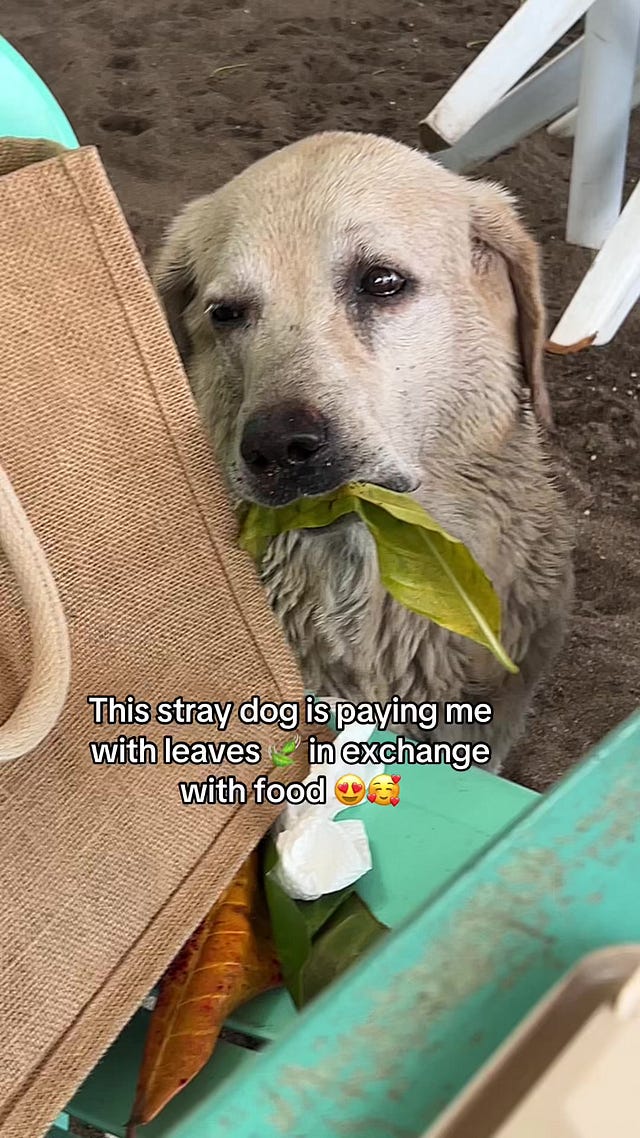
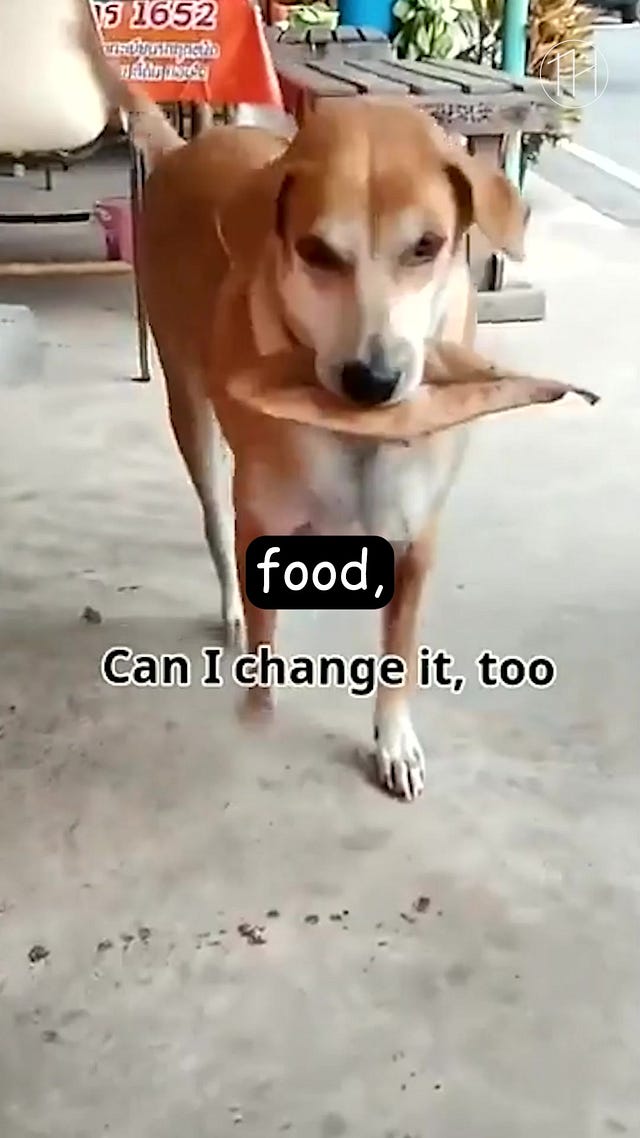
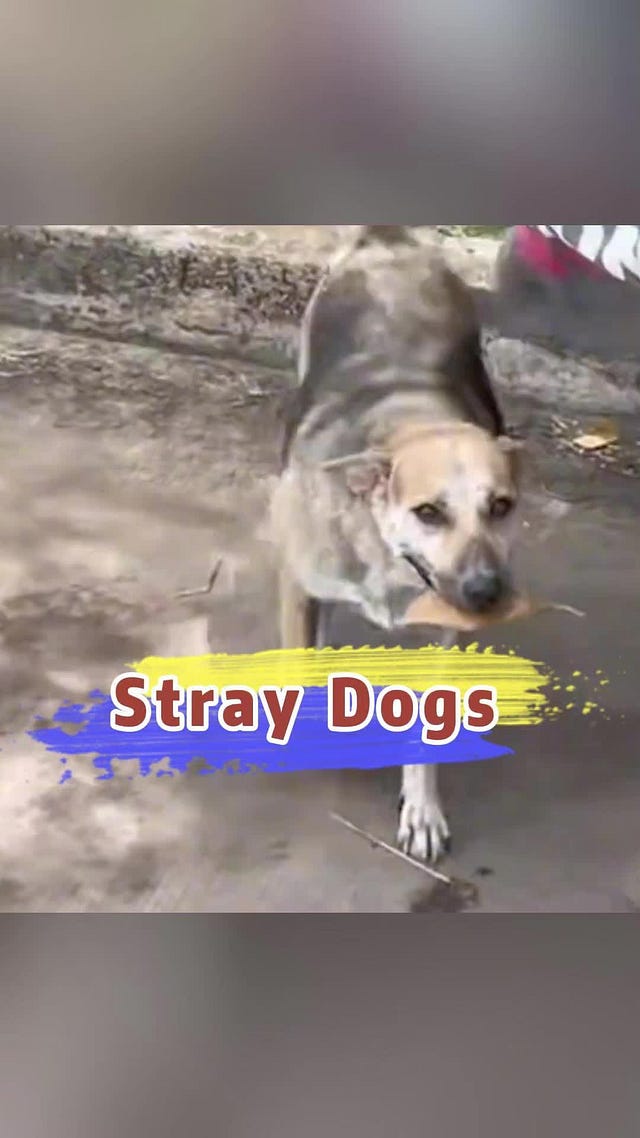
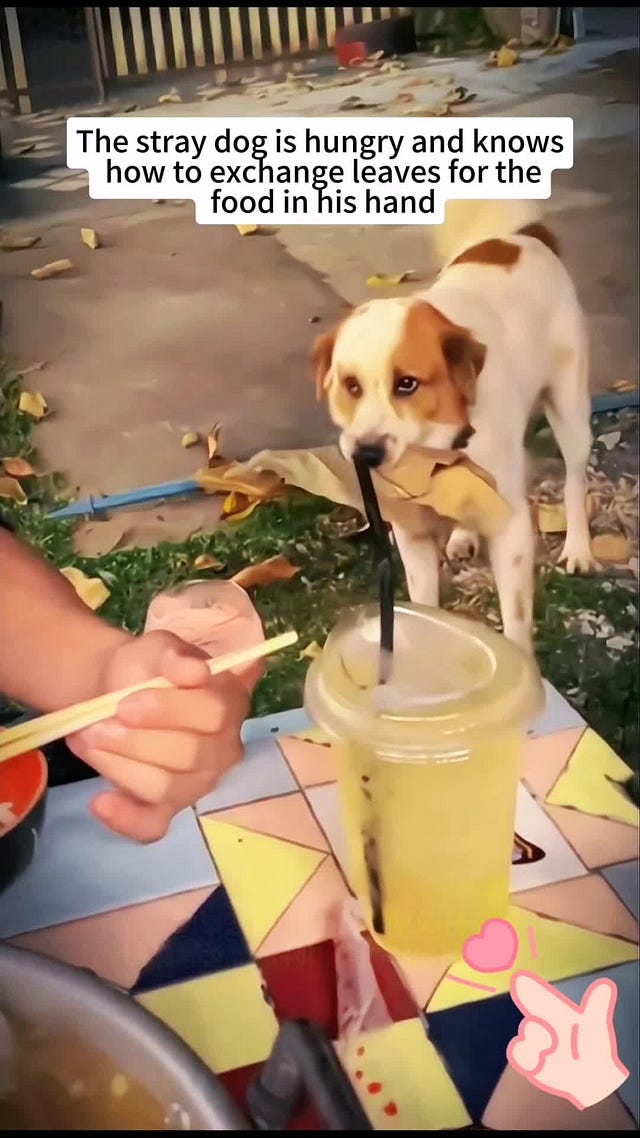
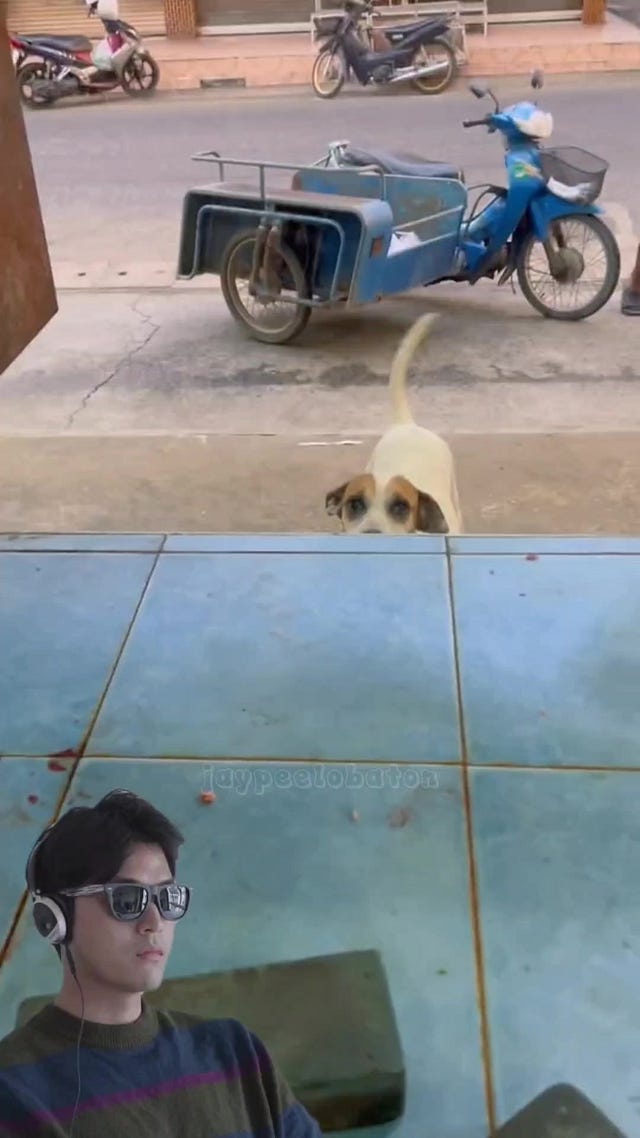
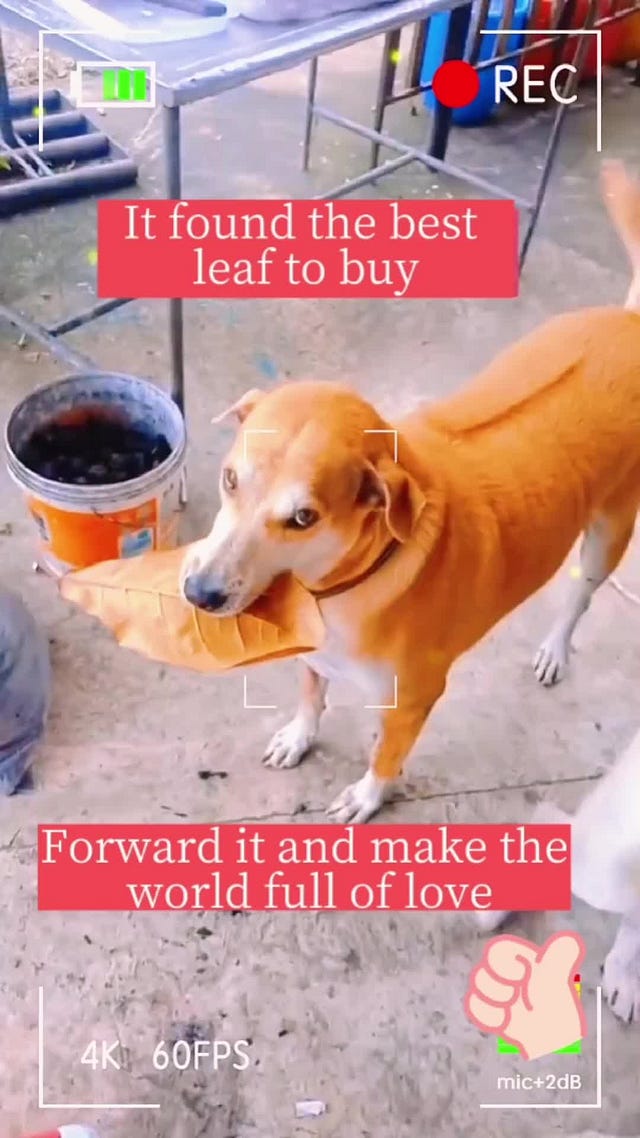
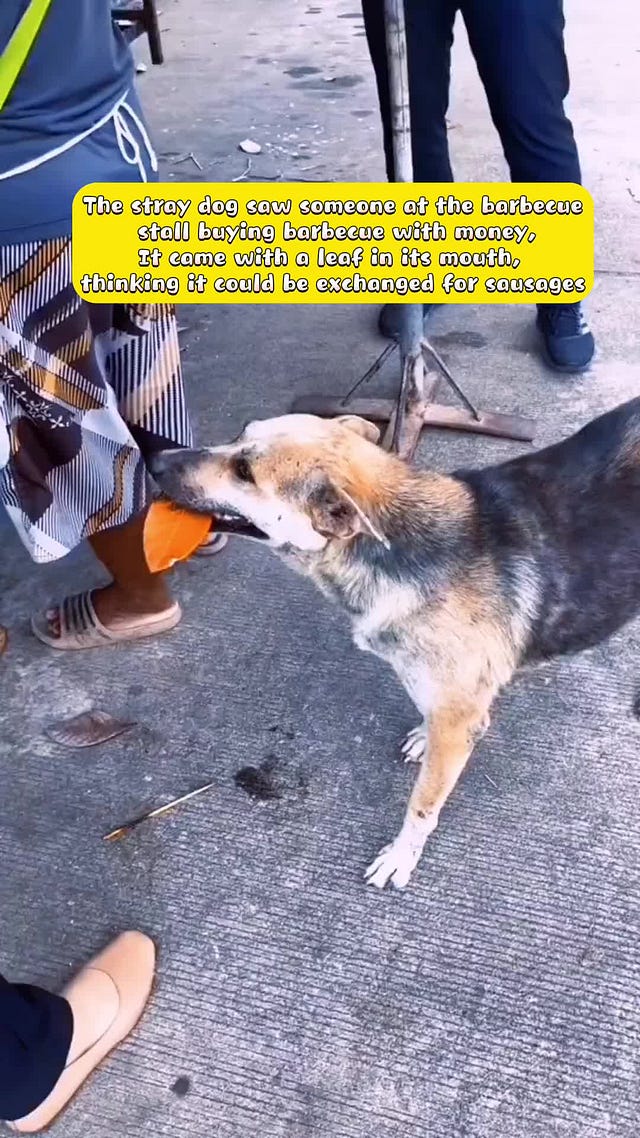
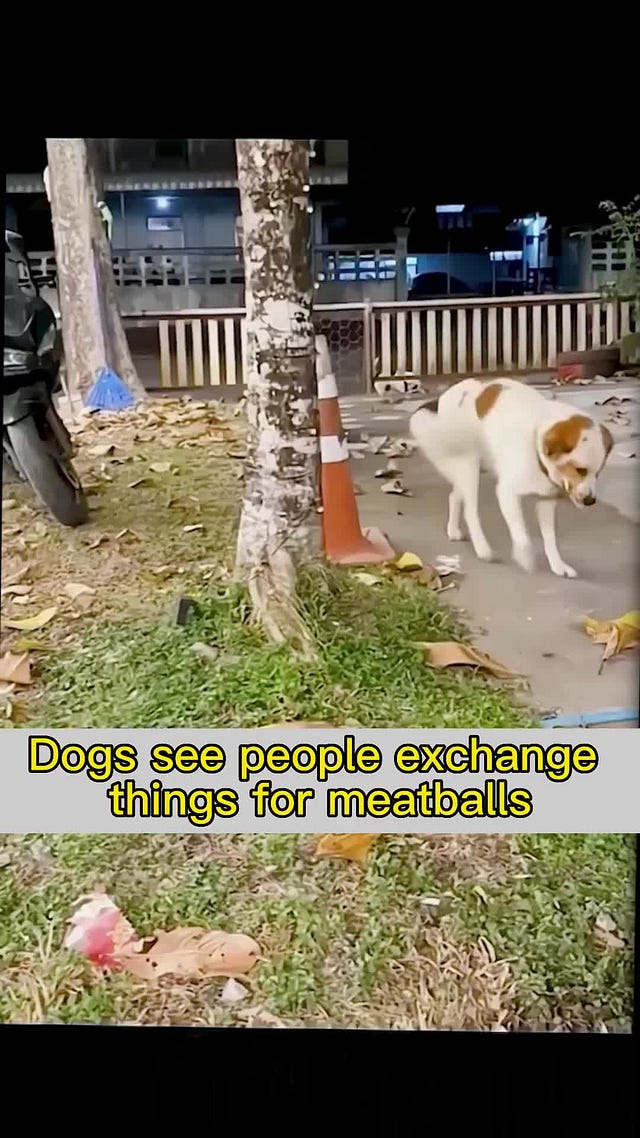
Across social media and local reports, particular images & videos keep resurfacing: a dog approaches a human, drops a leaf, a scrap of cardboard, a small piece of rubbish then waits. The implication is simple, and powerful: the dog is offering something in exchange for food.
It is often framed as heartwarming. Resourceful. Even charming.
But the reality behind it is far more complex and far less comfortable.
 Tiktok failed to load.
Enable 3rd party cookies or use another browser
Not a Trick, But a Response
Dogs do not understand money, trade, or symbolic exchange in the human sense. What they do understand is pattern, repetition, and outcome.
If a dog once received food after approaching a person while holding an object that behaviour can become reinforced. Over time, the dog repeats it, refining the action based on what works.
What looks like payment is, in fact, learned survival behaviour.
Approach human
Present object
Wait
Receive food
The object itself is irrelevant. The outcome is everything.
 Tiktok failed to load.
Enable 3rd party cookies or use another browser
The Environment Shapes the Behaviour
This behaviour tends to appear in environments where:
Food is scarce or inconsistent
Human interaction is unpredictable
Dogs must compete for attention or resources
Small, repeatable actions can improve survival odds
In these contexts, even the smallest behavioural edge matters. A dog that learns how to reliably trigger a feeding response has, in effect, created a survival strategy.
 Tiktok failed to load.
Enable 3rd party cookies or use another browser
The Problem With What We’re Seeing Online
Not every video showing a dog offering an item for food is genuine.
Some are staged, edited, or guided to create a more emotionally compelling story.
This can include:
Repeated prompting just outside the frame
Food withheld until a specific behaviour is performed
Multiple takes edited into a single “moment”
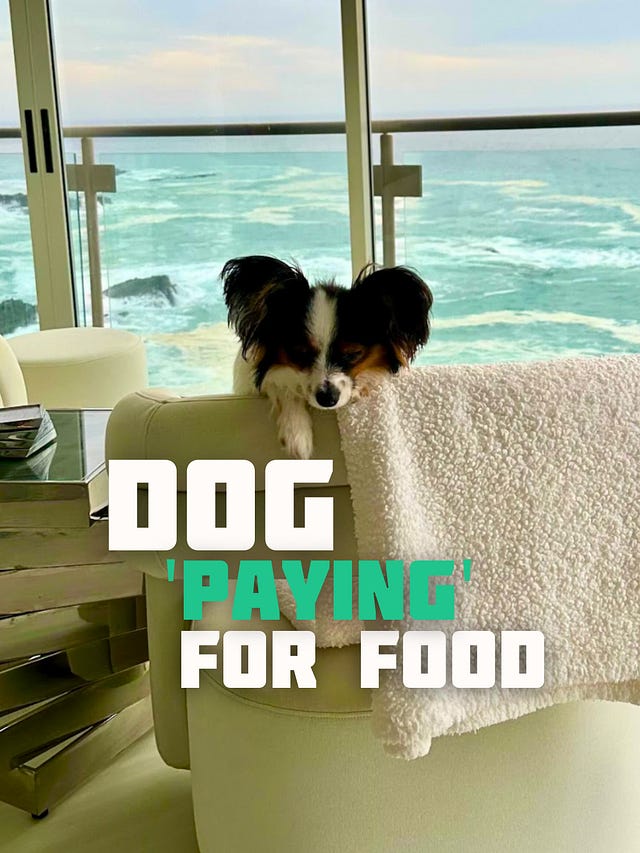
Pet dogs (not strays) presented as street animals
Objects deliberately placed for the dog to pick up
In these cases, what appears to be spontaneous survival behaviour is actually constructed content, there is a lot of it about & it’s big business sadly.
 Tiktok failed to load.
Enable 3rd party cookies or use another browser
Why Staging Matters
At first glance, staging might seem harmless. But it creates real problems:
It distorts public understanding
People begin to believe dogs are naturally “trading” or “offering gifts” in a meaningful way.
It softens the reality
Genuine survival behaviour gets reframed as something cute and functional—when it is neither.
It rewards the wrong content
Algorithms amplify emotional, simplified narratives. The more these videos perform, the more they are replicated.
It risks welfare
Encouraging repeated behaviour for filming especially around food can create stress, frustration, or dependency.
 Tiktok failed to load.
Enable 3rd party cookies or use another browser
Why This Should Give Us Pause
Even when the behaviour is genuine, it raises uncomfortable questions.
A dog presenting rubbish for food is not performing it is adapting to deprivation. This is not enrichment. It is necessity.
And when we step back, the image shifts:
A dog is hungry enough to experiment with human behaviour
A dog has learned that attention must be earned
A dog is navigating a system where survival depends on reading us correctly
That is not ingenuity alone. It is pressure.
 Tiktok failed to load.
Enable 3rd party cookies or use another browser
The Risk of Misinterpretation
When these stories go viral, they can unintentionally reinforce the wrong message:
That the situation is “working”
That dogs are coping well on the streets
That small acts of kindness are enough
They are not.
Feeding a dog in that moment may help that individual survive the day. But it does not address the underlying conditions that made that behaviour necessary in the first place.
 Tiktok failed to load.
Enable 3rd party cookies or use another browser
What It Really Shows
At its core, this behaviour demonstrates three things:
1. Dogs are highly adaptive
They observe, learn, and adjust rapidly especially under pressure.
2. Human behaviour directly shapes animal survival
Even unintended actions can create patterns that animals rely on.
3. The system is failing them
No animal should need to “offer” anything to be fed.
A Different Standard
If a dog feels the need to bring something anything in order to receive food it is a reflection of humanity.
A functioning welfare system does not require animals to negotiate for basic needs. It provides:
Consistent access to food and water
Safe shelter
Structured population management (including sterilisation)
Clear, humane interaction between people and animals
 Tiktok failed to load.
Enable 3rd party cookies or use another browser
Conclusion
The image of a dog paying for food with a leaf or a scrap of rubbish may stop us mid-scroll. But it should not reassure us.
Because whether the clip is genuine or staged for views the underlying truth remains the same:
No dog should have to earn the right to eat.