

Why Dogs Dig - Understanding the Natural Instinct Behind the Behaviour

If you’ve ever watched a dog enthusiastically dig a hole in the garden, or scratch at their bed before lying down, you’ve seen a glimpse of one of the oldest instincts in the canine world.
Digging isn’t simply mischief or boredom it’s a deeply ingrained behaviour inherited from generations of wild ancestors. To truly understand why dogs dig, we can look at the lives of street-born, semi-feral, and feral dogs, as well as their wild relatives like wolves, foxes, and dingoes.
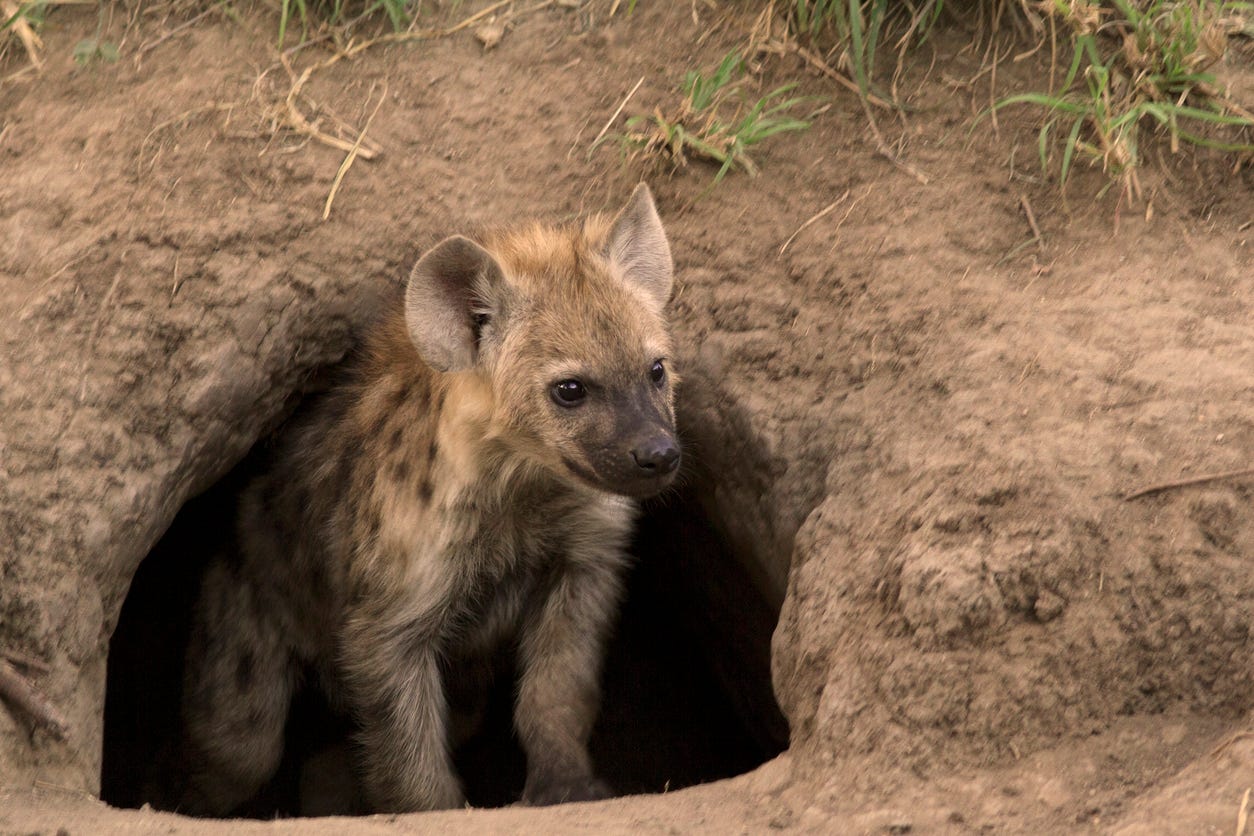
Cooling Pits and Comfort
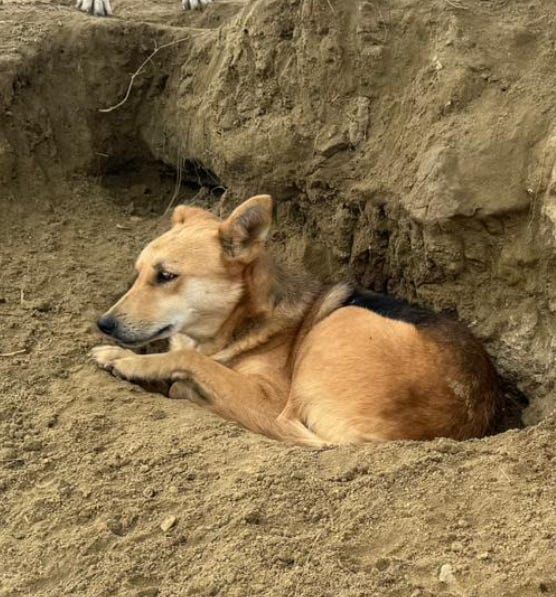
In hot climates, dogs instinctively dig shallow pits in the earth to help regulate their body temperature. The soil just below the surface is cooler, and by creating a small hollow to lie in, a dog can escape the heat of the day. This behaviour is common in street dogs across warmer regions, where shade and cool surfaces may be scarce. I have recorded stray dogs in a shelter environment where shade is in plentiful supply still dig a pit or den.
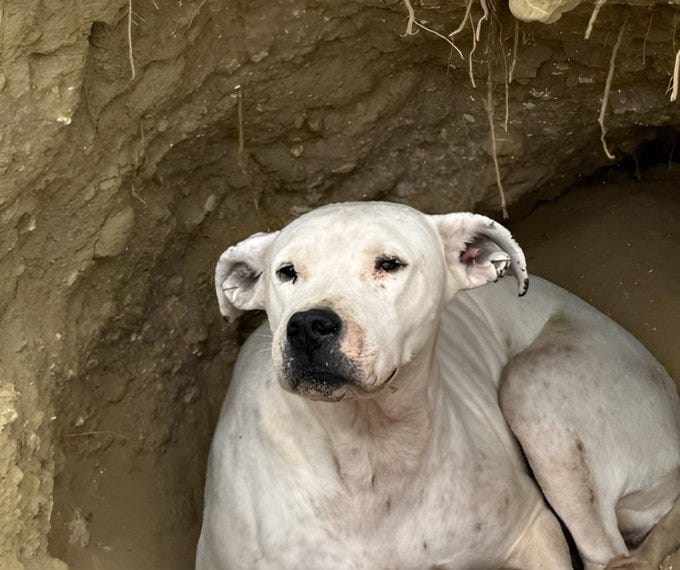
Building a Safe Den
For feral and semi-feral dogs, digging also serves a more vital purpose protection and shelter.
Pregnant females often dig dens where they can give birth and raise their puppies safely, hidden from predators and the elements. These dens are typically dug in secluded or covered areas and may be lined with leaves, grass, or other soft materials.
This denning behaviour closely mirrors that of wild canids such as wolves and foxes, who rely on burrows to raise their young and shelter from harsh weather. In some of the semi feral & feral dogs I have studied the den is preferable to kennels, huts & other man made structures designed for canine comfort. Of course we don’t allow them to live in these dens but we do allow them to create them & use them - because it makes them happy.
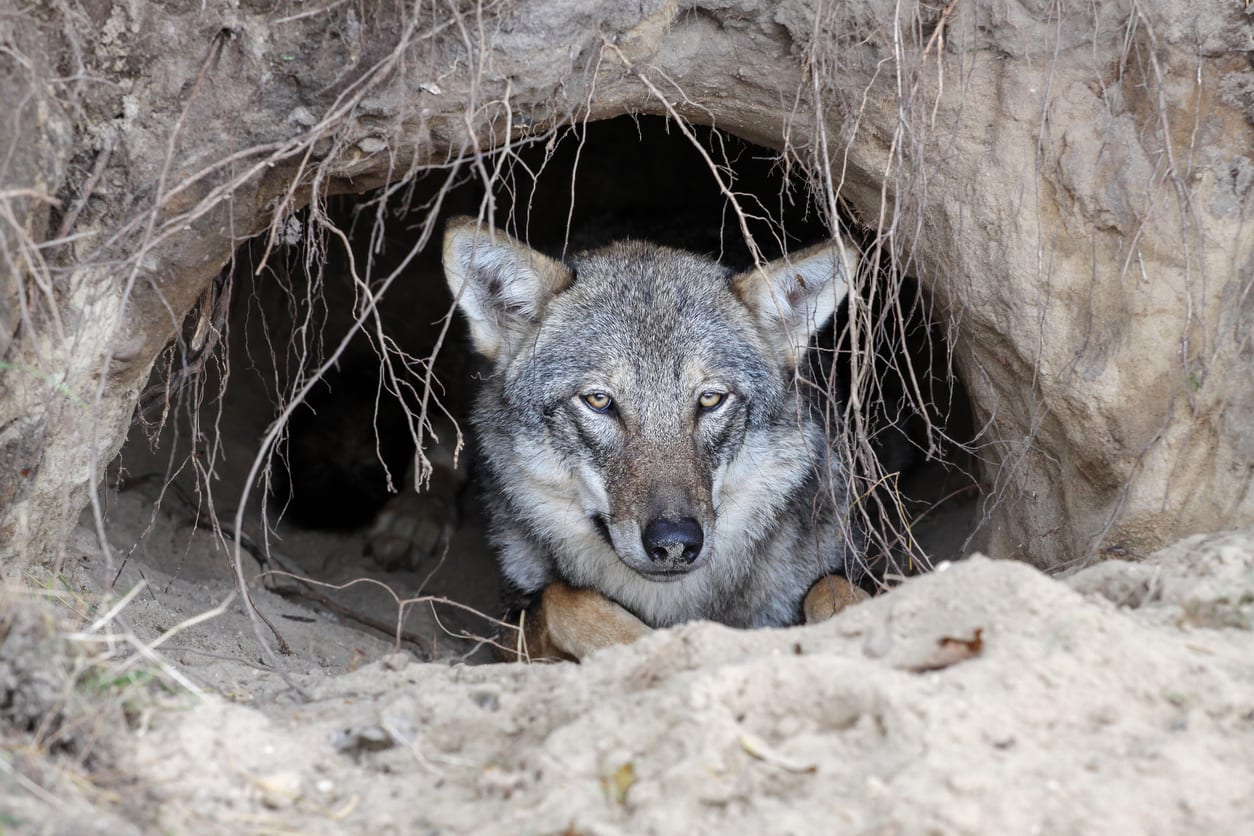
The Hidden Larder - Caching Behaviour
Another reason dogs dig is to hide food. Known as caching, this instinct helps ensure survival in uncertain conditions. Street dogs and feral dogs that find a rare surplus of food perhaps scavenged leftovers or something they’ve caught may bury it for later.
The cool earth slows decomposition and keeps scavengers at bay, natures fridge if you like. Wolves, coyotes, and other wild canids display the same behaviour, burying food near their resting sites to retrieve later when hunting is less successful.
Interestingly caching is not a behaviour I have noticed in the street born, semi feral & feral pack. There are numerous feeding troughs scattered around the entire facility & they are always full. I can only deduce that the dogs understand this from an early stage & know that food will always be there for them.
The only feeding behaviours we have seen are as follows
Resource guarding the feeding troughs in the early days. Most dogs will lie in them not allowing anyone else access. This behaviour goes unchallenged due to the number of feeding troughs & constant supply of food.
Sometimes dogs will be wary of the troughs & only eat a good quantity of food if it is placed on the ground. This is because they have never eaten from anywhere but the ground & their caution serves as a self preservation technique. A dog who leaps in to unknown or takes risks does not last very long on the streets.
An Instinct That Never Fully Disappears
Even in our modern domestic companions, the instinct to dig remains. While most pet dogs no longer need to build dens or bury food, they still exhibit traces of these ancestral behaviours.
You might notice your dog scratching at their bed or digging at the carpet before lying down, a vestige of their wild ancestors nesting behaviour. Some breeds & breed mixes have a stronger digging instinct than others due to their historical roles in hunting or burrowing after prey.
Understanding, Not Punishing
When dogs dig, they’re not being naughty, they’re responding to deep-seated instincts shaped by survival. Street and feral dogs show us these behaviours in their most natural, functional forms: cooling down, nesting, caching food, or creating security. Domestic dogs & street born dogs in shelters may no longer need to dig for survival, but the impulse remains, a reminder of their wild heritage.
Rather than punishing digging, it’s helpful to understand why it’s happening. For pet dogs, offering suitable alternatives like sandpits, cooling mats, or comfortable nesting areas can channel that instinct in a healthy way. For feral and street dogs, recognising that behaviour as natural allows us to better understand them & their need to exhibit that natural behaviour.
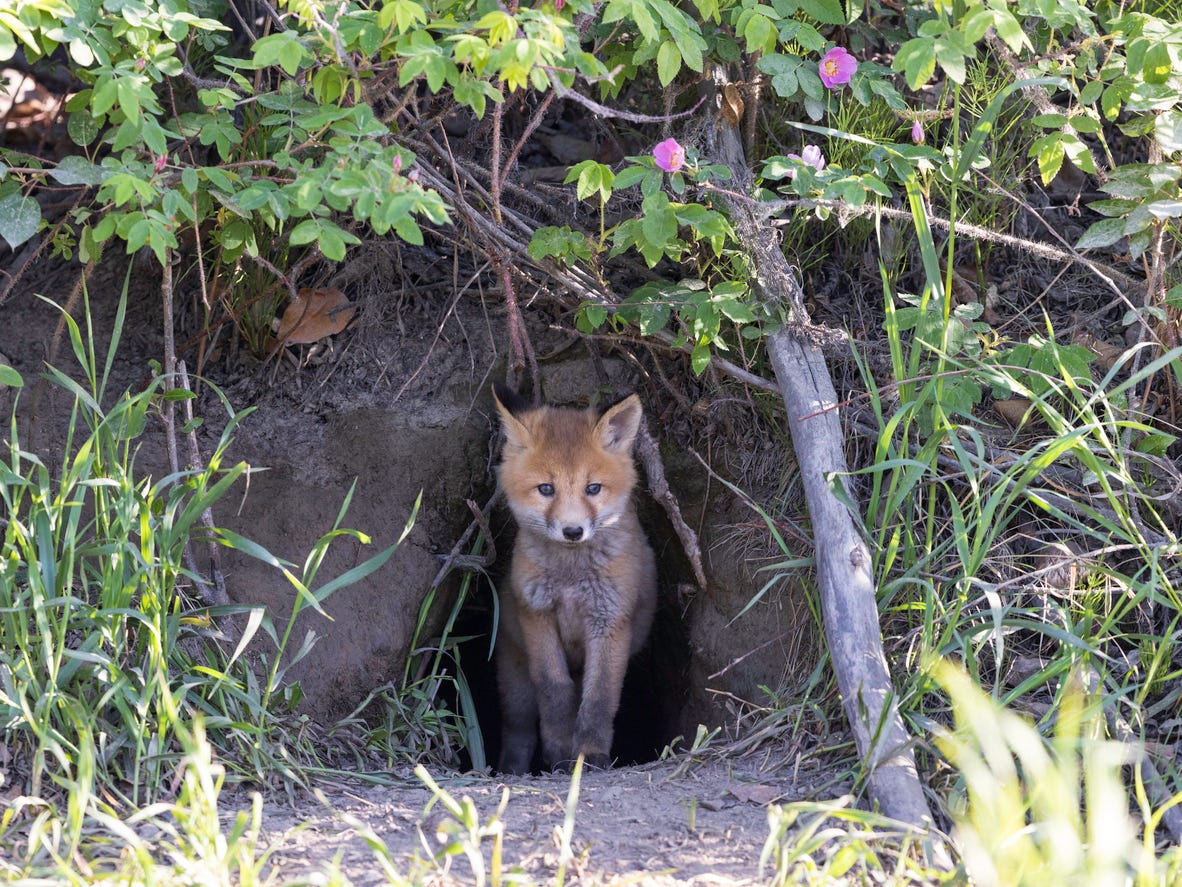
The Deep Roots of a Simple Act
Digging connects all dogs from the wild wolf to the feral scavenger to the pampered pet through a shared evolutionary thread. It’s a behaviour that tells the story of survival, adaptation, and instinct.
When we see a dog dig, we’re not just watching a quirky habit; we’re witnessing a piece of their history.
Continuing the Study
I study and record the behaviour of street-born dogs, including their interactions with abandoned, breeder-bought dogs. Each observation adds to our understanding of how instinct, environment, and human impact shape the way dogs live and communicate.
I’m always interested in learning more about dogs of all kinds so if your dog does something a little quirky or fascinating and you’d like to share, please do! My DMs are always open, or you can contact me through our website: dogdeskanimalaction.com.