


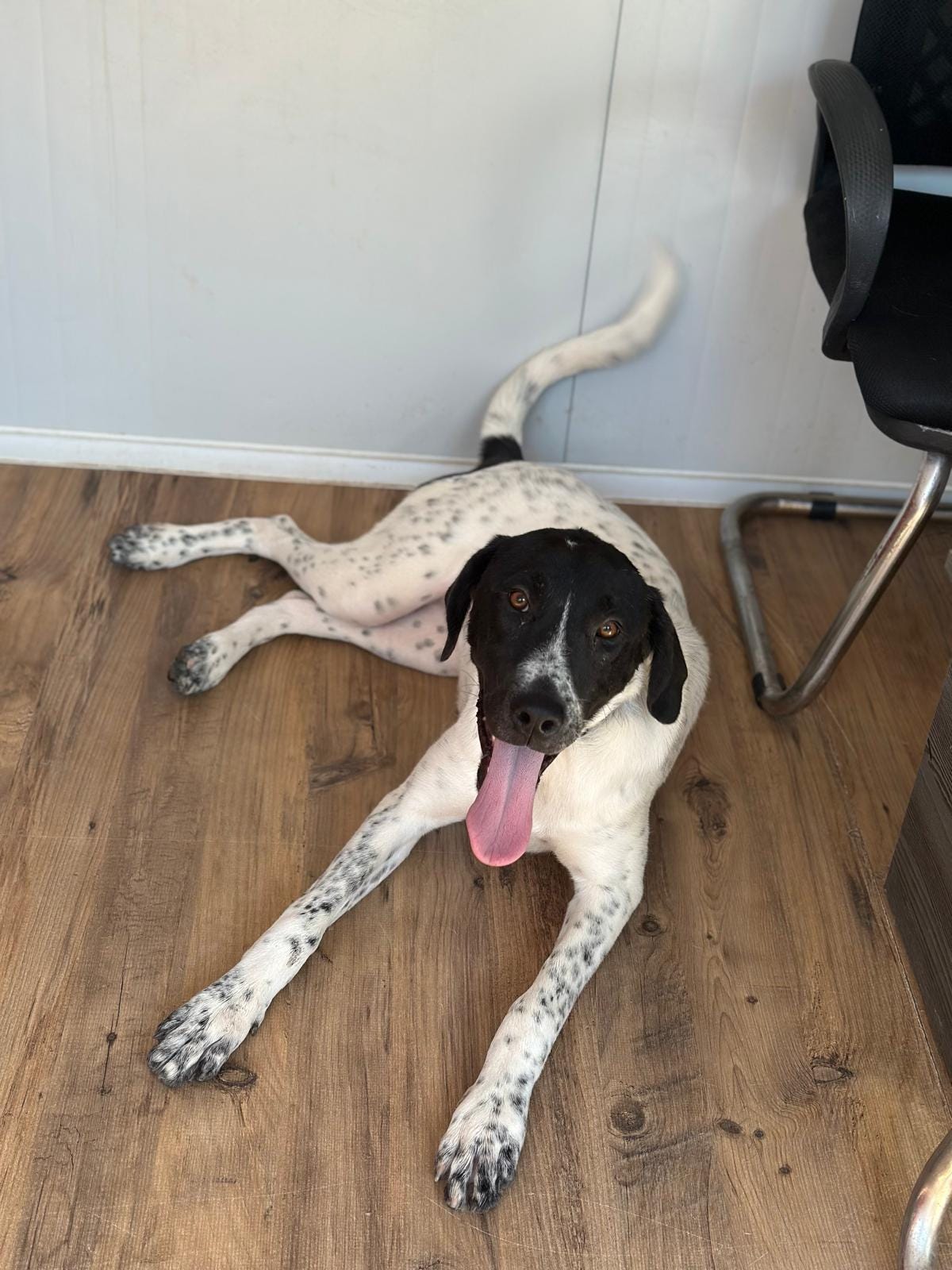
When we see a dog panting, it’s natural to wonder whether they’re too hot or in distress. While excessive panting can sometimes signal a medical emergency, panting itself is one of the most normal and important behaviours a dog has. In fact, on a warm summer’s day, I would be far more concerned if one of our dogs wasn’t able to pant.
Unlike humans, dogs have very few sweat glands. They cannot cool themselves by sweating over most of their bodies, so they rely on panting to regulate their temperature. As air moves rapidly over the tongue, mouth and upper respiratory tract, moisture evaporates and helps remove heat from the body. It is an incredibly effective cooling system and one that healthy dogs use every day.
Panting is not only linked to temperature. Dogs also pant when they are excited, playing, travelling, meeting new people or experiencing stress. Anyone who has watched a dog greet a favourite person or enjoy a game will almost certainly have seen them panting happily afterwards. On its own, panting is not a sign that something is wrong.
During the summer, dogs will naturally pant more frequently. Here in Ankara, where our sanctuary programme is based, temperatures regularly climb well above 30°C. As I write this, we’ve reached 34°C. Our dogs have constant access to fresh drinking water, shaded areas and cool surfaces where they can rest whenever they choose. They spend the hottest part of the day relaxing before becoming more active again as the temperature falls. Panting is simply part of how they cope with the heat.
That doesn’t mean every panting dog should be ignored. Heatstroke is a genuine veterinary emergency and owners should know the warning signs. A dog that is panting excessively while struggling to recover, becoming weak or collapsing, drooling heavily, vomiting, appearing disorientated or showing bright red or pale gums needs immediate veterinary attention. The key is to look at the whole dog, not just one behaviour.
Context matters. A dog that has just been running around the garden, playing with friends or greeting visitors will often pant heavily for a short time before settling. That is completely different from a dog that is unable to cool down despite resting in the shade with access to water.
One of the challenges of social media is that we often see only a few seconds of a dog’s day. A short video rarely shows what happened beforehand or what happened afterwards. It is easy to mistake a happy, excited dog for one in distress when we don’t have the full picture.
Understanding normal canine behaviour helps us recognise genuine emergencies when they occur. Panting is not something to fear. It is one of the most important ways a healthy dog protects itself from overheating.