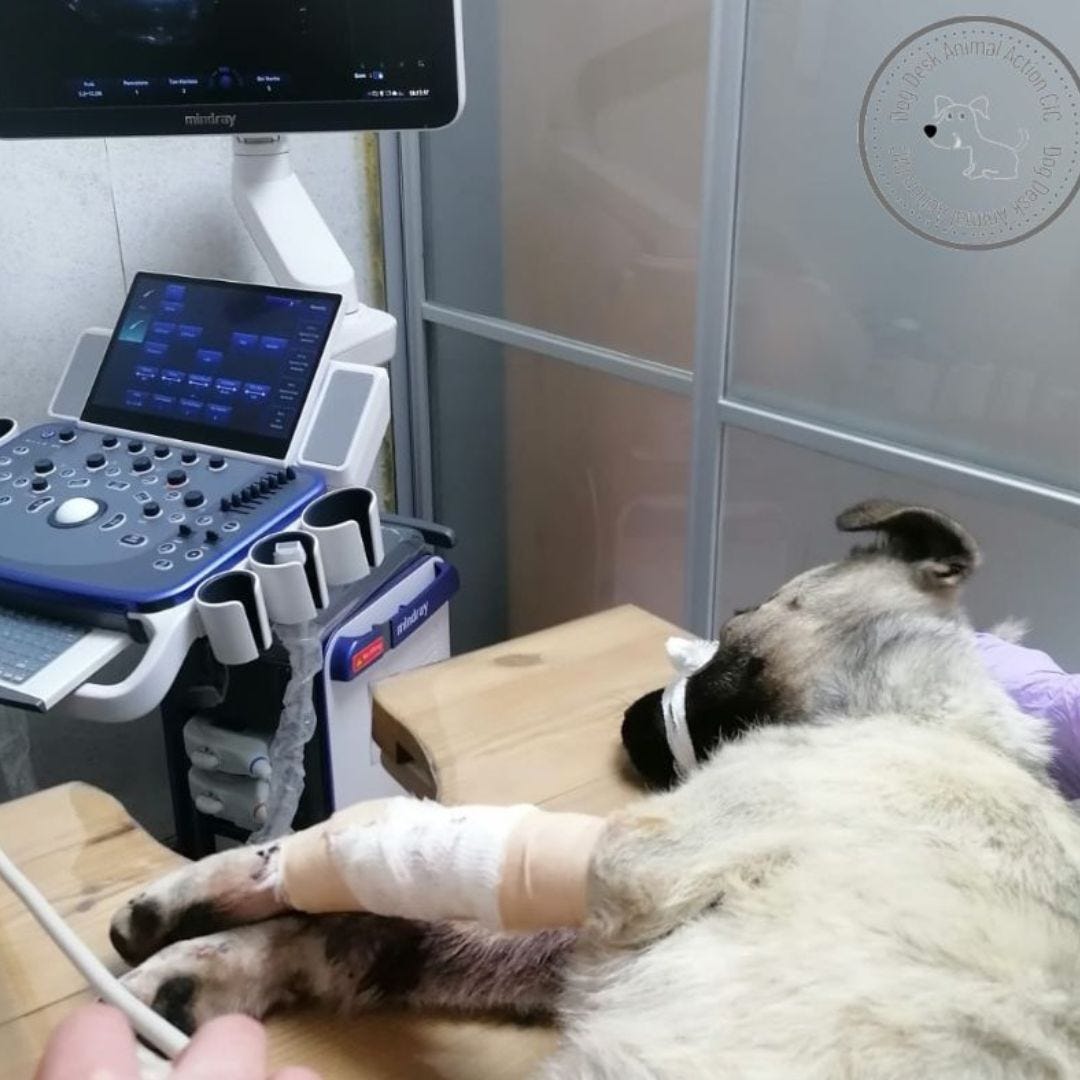
Why “Just Hire a Vet” Isn’t an Option
For years, small rescue organisations in Turkey have worked on the front lines of animal suffering: pulling dogs from traffic, treating disease, responding to abuse, and giving the abandoned a chance to live. Today, that work is no longer simply difficult. It is legally constrained.
Since the passing of the 2024 legislation widely referred to as the “slaughter law,” the entire landscape of rescue has changed. Under this law, we can no longer legally intervene to help a stray dog without obtaining express official permission. This requirement alone is devastating. It has already forced many rescues, including ours, to freeze planned programmes. This is why our 2025 projects were placed on ice before they could begin.
When Compassion Requires Permission
Previously, if we found a dog hit by a car anywhere in the country, in agony from infection, or collapsing from starvation, we could act immediately. Now, even approaching a stray animal for treatment can place a rescuer at legal risk without formal & prior authorisation.
This has created a chilling effect for many NGO’s in the country:
Delays in emergency care
Fear of confiscation or legal action
Animals left suffering while paperwork is sought
Rescue groups forced into paralysis
The law has not only restricted NGOs. It has placed veterinarians themselves in an impossible position. We are far luckier than most as we have good relationships with authorities which allow us to continue our work but with caveats.
Vets Under Pressure
Today, many Turkish vets are being questioned, challenged, and in some cases intimidated by authorities for treating stray animals. Where once they could act under professional and ethical duty, they now face scrutiny for every intervention.
Helping a street dog can mean:
Being asked to justify treatment
Facing inspections
Risking professional standing
Being accused of acting without approval
This has left many compassionate vets caught between their oath and their safety. Some are forced to refuse cases they would once have treated without hesitation. Others help quietly, at personal and professional risk.
In this climate, expecting our vet to formally partner with us to open or run a clinic is simply unrealistic.
Why We Cannot Open Our Own Clinic On Our Own
A common suggestion is: “Why don’t you open your own veterinary clinic?”
Legally, a non-veterinarian cannot open or operate a veterinary practice in Turkey. An NGO cannot do so either. A clinic must be established and licensed through a registered veterinary surgeon, who becomes legally responsible for:
All medical decisions
Controlled drug management
Regulatory compliance
Government inspections
Legal liability for every animal treated
This means we would need a vet partner willing to put their professional licence, career, and freedom on the line by attaching themselves formally to a rescue organisation that treats stray dogs under an increasingly hostile legal framework. two years ago this was not a problem & we did fund a small clinic offering very basic services. However, in the current climate, this is simply not going to happen. And it would be deeply unethical to ask it of any vet.
The Reality
Between:
The new legislation restricting intervention
Increased pressure on veterinarians
The legal impossibility of NGOs running clinics alone
The requirement for a vet partner who would face serious professional risk since the 2024 slaughter law
Small rescues are now operating in survival mode.
We can only act when permission is granted.
We can only treat when vets feel safe enough to help.
We can only plan when the law allows
This is why our 2025 projects were frozen. Not from lack of will. Not from lack of compassion. But because the legal environment no longer allows us to function as we once did. It is no longer possible to work outside the areas we currently have permission to operate.
Still Here, Still Fighting
Despite all of this, we continue to work within the narrow space that remains. We advocate, we support where permitted, we stand beside the vets who still dare to help, and we document what is happening. We maintain the precious relationships which allow us to provide medical care to dogs in some regions.
Rescue in Turkey is no longer just about pulling dogs from the streets.
It is about navigating law, fear, and restriction and still choosing, whenever possible, to save a life.
That is the reality small NGOs are now facing.


