

Why Large Animal Welfare Accounts Thrive on X While Smaller Ones Are Buried

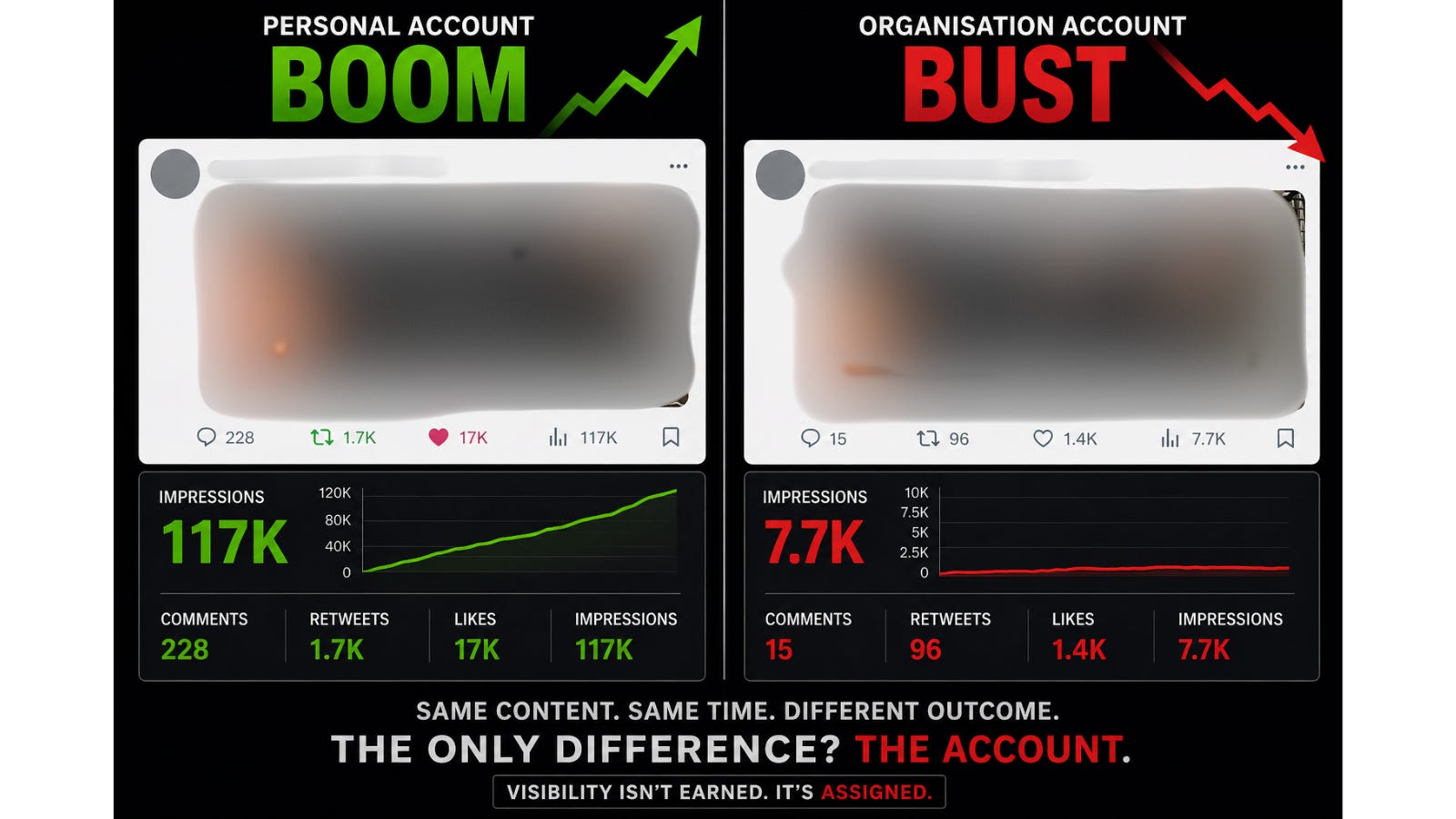
On X (formerly Twitter), two accounts can document the same dog, the same suffering, the same moment and experience completely different outcomes.
One reaches tens of thousands. The other barely reaches its own audience.
No explanation. No transparency. Just silence.
That is not inconsistency. It is how the system operates.
Reach Is Preserved, Not Earned
There is a persistent assumption that visibility reflects quality.
It doesn’t.
Large accounts benefit from structural advantages:
Immediate engagement within seconds
Followers conditioned to react quickly
Strong historical engagement signals
Enough reach to absorb underperforming posts
That early engagement determines everything.
Because the system does not ask, Is this important?
It asks, Did people react immediately?
If yes the post spreads. If no it is contained before most people ever see it.
Animal Welfare Content Is Not Treated Equally
Animal welfare content is inherently difficult. It shows:
injury
neglect
abandonment
systemic failure
Even when handled responsibly, it sits close to what platforms classify as sensitive. But that sensitivity is not applied evenly.
Larger accounts can post difficult material and remain visible
Smaller accounts post the same reality and lose distribution
Risk is tolerated at scale and enforced at the margins.
The System Reinforces Itself
This creates a closed loop:
Visibility drives engagement
Engagement protects visibility
And those already visible stay visible. Smaller organisations are locked out of that cycle.
A Mind Blowing Case Study
There are cases that remove all ambiguity. A personal account and a charity account are run side by side by the same individual.
They are directly linked. They represent the same work. They document the same dogs. And this is the critical point:
They are posting 100% exactly the same content.
Not similar. Not adapted. Not re-edited.
Exactly the same.
The same video file is uploaded to both accounts
The same image is used
The same caption is copied and pasted
Posted at roughly the same time
There is no difference in content whatsoever. None. The only difference is the size of the accounts.
Most animal welfare organisations do not operate two accounts in parallel.
They have one account, one stream of visibility, and no way to test what is happening to their reach.
They cannot run controlled comparisons. So when their content stops being seen, they cannot prove why. This case study did because the two accounts exist in tandem.
And Still, the Outcome Is Different
Despite that, the results are consistently unequal.
One account is pushed out and reaches widely
The other is restricted and struggles to be seen
One appears in search and recommendations
The other is absent or suppressed
Same content. Same person. Same moment. Different treatment.
There Is Nothing Left to Debate
It is not:
content quality
storytelling
timing
audience behaviour
Because those variables are identical. Controlled. Matched. Eliminated.
The only variable left is the account itself.
What This Shows
On X, distribution is not being applied purely to content. It is being applied to the account.
Because when the exact same post produces different outcomes depending on where it is uploaded the platform is not neutral.
The Shadow Layer: Quiet Suppression
This is where discoverability becomes decisive. If an account is:
excluded from search suggestions
difficult to find
unable to reach beyond its existing audience
then growth is effectively blocked.
Not visibly. But functionally. And with that:
reach is capped
awareness is limited
fundraising is constrained
cases remain unseen
The Pressure to Dilute Reality
Smaller organisations learn quickly what happens when they post honestly. Their reach drops.
So they adjust:
language is softened
imagery is reduced
context is stripped back
Not because they want to. Because the system forces it.
The Result: A Filtered Version of Animal Welfare
Over time, the platform fills with content that is:
easier to consume
less confronting
more acceptable
What disappears is:
scale
systemic failure
policy consequences
long-term suffering
Reality does not change. Only what people are allowed to see. And it looks like the big accounts who are able to post more freely are the only ones doing anything.
To be clear this is not a criticism of any organisation, merely an explanation of the systems we are all working in & its consequences for the animals.
New Voices Are Contained
This is not about slow growth. It is about restricted growth.
Without reach:
evidence does not spread
cases do not gain traction
expertise is not recognised
So the space consolidates. The same voices dominate visibility.
Not because they are the only ones doing the work but because they are the only ones consistently seen.
Influence Becomes Detached From Reality
When visibility becomes credibility, a false hierarchy forms:
the most visible appear the most effective
the least visible appear less important
This shapes:
public perception
donor behaviour
media attention
And none of it reflects the full reality.
The Real Effect
When identical content produces different outcomes depending on the account posting it, this is no longer about engagement.
It is distorting the entire animal welfare landscape.
What That Distortion Does
It determines:
which organisations grow
which work is recognised
which cases gain attention
which animals are seen
And just as importantly which are not.
Final Line
If the same dog, the same suffering, and the same evidence can be shown in the same way by the same person and only one version is allowed to reach people, then visibility is not a reflection of reality.
It is a filter.
And that filter is quietly deciding which parts of animal welfare exist
and which ones never reach the world at all.
More importantly it affects which dogs get help & which don’t