


I rarely support petitions.
Over the years I have seen too many petitions reduce complex issues to slogans, create unnecessary alarm or present worst case scenarios as established facts. Good intentions do not always lead to good outcomes, and sometimes a poorly framed campaign can make it harder to have the very conversation it was intended to start.
That is why I approached the petition calling for an exemption for rescue dogs with historic injuries under the Animal Welfare (Import of Dogs, Cats and Ferrets) Act 2025 with some caution after initially supporting it.
The legislation itself was introduced with aims that many animal welfare organisations support. It seeks to tackle concerns such as puppy smuggling, ear cropping and other procedures carried out for cosmetic rather than welfare reasons. Few rescuers would argue against efforts to prevent animals being subjected to unnecessary suffering.
At first glance, the concerns raised by some rescue organisations may seem difficult to understand. There is nothing in the legislation that explicitly states that three legged dogs, one eyed dogs or other disabled rescue dogs are prohibited from entering the United Kingdom. Most people would assume that a dog who lost a leg in an accident or had an eye removed during veterinary treatment would not be affected by a law designed to tackle deliberate mutilations.
That is where the debate becomes more nuanced.
The concern is not really about a dog with a well documented veterinary history. Nor is it necessarily about a dog whose injury clearly resulted from medical treatment. The concern is about how legislation is applied to rescue dogs whose histories are incomplete, unknown or impossible to verify.
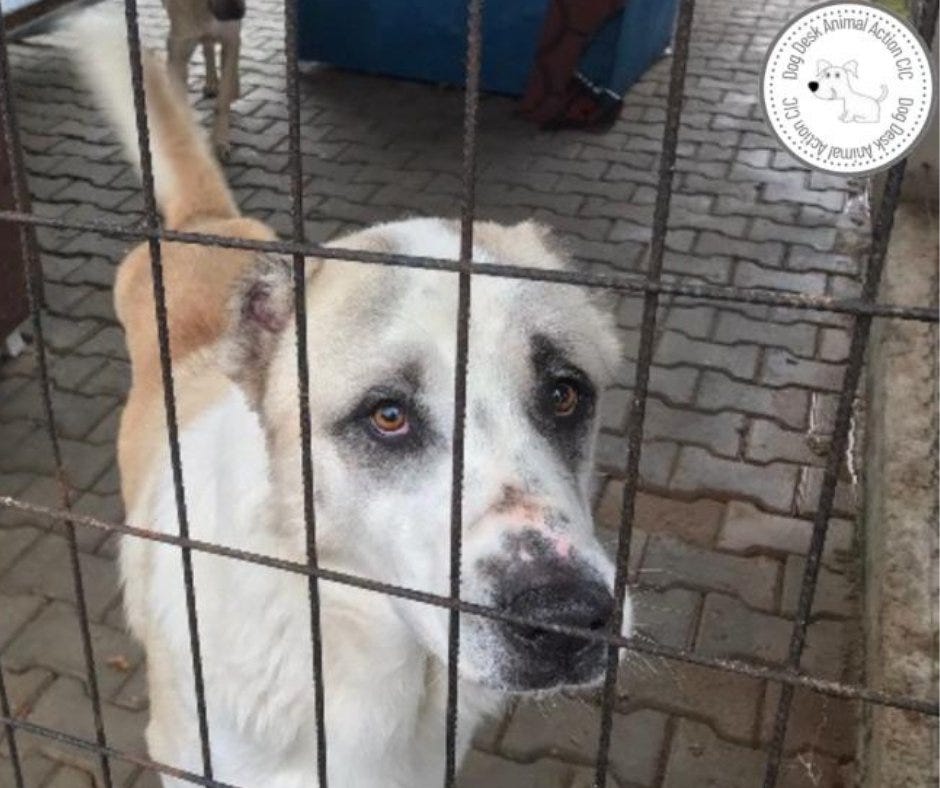
A dog rescued from the streets may be missing part of an ear, have an old tail injury, carry the scars of previous trauma or have undergone treatment years before anybody involved in its rescue ever met it. In many cases there are no veterinary records. There are no photographs showing how the injury occurred. There is no witness statement explaining what happened. There is simply the dog and the evidence of a difficult life.
While a leg amputated by a veterinarian would appear to fall comfortably within the law’s medical treatment exemption, some rescue organisations are asking what happens when the history is less clear. How much evidence will be required? Who decides whether an injury resulted from trauma, treatment or a prohibited procedure? What happens when the only evidence available is the dog itself?
These are not unreasonable questions.
Whether the concerns ultimately prove justified remains to be seen. The legislation was introduced to tackle practices such as ear cropping and other deliberate mutilations, not to prevent disabled rescue dogs from finding homes. I have seen no evidence that Parliament intended to exclude dogs who have lost limbs, eyes or other body parts through accidents, disease or necessary veterinary intervention.
However, rescue organisations are accustomed to working in the real world rather than the ideal one. They know that many of the dogs they help have lived on the streets for years. They know that documentation is often incomplete. They know that proving exactly what happened to an injured dog can be impossible.
That is why some are seeking clarity.
An explicit exemption would not undermine the aims of the legislation. It would not weaken protections against ear cropping or other deliberate mutilations. Instead, it would provide reassurance that dogs with historic injuries and incomplete histories will not become caught in uncertainty because the evidence needed to explain their past no longer exists.
This is one of the few petitions I have felt inclined to support. Not because I believe the United Kingdom is about to ban three-legged rescue dogs.
I support it because good laws should be clear. Rescue organisations should not be left wondering how a dog with an unknown history will be treated. When animals have already endured abandonment, injury, neglect or life on the streets, their future should not depend on paperwork that may never have existed in the first place.
That is the question at the heart of this debate, and it is a question that deserves a thoughtful answer.
I have signed the petition & would be grateful if you felt able to sign it too. You can find it here