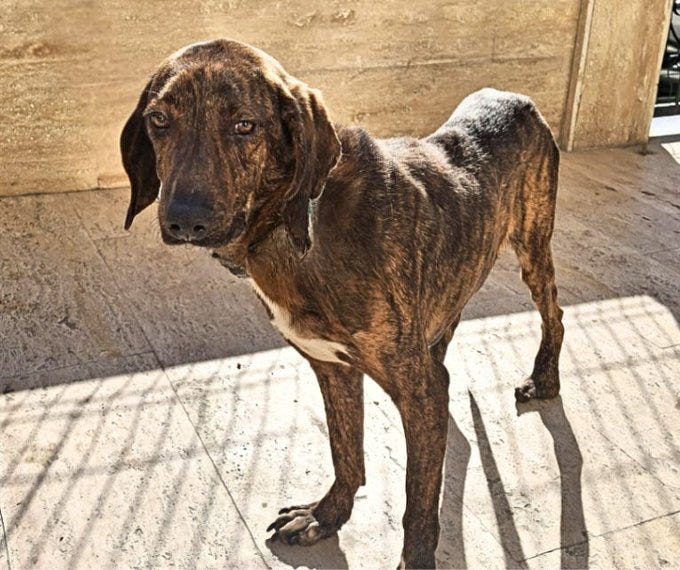
Why Some Dogs Don’t Know How to Play
When people imagine dogs, they imagine play.
Chasing balls. Tugging ropes. Zooming in wild circles across a garden.
So when a rescue dog stands still, watches quietly, or simply walks away from a toy, it can feel confusing. Sometimes even worrying.
But for many dogs, especially those born or raised on the streets, play is not natural behaviour.
It is a luxury behaviour.
And luxury only appears after survival ends.
Survival Has No Spare Energy
A dog living without security does not waste movement.
Every step has purpose:
Find food
Avoid conflict
Stay warm
Stay unnoticed
Stay alive
Play requires something survival never offers, spare emotional space.
Street dogs rarely experience boredom. They experience vigilance.
Their brains are constantly filtering:
Is that person safe?
Is that dog dominant?
Is that noise danger?
Will I eat today?
A brain wired like this does not experiment with toys. It conserves energy because energy may be needed later to escape.
So when a rescued dog ignores a ball, it is not stubbornness. It is history.
Play Is a Sign of Safety
Play behaviour lives in the relaxed part of the nervous system.
It only appears when the body believes tomorrow exists.
This is why the first signs of recovery are often quiet:
Longer sleep
Slower eating
Resting on one side instead of curled tight
Turning their back to you
Stretching fully
Only after these appear does curiosity follow. And only after curiosity comes play.
For some dogs, that process takes days.
For others, months.
For a few, years.
They are not learning how to play.
They Never Learned the Rules
Puppies learn play through safety and repetition. They mouth gently because siblings correct them. They chase because no one punishes movement. They tug because objects are reliable possessions.
Many rescue dogs never had this stage.
Instead they learned:
Food disappears quickly
Objects are taken away
Fast movement triggers shouting or throwing
Excitement causes conflict
So toys are confusing.
A thrown object is suspicious, not exciting. A squeak is startling, not stimulating.
You see hesitation.
The dog sees unpredictability.
What Play Looks Like Before It Looks Like Play
The first play behaviour is rarely dramatic.
It might be:
Nudging bedding
Carrying an object a few steps
A brief paw tap
A half bow that stops midway
A sudden zoom then immediate embarrassment
These moments pass quickly because the dog remembers caution.
Then one day they repeat and don’t stop themselves.
That is usually the turning point. Play doesn’t arrive fully formed.
It flickers into existence.
The Role of Humans
Humans often try to teach play by demonstrating enthusiasm. But excitement can feel like pressure to a cautious dog.
The most helpful human behaviours are quiet ones:
Sit nearby
Move slowly
Ignore the toy yourself
Let the dog investigate without watching intensely
Being observed can feel like evaluation. And evaluation belongs to survival, not play.
Safety grows best in ordinary moments.
When Play Finally Happens
The first real play session is often emotional for carers. Not because it is impressive, but because it is unnecessary.
A dog that plays believes three things:
I will eat again.
Nothing will hurt me.
I have time.
It is not about enrichment. It is about certainty.
Not Every Dog Becomes Playful
Some dogs remain gentle observers forever. They prefer resting near people, walking familiar paths, or simply lying in the sun. They are not missing something. They have reached peace instead of exuberance.
Play is one form of happiness.
Calm is another.
The Meaning Behind the Moment
When a rescue dog finally tosses a toy, bows clumsily, or forgets to stay cautious, it is easy to call it cute.
But what you are seeing is neurological change. Fear releasing its grip on the future. The dog is no longer preparing for loss. They are spending energy they trust they will get back.
And that may be the clearest sign a life has truly become safe.


