
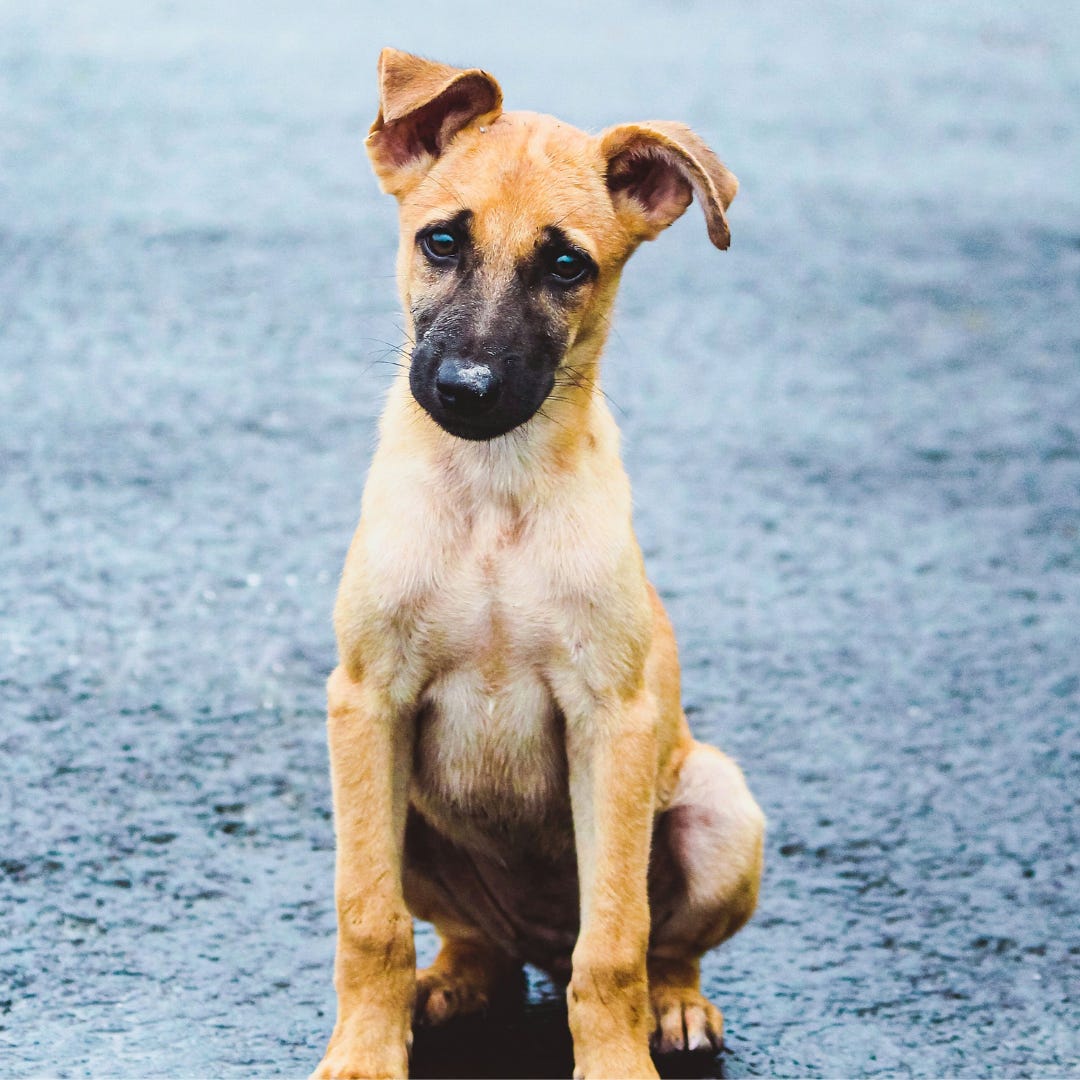
Why Street Dogs Are So Gentle, What Science Tells Us About Survivors
We often hear people say that street dogs are the gentlest souls you could ever meet and it’s true. Despite the hardships they face, many street dogs display remarkable empathy, loyalty, and calmness towards humans and other animals. But why is that? What makes a dog who’s known only hunger, danger, and rejection so capable of affection and trust?
Recent studies in animal behaviour and evolutionary psychology are beginning to shed light on this mystery. What we’re discovering is that gentleness isn’t weakness, it’s survival.
Adaptation Through Sensitivity
Street dogs live in complex social environments. They share public spaces with people, vehicles, other dogs, cats, and even wildlife. To survive, they’ve had to develop extraordinary emotional intelligence.
Research from behavioural ecology shows that free-ranging dogs can recognise human emotions and adjust their behaviour accordingly. Dogs who can interpret human cues, a kind voice, a calm posture, a soft gaze, are more likely to receive food and protection. Over generations, this sensitivity has become a key survival trait.
In essence, street dogs have evolved to read the room. Their gentleness isn’t random; it’s an adaptive strategy. They’ve learned that kindness keeps them safe.
Loyalty Rooted in Shared Experience
When a street dog finds a person who offers consistent care, the bond formed can be unbreakable. Scientists studying attachment in free-living dogs have found that many form deep emotional connections with individuals who show them compassion, even if they continue to live semi-independently.
This loyalty often surprises people but for dogs, loyalty is not a learned trick; it’s emotional logic. In a world where survival depends on fragile alliances, trust becomes sacred.
These dogs remember who fed them, who didn’t chase them away, who spoke softly. Their loyalty isn’t about ownership it’s about recognition of goodness.
The Quiet Strength of Trauma Survivors
We can’t talk about street dogs without acknowledging the trauma they endure. Many have been beaten, starved, run over, or witnessed the suffering of others. Yet, instead of responding with aggression, countless dogs display restraint, forgiveness, and even playfulness once they feel safe.
Animal behaviourists believe that dogs who survive extreme conditions may develop a sort of emotional resilience. Just as humans can emerge from hardship with greater empathy, so too can animals. Their calmness isn’t a lack of memory it’s a hard-won ability to live in the moment.
Every gentle street dog you meet carries invisible scars. Their kindness is not naïveté; it’s courage.
What Street Dogs Teach Us
If we take the time to truly see them, street dogs become some of our greatest teachers. They remind us that gentleness can coexist with strength, that trust can grow from pain, and that empathy is not a luxury but a means of survival.
Science can explain much about behaviour and adaptation but what it cannot fully measure is the grace these animals show in spite of everything.
When a street dog wags their tail at you, you are not just meeting an animal; you’re meeting a survivor whose gentleness has been honed by hardship and hope.
Be Kind to the Gentle Ones
The next time you see a street dog, remember: their softness is not an accident. It’s the quiet triumph of evolution, emotion, and endurance.
If you want to help them by fostering, adopting, or supporting community feeding and sterilisation programmes know that every act of compassion contributes to their survival story.
These dogs have already done the hardest part: they’ve kept their hearts open in a world that hasn’t always been kind. The least we can do is meet that courage with kindness.


Thank you for this wonderful article about the pups